

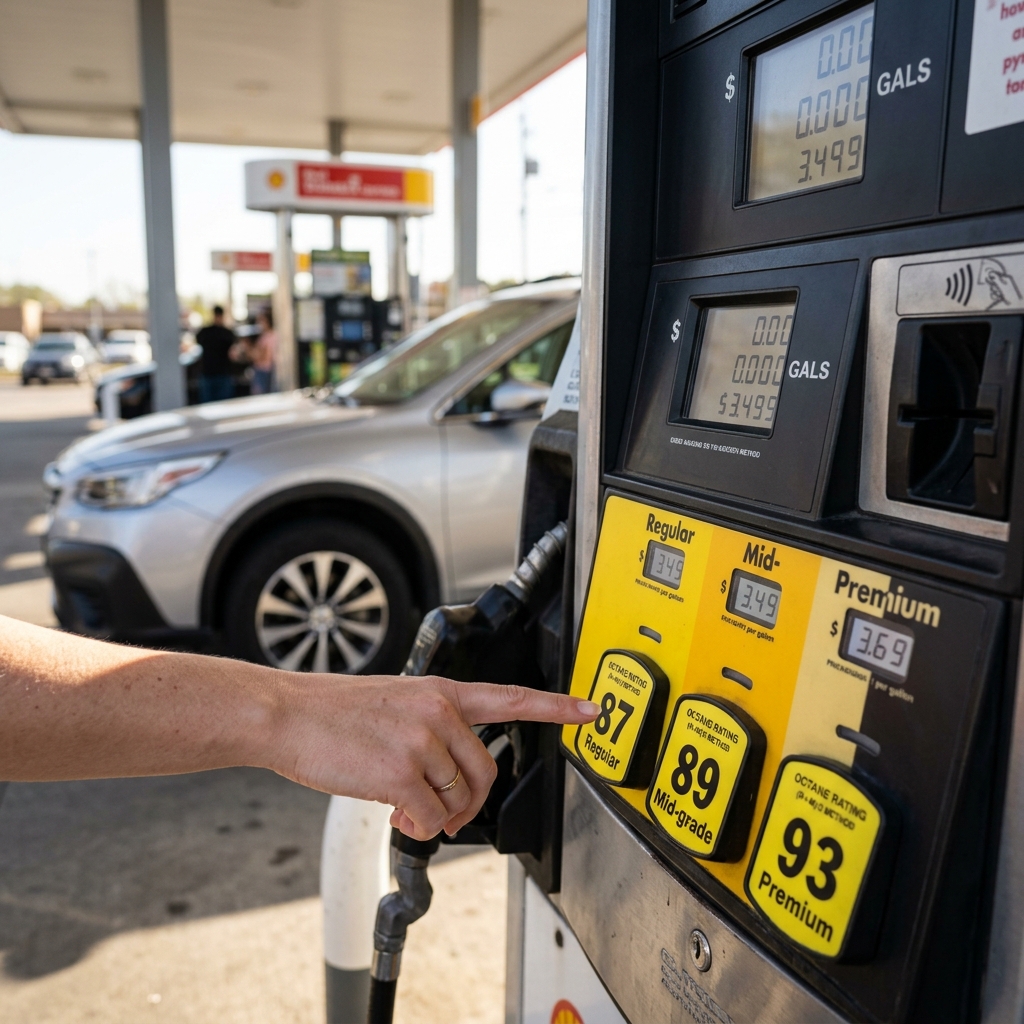
Selecting the right fuel at the pump can feel like an unnecessary guessing game, especially when staring at the price differences between the yellow buttons. At U.S. gas stations, 87 octane is classified as regular gasoline, while 89 octane represents mid-grade fuel. The core difference between these two options is not the cleanliness of the fuel or the energy content inside each gallon. Instead, the octane rating measures a fuel's chemical stability and its specific resistance to engine knocking or pinging during combustion.
The number displayed on the pump is the Anti-Knock Index, which is calculated by taking the average of the Research Octane Number and the Motor Octane Number. A higher octane rating indicates that the fuel can withstand greater pressure and temperature before igniting. For families hauling heavy trailers or recreational boats to Wamplers Lake near Onsted, understanding this stability is vital. When an engine is working hard under a heavy load, using a fuel with the appropriate knock resistance prevents the air-fuel mixture from detonating prematurely in the cylinders, which can cause severe internal damage over time.
If you are driving a vehicle designed to run on standard regular fuel, opting for the more expensive mid-grade option will generally provide no measurable benefit to horsepower, acceleration, or fuel economy. However, if you are looking to save on your next vehicle purchase, you can explore our quality selection of used vehicles under $20,000 to find an efficient commuter. For any questions about your vehicle's specific fuel requirements, you can give our service team a quick call or stop by our showroom at 1111 W Michigan Ave, Clinton, MI 49236 to speak with an expert in person.
Table of Contents
- How Modern Vehicle Computers and Knock Sensors Manage Different Octane Levels
- Which Ram Trucks and Dodge SUVs Actually Require 89 Octane Fuel
- Analyzing the Price Gap and What Happens When You Mix 87 and 89 Gas
- Common Octane Questions From Drivers
- Optimizing Your Engine Performance and Maintenance
- Quick Answers to Your Fuel and Octane Questions
- Get Expert Vehicle Advice and Professional Care
How Modern Vehicle Computers and Knock Sensors Manage Different Octane Levels
Modern powertrains rely on highly sophisticated electronic systems to optimize combustion and protect internal components from damage. The central brain of this operation is the Engine Control Unit, which constantly monitors a series of specialized knock sensors bolted directly to the engine block. These sensors are tuned to detect the specific structural vibrations and pressure waves caused by premature detonation, which typically oscillate at frequencies between 7 and 16 kilohertz.
If you put a lower octane fuel than recommended into your tank, the sensors detect the very first microseconds of engine knock. The computer responds almost instantly, adjusting the spark timing to retard the ignition within just one or two combustion cycles. This rapid adjustment eliminates the knock and protects the pistons and cylinder walls, but it comes at a cost. Retarding the timing reduces the engine's thermal efficiency, which directly decreases both total horsepower and fuel economy.
When searching for a new vehicle, matching the engine's technology to your driving habits is the best way to maximize efficiency. You can browse our new inventory to compare different powertrain configurations. If you need a vehicle built for serious utility, you can explore our new Ram 1500 inventory or view our capable new Dodge Durango models to find a high-performance SUV equipped with advanced engine management systems.
Which Ram Trucks and Dodge SUVs Actually Require 89 Octane Fuel
While the vast majority of mainstream passenger vehicles are engineered to run efficiently on regular fuel, certain larger displacement or high-compression engines specify mid-grade gasoline. A prime example is the legendary 5.7-liter Hemi V8 engine, which has long been a staple of the truck and full-size SUV lineups. Stellantis officially recommends 89 octane fuel for this engine to achieve optimum performance and maximum towing capability, though the vehicle's computer can safely adjust to run on standard regular fuel when necessary.
During vehicle walk-arounds on our showroom floor, buyers frequently ask our sales staff whether they truly need to pay extra for mid-grade fuel at every fill-up. For daily commuting without a heavy load, regular fuel is perfectly acceptable and will not harm the engine. However, when you are utilizing the truck's maximum towing capacity to haul equipment or trailers, switching to the recommended mid-grade fuel allows the engine to maintain its full ignition timing, delivering the complete 395 hp and torque needed for heavy-duty tasks.
If you are ready to upgrade to a powerful and durable truck or SUV, you can check out the new Ram 1500 to experience Hemi capability firsthand. We also carry the spacious and family-friendly new Dodge Durango for those who need three rows of seating alongside robust towing power. Before you visit, be sure to check out our current Ram manufacturer incentives to find current offers.
Analyzing the Price Gap and What Happens When You Mix 87 and 89 Gas
The price difference between regular and mid-grade gasoline is a common source of frustration for drivers at the pump. This cost gap is primarily driven by the expensive refining processes and specialized chemical additives required to elevate the fuel's octane rating. Additionally, regional environmental regulations, local fuel taxes, and supply chain logistics cause the retail price spread to vary significantly from one area to another.
A common question among budget-conscious drivers is what happens when you mix different fuel grades in the same tank. If you mix equal parts of regular and mid-grade fuel, you will end up with a tank of fuel that has an octane rating of exactly 88 octane. This mixture is completely safe and will not harm your fuel system or engine components. The fuels blend seamlessly in the tank, creating an intermediate octane level that is directly proportional to the ratio of the mixture.
For commuters driving from Michigan Center to Jackson for work, managing fuel costs is an important part of the monthly budget. If your vehicle recommends mid-grade fuel but you want to save money, mixing grades or using regular during light driving is a practical option. If you are looking to maximize your daily fuel economy, you can also browse our fuel-efficient pre-owned options, such as our used Jeep Compass inventory, which offers excellent efficiency on regular fuel.
Common Octane Questions From Drivers
There are several persistent myths surrounding high-octane fuels that often lead drivers to spend more money than necessary at the pump. The most common misconception is that mid-grade or premium gasoline is "cleaner" or contains more raw energy per gallon than regular unleaded. In reality, all fuel grades contain the same energy content, measured in BTUs, and are refined to the same strict environmental standards. The higher octane rating simply means the fuel is more stable under pressure.
Another frequent misunderstanding is that using a higher octane fuel than specified will automatically clean out engine deposits or improve performance in a standard commuter car. Unless your engine is specifically designed with a high compression ratio or turbocharging, it cannot take advantage of the increased knock resistance. Pumping mid-grade fuel into an engine rated for regular is essentially paying a premium for capability your vehicle's computer will never use.
If you are shopping for a reliable pre-owned vehicle and want to know the exact fuel requirements of a specific model, our team is here to help. You can browse our pre-owned inventory to view a wide range of makes and models. Our staff can pull up the original owner's manual for any vehicle on our lot, helping you understand the long-term cost of ownership before you make a decision.
Optimizing Your Engine Performance and Maintenance
Keeping your engine running at peak efficiency involves much more than just choosing the correct fuel grade at the pump. Over time, normal combustion can lead to carbon buildup on fuel injectors, intake valves, and piston tops, which can artificially increase the engine's octane requirement by creating hot spots in the combustion chamber. Regular maintenance is the key to preventing these issues and avoiding premature engine wear.
Replacing worn spark plugs at the manufacturer-recommended intervals ensures a clean, consistent spark, which prevents the unburned fuel and irregular combustion cycles that trigger knock sensors. Using high-quality fuels that meet top-tier detergent standards also helps keep internal engine components free of performance-robbing deposits. If you ever notice a persistent metallic pinging or knocking sound coming from your engine under acceleration, it is important to have it diagnosed by a professional immediately.
Our factory-trained technicians are equipped with specialized diagnostic tools to read sensor data, check ignition timing, and inspect your combustion chambers. You can schedule Mopar service online to have our team perform a comprehensive multi-point inspection. To get your vehicle serviced quickly and efficiently, you can use our online service scheduler to book an appointment, or stop by our dealership for routine maintenance.
Quick Answers to Your Fuel and Octane Questions
Q: Does 89 octane fuel increase fuel economy in an engine designed for 87?
Under normal driving conditions, using mid-grade fuel in an engine calibrated for regular gasoline will not improve your fuel economy. The engine is already optimized to burn regular fuel completely without knocking, meaning the extra octane goes unused. The only minor exception is during extreme operating conditions, such as towing a heavy load in hot weather, where the higher octane may prevent the computer from retarding the ignition timing.
Q: Can I use 85 octane fuel in my modern vehicle when traveling through high-elevation areas?
You should avoid using 85 octane fuel in modern fuel-injected engines, even if it is widely available at high-elevation gas stations. While older carbureted engines could tolerate lower octane at high altitudes due to thinner air, modern engine management systems are designed to maintain specific combustion pressures and still require the manufacturer's minimum recommended octane rating.
Q: What happens if I accidentally put 87 octane in a vehicle that requires premium 91 or higher?
If you accidentally fill a premium-required vehicle with regular fuel, you do not need to panic or drain the tank. Modern engine computers will detect the lower knock resistance and automatically retard the ignition timing to protect the engine. You should drive moderately, avoiding heavy acceleration or towing, until you can fill the tank with the correct high-octane fuel to restore normal performance.
Q: Does ethanol content affect the octane rating of the fuel?
Yes, ethanol has a naturally high octane rating of about 109, which makes it an effective and clean-burning octane booster. Most standard gasoline sold in the United States is blended with up to 10% ethanol to help refiners meet the required octane ratings for regular, mid-grade, and premium fuels while reducing tailpipe emissions.
Q: Is mid-grade fuel necessary for towing heavy loads with a light-duty truck?
If your truck's owner's manual states that regular fuel is acceptable but mid-grade is recommended, using mid-grade fuel while towing is highly beneficial. Heavy loads increase cylinder pressures and engine temperatures, which significantly raises the risk of engine knock. Using the recommended mid-grade fuel prevents the computer from having to pull back ignition timing, ensuring you have access to the truck's full power on steep grades.
Get Expert Vehicle Advice and Professional Care
Whether you are trying to maximize the fuel efficiency of your daily commute or looking to maintain the heavy-duty towing power of your truck, using the correct fuel and staying on top of scheduled maintenance is the best way to protect your investment. Our experienced service team is dedicated to providing transparent, high-quality care to keep your vehicle running like new for years to come.
If you are experiencing engine performance issues or simply need a routine oil change, you can visit our express lane for fast, convenient maintenance with no appointment necessary. Our certified technicians use genuine parts and state-of-the-art diagnostic equipment to service your vehicle quickly and accurately. Stop by our service center today to experience the professional care and friendly, community-focused support that defines our dealership.
© 2026 NewGen Chrysler Dodge Jeep Ram of Clinton. All rights reserved.