

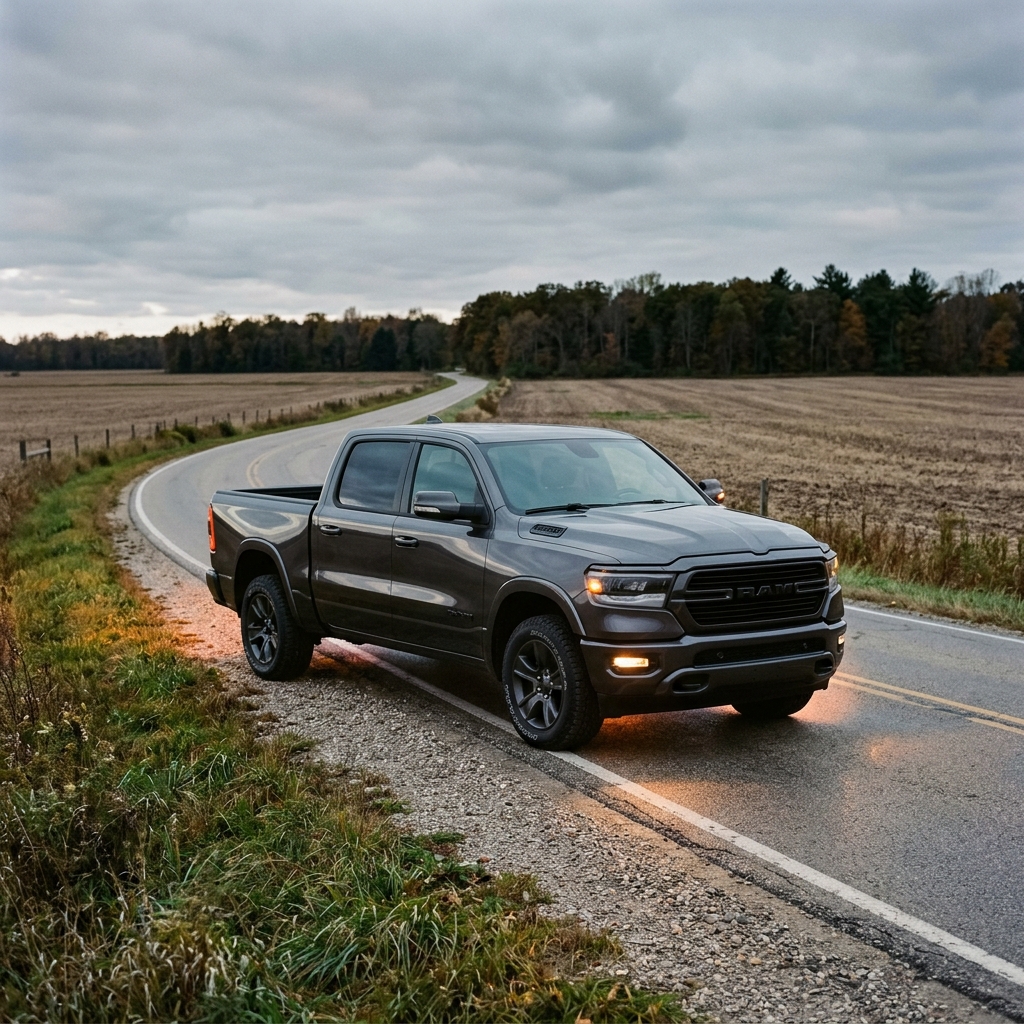
A 2027 Ram 1500 enters limp mode when the powertrain control module detects a severe sensor parameter discrepancy, electrical fault, or mechanical condition — such as transmission fluid temperatures exceeding 240–260°F, boost pressure mismatches, or throttle sensor failures — and intentionally caps engine speed near 2,500 RPM while locking the transmission into a safe gear to prevent internal engine or gear destruction.
Modern Ram trucks utilize an integrated network of electronic control units that constantly monitor operating data against predetermined safety thresholds. When an active actuator command fails to match sensor feedback, the engine computer defaults to a failsafe operating strategy. Rather than risk catastrophic component failure while hauling heavy payloads or towing up to 11,000 pounds, the vehicle restricts fuel delivery, limits throttle plate opening, and disables performance features like cruise control.
This protective state is designed to allow drivers to move their truck off high-speed roadways to a safe location or reach a service bay without inflicting permanent damage on mechanical assemblies. Understanding that limp mode is an automated safety response rather than a complete mechanical breakdown is the essential starting point for proper diagnosis. If your vehicle suddenly enters reduced power mode on your drive, contact our service team at (517) 456-6555 or bring your truck directly to our Clinton service center for an immediate diagnostic assessment.
Table of Contents
- What Are the Most Common Electrical and Sensor Triggers for Limp Mode in Ram Trucks?
- Can Transmission Problems and Low Fluid Cause Limp Mode on a Ram 1500?
- Do Turbocharger and Boost Leaks Cause Reduced Engine Power on Ram Pickups?
- Why Is It Important to Read and Save Diagnostic Trouble Codes Before Repair?
- How Can You Safely Exit Limp Mode and Restore Power on Your Ram 1500?
- Frequently Asked Questions About Ram Limp Mode
- What Maintenance and Upkeep Prevent Limp Mode on Ram 1500?
What Are the Most Common Electrical and Sensor Triggers for Limp Mode in Ram Trucks?
Electrical and sensor triggers for limp mode in Ram trucks most commonly stem from throttle position sensor mismatches, accelerator pedal position circuit faults, low system voltage, or corrupted mass airflow sensor readings.
Electronic throttle control systems on Ram pickups utilize dual throttle position sensors engineered with opposing voltage curves. This dual-circuit design allows the powertrain control module to verify accelerator commands continuously. If a worn sensor track or loose connector causes the two voltage signals to diverge beyond acceptable tolerance limits, the computer immediately illuminates the electronic throttle control symbol—often styled as a red lightning bolt—and restricts throttle opening.
Low system voltage is another frequent electrical trigger. Modern Ram trucks rely on stable 12-volt current to supply precision reference voltages across dozens of powertrain sensors. A failing main battery, degraded ground strap, or weak alternator can cause sudden voltage dips during high electrical loads. When supply voltage drops, modules experience temporary communication drops, leading to false sensor fault codes such as P0101 for mass airflow out of range or P0335 for crankshaft position errors.
Harness vibration and environmental exposure also play a major role in sensor failure. Farm trucks and work vehicles driven along unpaved rural routes around Onsted frequently experience dust intrusion and connector strain, which can compromise wheel speed sensors and throttle body harnesses over time.
Can Transmission Problems and Low Fluid Cause Limp Mode on a Ram 1500?
Transmission issues—including low hydraulic fluid levels, internal pressure drops, clutch pack slippage, or fluid temperatures exceeding 240–260°F—cause limp mode by triggering the transmission control module to issue an immediate torque denial request to the engine computer.
The eight-speed automatic transmission used across the Ram truck lineup relies on precise hydraulic pressure to execute gear changes and maintain clutch engagement. When fluid levels drop due to cooler line leaks or pan gasket seepage, the hydraulic pump draws in air, creating line pressure instability. The control module detects gear ratio slip when input shaft speeds fail to match output expectations, forcing the transmission into a fixed-gear "limp-in" state—typically locking the unit in third gear to prevent further mechanical wear.
Software calibration issues can also trigger transmission protection strategies. Diagnostic trouble code U0402-00 (Implausible Data Received from TCM) can set when communication packets between powertrain and transmission controllers timing out or reporting conflicting torque calculations. Factory technical service bulletins address these communication discrepancies by reflashing the control software with updated parameter thresholds.
Whether your truck features the Pentastar V6, the legendary 5.7-liter HEMI V8, or the high-output twin-turbo Hurricane I6, keeping transmission hydraulics clean and cool is essential for reliable operation. Drivers exploring options in our new Ram 1500 lineup can count on factory thermal management systems, but regular fluid inspections remain crucial during severe-duty work.
Do Turbocharger and Boost Leaks Cause Reduced Engine Power on Ram Pickups?
Boost leaks and intake tract pressure losses cause reduced engine power on turbocharged Ram trucks because split intercooler hoses, loose charge-pipe clamps, or faulty wastegate actuators create a severe discrepancy between commanded boost pressure and actual manifold pressure.
On models equipped with forced-induction engines—such as the twin-turbo Hurricane I6 or EcoDiesel powertrains—the engine control unit calculates fuel injection timing and quantity based on precise air mass measurements. Pressurized air travels from the turbochargers through charge pipes, intercoolers, and intake manifolds before entering the combustion chambers. If a charge pipe seam develops a hairline split or an intercooler coupler slips under heavy load, pressurized air escapes into the atmosphere.
The manifold absolute pressure sensor registers less boost than the computer commanded the turbocharger wastegates to build. Recognizing this mismatch as a potential overspeed condition or intake failure, the powertrain control module cuts fuel delivery and limits wastegate duty cycles to protect internal engine components.
When truck owners bring their vehicle into our service drive after noticing a sudden power drop, they often ask whether a simple battery disconnect will permanently clear the issue before our technicians perform a smoke test or leak check. Addressing physical boost leaks through mechanical repair is the only way to prevent recurring power loss.
Why Is It Important to Read and Save Diagnostic Trouble Codes Before Repair?
Reading and saving diagnostic trouble codes along with freeze-frame data before attempting any repair is critical because clearing codes wipes essential diagnostic context, such as engine load, vehicle speed, and fluid temperatures present at the exact moment the fault occurred.
When an electronic control module detects an out-of-spec reading, it stores a specific diagnostic trouble code alongside a snapshot of engine parameters called freeze-frame data. This snapshot records engine RPM, coolant temperature, intake manifold pressure, battery voltage, and fuel trim percentages. Reviewing this stored information allows factory-certified technicians to determine whether a fault occurred under heavy load at highway speeds or during idle in sub-zero weather.
Clearing codes using an entry-level scan tool or disconnecting the vehicle battery erases this valuable history. If the triggering fault is intermittent, the truck may briefly operate normally until driving conditions recreate the exact sensor parameters needed to trip the monitor again. This leads to frustrating symptom recurrence and prolonged diagnostic timelines.
Proper diagnostic routine involves scanning all vehicle networks—including the PCM, TCM, and body control modules—recording active and pending codes like P0700, and saving freeze-frame files before resetting system memory. You can get professional diagnostic support by scheduling a Mopar service appointment online or preserve your vehicle's reliability by ordering genuine Mopar parts directly through our facility.
How Can You Safely Exit Limp Mode and Restore Power on Your Ram 1500?
To safely exit limp mode on a Ram 1500, bring the vehicle to a complete stop in a secure location off the main roadway, turn the ignition off, wait roughly two minutes for all onboard control modules to fully shut down, and restart the engine to allow the system to perform its power-up self-check.
If the condition that triggered limp mode was a temporary communication glitch or brief thermal spike, the computer may restore full engine output upon key cycle. However, if the underlying fault is a hard electrical short, severe mechanical failure, or active sensor breakdown, the powertrain control module will re-engage limp mode immediately upon restart.
When operating a truck in reduced power mode:
- Move safely to the right shoulder or nearest parking area without making sudden lane changes.
- Avoid heavy throttle inputs that can cause transmission clutch slippage or thermal buildup.
- Monitor dashboard engine coolant and transmission fluid temperature gauges closely.
- Refrain from towing trailers or carrying heavy bed loads while operating in reduced power state.
Commuters traveling from Michigan Center along high-speed stretches toward Jackson should pull off at the first available exit or safe turnout rather than trying to push through reduced engine output. If you require replacement components after a diagnostic scan, explore our inventory options like new Ram 1500 Big Horn Crew Cab 4x4 trucks to learn more about modern powertrain safety engineering.
Frequently Asked Questions About Ram Limp Mode
Q: Can a failing 12-volt battery cause my Ram truck to enter limp mode unexpectedly?
Yes, a failing or degraded 12-volt battery can trigger limp mode by causing sudden voltage drops across sensitive vehicle sensor networks. When system voltage dips below operational thresholds, control modules lose steady reference voltage and generate false sensor communication codes. Replacing a weak battery and verifying ground connections often resolves intermittent electrical limp mode conditions.
Q: Will clearing Check Engine light codes with a basic scanner fix limp mode permanently?
Clearing diagnostic trouble codes with a basic scan tool will not fix limp mode if the underlying mechanical or electrical fault remains active. While clearing codes may temporarily reset the dashboard warning light, the powertrain control module will re-engage limp mode as soon as vehicle sensors detect the out-of-spec condition during normal driving cycles.
Q: Is it safe to drive my Ram 1500 in limp mode to get home?
Driving a short distance at low speeds in limp mode to reach a safe off-road location or local service facility is generally safe, as the operating mode is designed to protect internal hardware. However, driving long distances under reduced power—especially with active transmission, oil pressure, or cooling faults—can lead to severe internal engine or gear damage.
Q: How does high transmission fluid temperature trigger limp mode on a Ram truck?
When transmission fluid temperatures exceed 240–260°F, the transmission control module limits engine torque output to prevent fluid oxidation, clutch pack degradation, and internal seal failure. Capping engine output reduces thermal stress on the transmission cooling circuit, allowing fluid temperatures to stabilize within safe operating ranges.
Q: Does a boost leak on a Hurricane engine permanently damage the turbocharger?
A boost leak itself does not instantly destroy a turbocharger, but driving extended distances with an unaddressed intake leak can cause the turbocharger to overspeed as the control unit attempts to compensate for lost manifold pressure. Promptly repairing split intercooler hoses or loose charge pipe clamps prevents unnecessary turbocharger wear.
What Maintenance and Upkeep Prevent Limp Mode on Ram 1500?
Preventing limp mode and reduced power conditions on a Ram 1500 requires adhering to regular transmission fluid service intervals, inspecting charge-air piping and electrical ground connections, and servicing engine cooling systems before tackling heavy seasonal work.
Routine maintenance is the most effective defense against unprogrammed power reductions. Inspecting air intake ducts, intercooler couplers, and vacuum lines during scheduled oil changes helps catch hairline cracks before they turn into major boost leaks. Likewise, testing battery cold-cranking amps and cleaning corrosion off main chassis ground terminals prevents low-voltage communication faults across powertrain control networks.
Key maintenance practices for long-term power delivery include:
- Flushing transmission fluid and servicing internal pan filters at factory-recommended mileage intervals.
- Cleaning throttle body assemblies to remove carbon buildup that interferes with throttle plate movement.
- Replacing engine air filters regularly to ensure accurate mass airflow sensor readings.
- Inspecting cooling radiators, auxiliary fluid coolers, and water pumps to prevent high-temperature thermal derating.
Our factory-certified technicians at NewGen Chrysler Dodge Jeep Ram of Clinton utilize OEM diagnostic tools like wiTECH software to check for module updates, read live sensor data, and perform precise system recalibrations. Visit our service department in Clinton or call our service team at (517) 456-6555 to schedule your truck's comprehensive preventative maintenance inspection today.
© 2026 NewGen Chrysler Dodge Jeep Ram of Clinton. All rights reserved.