
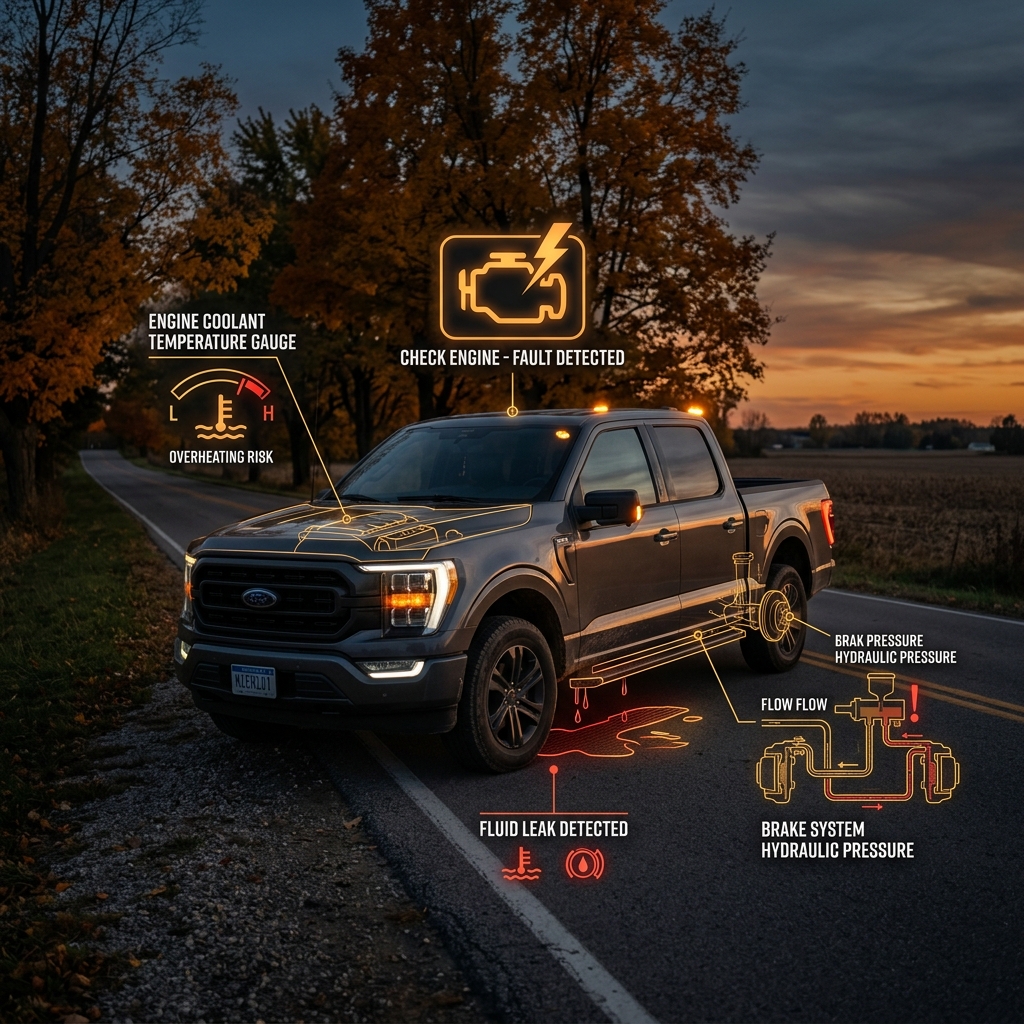
Car warning signs that demand immediate service include a flashing check engine light, a spongy or sinking brake pedal, deep engine knocking, rapid cooling system overheating, persistent oil or brake fluid leaks, and heavy steering wheel vibration. Continuing to drive when these warning signals appear risks total system failure, catastrophic mechanical breakdown, and severe safety hazards on the road.
Unusual vehicle behavior rarely stays minor for long. A sudden drop in hydraulic pressure or severe thermal buildup can transform a routine commute into an emergency within miles. Vehicle monitoring systems rely on sensors to measure fluid pressure, operating temperatures, and electrical feedback. When those sensors report values outside normal operating parameters, ignoring the warning creates a cascade effect where one failing component damages adjacent systems.
In rural communities like Onsted, where drivers frequently haul agricultural equipment or pull boat trailers to local lakes, heavy vehicle loads place increased demands on the cooling system, transmission, and heavy-duty braking components. Operating under load with compromised fluids or thin friction pads causes rapid heat buildup, accelerating mechanical wear.
When dashboard indicators light up or mechanical symptoms appear, prompt technical diagnosis is essential. Driver safety depends on functional safety systems, including functional brake displays mandated under Federal Motor Vehicle Safety Standard (FMVSS) No. 101. If you notice active warning signs or abnormal driving performance, stop by our service center location or give our certified technicians a call at (517) 456-6555 for immediate diagnostic support.
Table of Contents
- What Does the Check Engine Light Mean and When Is It an Emergency?
- What Causes a Soft Brake Pedal and What Does Metallic Grinding Indicate?
- What Do Engine Knocking, Oil Leaks, and Syrupy Coolant Smells Mean?
- Why Does a Steering Wheel Shake and What Is Included in 30,000-Mile Service?
- What Does ASE Certification Mean When Choosing an Auto Mechanic?
- Common Questions About Urgent Vehicle Maintenance
- Protect Your Vehicle with Certified Service in Clinton
What Does the Check Engine Light Mean and When Is It an Emergency?
A steady check engine light signals a non-emergency fault within the emissions or engine management system, whereas a flashing check engine light indicates an active cylinder misfire that requires immediate service to prevent permanent catalytic converter damage.
The powertrain control module illuminates the check engine light when onboard diagnostics detect a reading outside preset factory specifications. A steady light can stem from minor issues, such as a loose gas cap, a failing oxygen sensor, or an engine air intake leak. While a steady light allows you to reach a service center safely, scheduling a diagnostic scan remains necessary to clear fault codes and verify system health.
A flashing light represents a severe operational emergency. An active misfire means unburned fuel is leaving the combustion chamber and entering the hot exhaust system. This raw fuel ignites inside the catalytic converter, causing internal temperatures to surge past design thresholds and melting the precious metal honeycomb structure. What begins as a simple ignition coil failure or fouled spark plug quickly turns into an expensive exhaust system overhaul if driven continuously.
Electronic cluster reliability is equally critical for driver awareness. Software anomalies that cause instrument panels to go dark or fail to display active alerts violate safety regulations. Instrument cluster software updates restore full display functionality, ensuring drivers receive immediate notice of oil pressure drops, coolant temperature spikes, or charging system malfunctions. For replacement components during emissions or ignition repairs, using genuine Mopar replacement parts ensures factory fit and long-term system integration.
What Causes a Soft Brake Pedal and What Does Metallic Grinding Indicate?
A soft or sinking brake pedal is caused by trapped air in hydraulic lines, a brake fluid leak, or an internal primary seal failure within the master cylinder, while metallic grinding signifies complete pad wear where steel backing plates carve directly into the brake rotors.
Hydraulic brake systems rely on incompressible fluid to transfer force from your foot to the brake calipers. When air enters the brake lines through a loose fitting or worn seal, the air compresses under pressure, resulting in a pedal that feels spongy or drops smoothly to the floor. A master cylinder with degraded internal cup seals allows fluid to bypass the piston, preventing the system from maintaining holding pressure at a stoplight.
Metallic grinding noises indicate that friction material has completely worn away. Modern brake pads include a small metal wear indicator that produces a high-pitched squeal when pad thickness drops near replacement levels. Ignoring that squeal allows the pad to wear down to its steel backing plate, which then digs directly into the cast-iron rotor surface. This metal-on-metal contact creates deep scoring, severe heat distortion, and a drastic loss of stopping power.
For commuters traveling between Michigan Center and nearby Jackson, predictable stopping performance is essential during stop-and-go highway driving. Severe rotor scoring severely reduces braking efficiency and requires full rotor replacement alongside new pads. You can schedule your brake service online to address pedal softness, fluid seepage, or pad wear before rotor integrity is compromised.
What Do Engine Knocking, Oil Leaks, and Syrupy Coolant Smells Mean?
Deep engine knocking indicates severe internal wear on connecting rod bearings due to oil starvation, while dark puddles under the engine oil pan and sweet syrupy coolant odors point to active fluid breaches that can cause complete motor seizure.
Engine oil provides a thin protective film between rapidly moving metal surfaces, including crankshaft journals and connecting rod bearings. When oil levels drop significantly due to an undetected leak or extended service delays, metal surfaces make direct contact. The resulting play creates a distinct, heavy metallic clack—often called rod knock—that intensifies under acceleration. Driving with rod knock rapidly damages the crankshaft and can cause a connecting rod to snap through the engine block.
Oil leaks typically manifest as dark brown or black fluid spots under the front axle area. In vehicles like the Chrysler Pacifica or Jeep Grand Cherokee, persistent low oil pressure or lubrication loss can cause engine stalling and severe internal cylinder head wear. A low oil pressure warning lamp on the dashboard demands an immediate engine shutdown to prevent permanent scoring of cylinder walls and camshafts.
A sweet, syrupy smell inside or outside the cabin signals a toxic ethylene glycol coolant leak. Coolant leaks originate from cracked radiator tanks, failing water pumps, or deteriorating heater core hoses. When coolant escapes onto hot exhaust components, it vaporizes and produces a distinct odor. If coolant levels drop, the engine experiences rapid thermal expansion, leading to warped cylinder heads and blown head gaskets. During routine multi-point checks, certified technicians inspect coolant clarity and conduct pressure tests, catching small hose seeps before catastrophic thermal damage occurs.
Why Does a Steering Wheel Shake and What Is Included in 30,000-Mile Service?
Severe steering wheel shaking at highway speeds is caused by unbalanced tires, bent wheels, loose lug nuts, or worn front suspension components like tie rods and ball joints, while standard 30,000-mile service prevents these issues through comprehensive system inspections and scheduled maintenance.
Steering wheel vibration that begins at specific highway speeds usually points to tire imbalance or irregular tread cupping. However, violent shaking over bumps or during cornering often signals loose tie rod ends, worn ball joints, or deteriorated control arm bushings. Left unaddressed, loose front-end components allow alignment angles to shift, causing rapid wear across the inner or outer tire shoulders and compromising vehicle control during sudden maneuvers.
A standard 30,000-mile maintenance interval serves as a vital reset point for vehicle health. This factory-recommended milestone addresses wear items and fresh fluid needs to keep drivetrains operating at peak efficiency. Key services performed during a 30,000-mile maintenance appointment include:
- Engine oil and filter change to remove friction-causing contaminants.
- Engine air filter replacement to maintain proper combustion airflow.
- Cabin air filter replacement to ensure clean HVAC airflow and clear windshield defrosting.
- Tire rotation and pressure check to equalize tread wear across all four positions.
- Comprehensive brake system inspection, including pad thickness, rotor condition, and hydraulic lines.
- Transmission fluid, power steering fluid, and engine coolant evaluations.
Vehicle underbodies exposed to winter road salt experience accelerated surface corrosion on steel brake lines, suspension links, and exhaust hangers. Routine inspection during mileage intervals allows technicians to identify early rust formation or boot tears before structural safety is compromised. Review our current service information to keep your vehicle's routine maintenance calendar up to date.
What Does ASE Certification Mean When Choosing an Auto Mechanic?
ASE certification indicates that an automotive technician has passed rigorous national exams administered by the National Institute for Automotive Service Excellence and completed at least two years of full-time, hands-on repair experience.
Modern vehicles feature complex computer networks, advanced multiplex wiring, high-pressure fuel injection, and electronic driver-assist safety systems. Diagnosing these systems requires technical knowledge beyond basic mechanical familiarity. ASE-certified mechanics demonstrate tested competence across specific repair categories, including engine repair, electrical systems, automatic transmissions, brakes, and heating and air conditioning.
Choosing a service facility with factory-trained, ASE-certified technicians ensures your vehicle receives precise diagnostic evaluations using official OEM scan tools and specialized equipment. Certified mechanics follow exact factory technical service bulletins, proper torque specifications, and correct repair procedures, protecting your manufacturer warranty and ensuring long-term vehicle reliability.
When you bring your vehicle in for service, certified professionals conduct structured inspections to catch hidden wear before it leads to roadside breakdowns. To consult with our certified technical team or schedule a diagnostic evaluation, visit our service department address or speak directly with an advisor by calling (517) 456-6555.
Common Questions About Urgent Vehicle Maintenance
Q: What should I do if my brake warning light remains illuminated while driving?
If your brake warning light remains on while driving, safely pull off the road immediately and check your vehicle. An illuminated brake light signals low brake fluid, hydraulic pressure loss, or an active antilock braking system fault. Driving with an active brake warning increases stopping distances and collision risks, so the vehicle should be inspected by certified technicians before further use.
Q: How can I tell if a fluid leak under my car is engine oil?
Engine oil leaks appear as dark brown or black fluid spots directly under the engine compartment. Fresh oil feels slick to the touch, while dirty engine oil leaves a gritty texture and faint burnt smell. Leaks that collect further back and appear reddish or translucent brown typically indicate transmission fluid, whereas clear or brightly colored slippery fluids indicate power steering or coolant leaks.
Q: Why does my vehicle make a high-pitched shriek when I start the engine?
A high-pitched shriek upon starting the engine is caused by a slipping or worn serpentine belt. The serpentine belt drives vital accessories, including the alternator, water pump, and power steering pump. Glazed belt rubber or a failing automatic belt tensioner reduces belt grip, causing noise and eventual accessory failure if the belt snaps.
Q: Is it safe to drive with a steady check engine light on?
Driving short distances with a steady check engine light is generally safe, provided the vehicle exhibits no severe symptoms like shaking, knocking, or power loss. However, you should schedule a diagnostic code scan promptly. A steady light indicates a stored fault code that can decrease fuel economy and eventually lead to secondary component wear if ignored.
Q: What emergency assistance is available if my vehicle breaks down on the road?
If you experience an emergency breakdown due to mechanical or electrical failure, manufacturer-backed roadside assistance provides towing to the nearest authorized service center. Eligible Chrysler, Dodge, Jeep, and Ram vehicles receive factory roadside support by calling Jeep, Dodge, Chrysler, Ram Roadside Assistance: 1-800-521-2779 for battery jump-starts, flat tire changes, or emergency towing.
Protect Your Vehicle with Certified Service in Clinton
Addressing minor vehicle issues when they first appear is the most effective way to prevent costly repairs and maintain daily reliability. Dashboard warning lights, fluid seeps, pedal changes, and unusual engine sounds are clear indicators that mechanical components need professional attention. Delaying basic inspections allows minor wear to spread across interrelated systems, turning simple maintenance items into major mechanical failures.
At NewGen Chrysler Dodge Jeep Ram of Clinton, our factory-trained and ASE-certified technicians provide transparent diagnostics, complete multi-point checks, and genuine OEM parts to keep your Chrysler, Dodge, Jeep, or Ram vehicle performing at its best. Whether you need a quick diagnostic scan for a check engine light, a brake system overhaul, or a 30,000-mile factory service, our team delivers expert care tailored to your driving habits and local road conditions. Contact our service department today to schedule your next maintenance appointment.
© 2026 NewGen Chrysler Dodge Jeep Ram of Clinton. All rights reserved.