
What Ram Owners Need to Know About Service, Maintenance, and OEM Parts
Ram owners should choose genuine Mopar OEM parts for critical powertrain, brake, electrical, and suspension repairs to preserve factory warranty coverage, structural fit, and engineered performance standards. While generic aftermarket components might carry a lower upfront price for basic items, official Mopar components guarantee precise factory tolerances, structural integrity, and comprehensive warranty backing across your truck's operating life. Balancing upfront costs with long-term reliability is the single most important decision you will make when servicing your truck.
How Should Ram Owners Decide Between OEM and Aftermarket Parts for Service?
Deciding between original equipment manufacturer components and third-party replacements comes down to vehicle system criticalities, warranty protection, and precise engineering fits. Essential mechanical systems such as steering gear, electronic brake controllers, suspension linkages, and engine sensors require exact tolerances that aftermarket manufacturers rarely match. When you install genuine parts through our authorized Mopar replacement inventory, you receive components designed by the exact same engineers who designed your vehicle, backed by a 24-month, unlimited-mileage warranty that independent auto parts stores cannot provide.
When truck owners visit our service drive asking whether aftermarket components are worth the risk, I explain that modern electronics and vehicle chassis systems depend on exact signal voltages and material strength specifications. Using generic sensors or non-spec braking components can trigger check engine lights, disrupt stability control systems, and cause premature mechanical wear. While aftermarket accessories like floor mats or cosmetic bed liners are fine, replacing vital components under the hood or along the drivetrain demands factory-engineered precision. Maintaining your truck with genuine Mopar replacement parts ensures every mechanical tolerance matches original factory assembly standards.
For drivers who regularly use their trucks for heavy work or highway hauling, component durability is non-negotiable. Using high-grade fluids and factory-certified filters protects against severe heat build-up and mechanical breakdown. If you want to check for current maintenance offers on replacement components, you can explore our current Mopar parts specials or look through our updated service special offers. You can also quickly visit our quick service lane for routine maintenance checks without needing an advance appointment.
Owners keeping up with routine service can easily schedule a maintenance visit online or speak with our team directly by placing a quick call to our service desk. Whether you drive a light-duty truck or rely on a heavy-duty workhorse, keeping factory-backed components on your vehicle preserves both resale value and daily capability.
Table of Contents
- Where Can You Get Official Ram Truck Service Near Clinton, MI?
- How Does Ram Factory Warranty Coverage Support Roadside Assistance?
- Can Ram Service Centers Tailor Maintenance for Heavy Towing and Hauling?
- What Are the Service Requirements for the 3.0L Hurricane Twin-Turbo Engine?
- When Should Engine and Cabin Air Filters Be Replaced on a Ram 1500?
- Are Quick-Lube Oil Changes Really Cheaper Than Dealer Service?
Where Can You Get Official Ram Truck Service Near Clinton, MI?
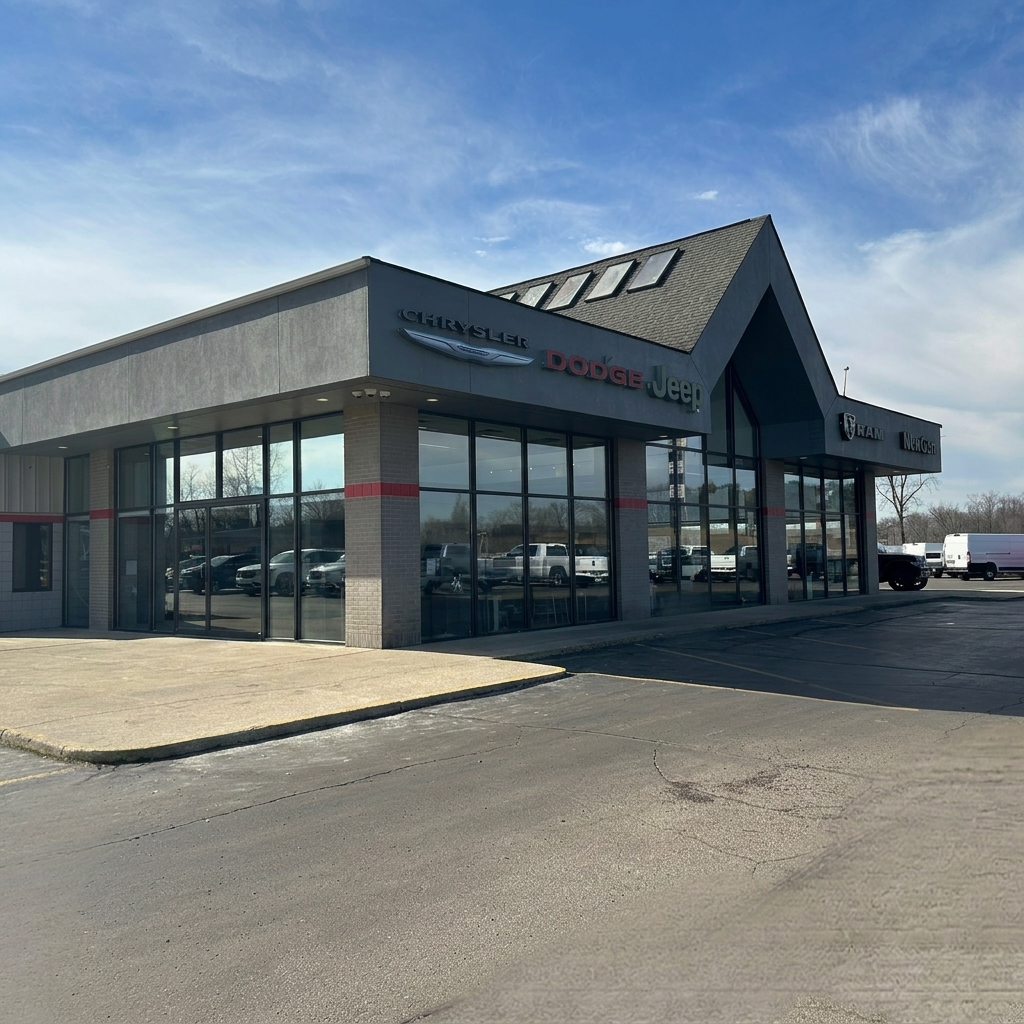
Official factory service is available directly at certified dealership service centers equipped with specialized diagnostic tools, factory-trained technicians, and genuine OEM inventory. Our service center at NewGen Chrysler Dodge Jeep Ram of Clinton provides comprehensive routine care, heavy drivetrain repairs, and specialized diesel maintenance backed by factory-certified mechanics. Servicing your truck with an authorized dealer ensures every repair bulletin, technical software update, and warranty standard is applied correctly to your vehicle.
Commercial operators and independent contractors relying on heavy-duty vehicles require minimal downtime and exact technical execution. Our facility features dedicated heavy-duty lifts, high-clearance service bays, and technicians certified in Cummins diesel systems, heavy duty transmissions, and commercial chassis alignment. You can learn more about our certified technicians and facility capabilities by reviewing our certified dealership staff profiles.
For local business owners operating light commercial fleets, keeping vehicles on a consistent preventative service schedule protects work site productivity. Our department handles everything from multi-point safety inspections to complete transmission flushes. Commercial fleet managers can explore options for keeping their fleet running strong by viewing our commercial vehicle inventory options to understand current chassis setups and powertrain requirements.
How Does Ram Factory Warranty Coverage Support Roadside Assistance?
Ram factory powertrain and bumper-to-bumper warranties include 24-hour roadside assistance coverage for 5 years or 60,000 miles on gas-powered models, and 5 years or 100,000 miles on diesel models. This coverage includes emergency towing to the nearest authorized dealership, flat tire changes, battery jump-starts, lockout services, and emergency fuel delivery. To request manufacturer-backed emergency support, drivers can contact Ram Roadside Assistance at 1-800-521-2779 directly.
Relying on factory-backed roadside protection guarantees that if your vehicle requires towing due to a mechanical breakdown, it is transported directly to a facility equipped with genuine Mopar equipment and factory-certified mechanics. Third-party towing providers often drop vehicles at non-authorized repair shops that lack specialized diagnostic tools, which can delay repairs and potentially compromise your remaining factory warranty coverage. Manufacturer roadside support ensures seamless communication between the tow driver, the dealership service bay, and your warranty claims portal.
Understanding how your warranty protects you during unexpected breakdowns provides real peace of mind on long trips. For comprehensive information about factory coverage details, owners can check our dealership homepage for active customer resources. Keeping your vehicle maintained according to factory schedule standards ensures that if a warrantable issue ever arises, your coverage remains fully intact without dispute.
Can Ram Service Centers Tailor Maintenance for Heavy Towing and Hauling?
Authorized service centers adjust fluid change frequencies, brake inspection points, and drivetrain lubrication schedules based on how heavily a truck is loaded and used. Standard maintenance schedules assume average commuting conditions, but frequent trailer towing, snowplowing, or heavy bed payload placement places severe thermal stress on the transmission, differential gearing, and braking systems. Tailoring service intervals to match real-world working conditions prevents premature component wear and costly drivetrain failures.
When a truck regularly hauls heavy loads across the agricultural dirt roads around Onsted, the rear differential, transfer case, and transmission operate at elevated fluid temperatures. In severe-duty environments, engine oil and filter changes should occur around 4,000 miles or 350 engine hours rather than waiting for the standard 10,000-mile ceiling. Furthermore, 4x4 transfer case fluid changes and differential flushes should be performed ahead of standard factory intervals to prevent thermal breakdown of protective lubricants.
A severe-duty maintenance plan focused on heavy towing includes specific inspection checkpoints:
- Inspecting front and rear brake pads, rotors, and caliper slide pins at every 4,000-mile oil change visit.
- Verifying trailer brake wiring harness integrity, 7-pin connector voltages, and integrated trailer brake controller signals.
- Checking transmission fluid color, level, and thermal degradation indicators during every multi-point inspection.
- Inspecting universal joints, drive shaft splines, and front axle CV boots every 7,500 miles for play or grease leakage.
Staying ahead of severe-duty wear protects your truck's performance during critical work tasks. You can read deeper maintenance advice and ownership tips by browsing our dealership automotive blog.
What Are the Service Requirements for the 3.0L Hurricane Twin-Turbo Engine?
Servicing the 3.0L Hurricane twin-turbo inline-six engine requires strict adherence to synthetic oil viscosity standards, precise spark plug replacement schedules, and careful cooling system maintenance. The standard-output version produces 420 hp and 469 lb-ft of torque, while the High-Output configuration generates 540 hp and 521 lb-ft of torque. Because twin-turbocharger assemblies operate under high thermal load and rotational speeds, using full-synthetic engine oil that meets Chrysler MS-6395 or material standards is essential to protect turbo bearings from oil coking.
Spark plug service schedules on the Hurricane engine are tighter than traditional naturally aspirated V8 engines. Ram specifies spark plug replacement at 60,000-mile or 120,000-mile intervals depending on output configuration, compared to 90,000 miles on the 3.6L V6 or 5.7L HEMI V8 engines. High-boost forced induction systems place increased electrical demand on spark plugs, making timely replacement critical for preventing cylinder misfires and maintaining fuel efficiency.
Cooling system integrity is another critical focus for twin-turbocharged engines. The Hurricane engine utilizes dual-cooling loops to manage intake charge temperatures and engine block cooling simultaneously. Coolant flushes and hose inspections should be conducted systematically, using only Mopar Ten-Year/150,000-Mile coolant to avoid internal corrosion or water pump seal damage.
When Should Engine and Cabin Air Filters Be Replaced on a Ram 1500?
Ram 1500 engine air filters should be replaced every 30,000 miles under normal conditions, while cabin air filters require replacement every 12,000 to 20,000 miles. However, driving in dusty environments, unpaved gravel, or agricultural conditions requires shortening filter service intervals significantly to maintain engine efficiency and interior air quality. Inspecting both filters during routine oil changes ensures restriction is caught before it impacts truck performance.
For drivers taking frequent trips near the Michigan Center reservoir, seasonal pollen, dust, and road debris can clog cabin filters rapidly, restricting HVAC airflow and stressing the blower motor. A dirty cabin filter reduces heating and air conditioning efficiency while allowing allergens into the interior. Replacing the cabin air filter every 12,000 miles keeps the defrost system clear and cabin air fresh.
A clogged engine air filter restricts air volume entering the intake manifold, causing the engine control module to compensate by altering fuel delivery, which reduces fuel economy and engine responsiveness. On forced-induction models, an air restriction forces turbochargers to work harder to draw air, elevating operating temperatures. Replacing the engine filter at recommended intervals guarantees clean airflow and protects turbo compression wheels from fine dust abrasion. If you ever have questions regarding filter replacements or routine care, feel free to contact our service team for direct advice.
Are Quick-Lube Oil Changes Really Cheaper Than Dealer Service?
Quick-lube oil change shops may advertise lower upfront promotional prices, but they often cost more over time due to bulk non-spec oil use, generic filters, and missed factory inspection protocols. Quick-lube locations focus on high-speed volume rather than brand-specific technical accuracy. They frequently lack factory diagnostic software, cannot check for active technical service bulletins or safety recalls, and rarely stock specialized Mopar filters designed for high-pressure Ram lubrication systems.
When servicing a truck at our dealership, every oil change includes a comprehensive multi-point inspection performed by factory-trained technicians using high-grade synthetic oil and genuine Mopar filters. On 2026 Ram 1500 trucks, the oil life monitoring system tracks operating conditions, but factory guidelines require servicing engine oil and filter at least every 10,000 miles, 12 months, or 350 engine hours. On heavy-duty models equipped with the 6.7L Cummins turbo diesel, service intervals max out at 15,000 miles or 500 engine hours, requiring specialized dual fuel filter changes that quick-lube shops rarely stock or perform correctly.
The value of dealership maintenance comes from total vehicle care rather than a 10-minute drive-thru speed run. Our certified technicians check software calibration levels, inspect brake pads and suspension joints for abnormal wear, measure tire tread depth, and ensure your factory warranty record is updated in the manufacturer database. To learn more about our commitment to complete vehicle maintenance, you can read about our dealership history or get driving directions to our facility at 1111 W Michigan Ave, Clinton, MI 49236 to experience professional, factory-backed service firsthand.
© 2026 NewGen Chrysler Dodge Jeep Ram of Clinton. All rights reserved.