
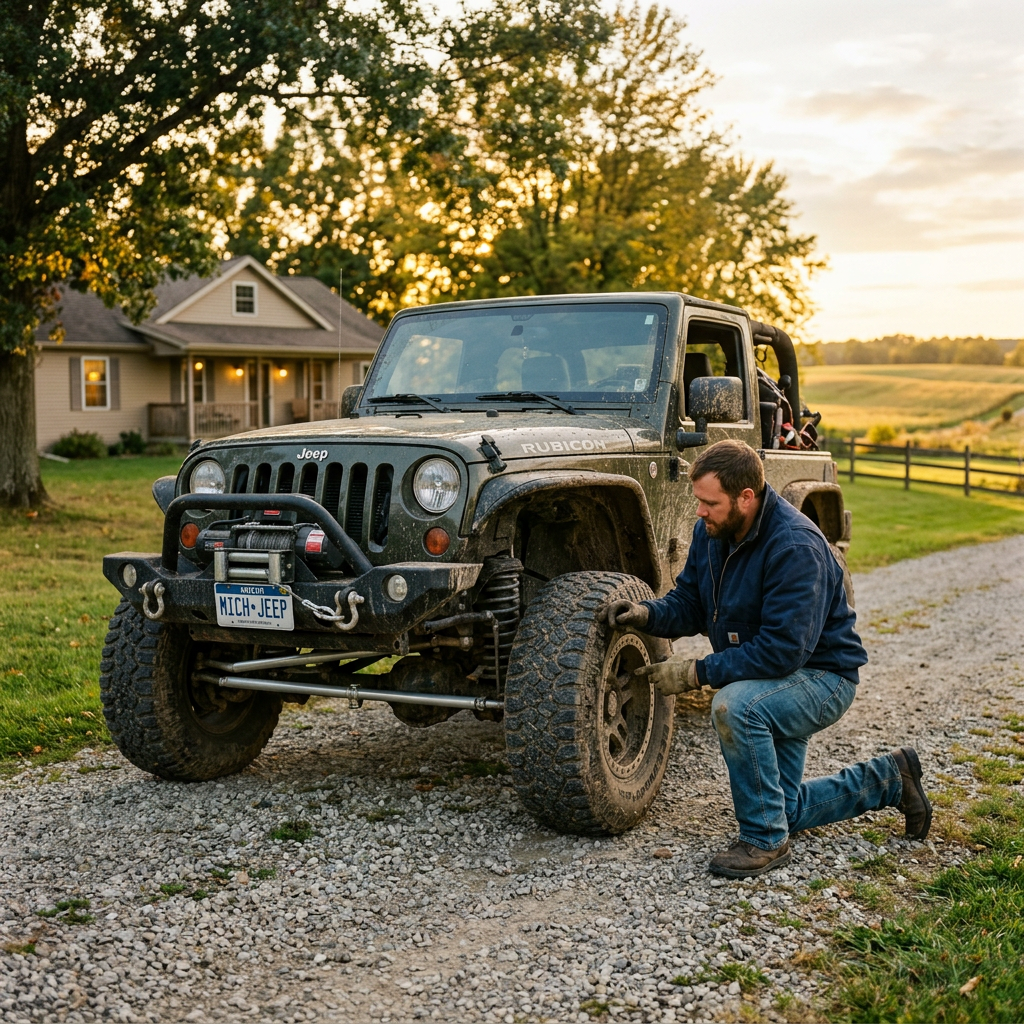
Hitting the dirt, navigating rocky paths, or exploring the areas around Wamplers Lake near Onsted requires a vehicle built for punishment. However, the real work of owning a trail-rated machine begins when you return to pavement. A thorough post-trail inspection is the single most effective way to prevent minor trail wear from turning into an expensive mechanical failure on your Monday morning commute.
Our service team always recommends starting your post-trail inspection from the ground up. Before you leave the trail area, perform a quick visual walk-around to check for obvious body damage, tire punctures, or leaking fluids. Once you are back on solid ground, a more detailed inspection of your suspension, steering components, and underbody armor is required. If you notice any unusual vibrations, fluid spots on your driveway, or structural bends, it is time to have a certified technician take a look.
For quick checkups, you can roll right into our Mopar express service lane for rapid, routine maintenance without an appointment. If your trail adventures have resulted in more complex concerns, such as a misaligned axle or damaged skid plates, you can easily schedule your service appointment online to secure a dedicated diagnostic slot.
To keep your vehicle performing at its peak, we utilize specialized diagnostic equipment and factory training designed specifically for the unique demands of the brand's 4x4 systems. Whether you are driving a traditional gas-powered model or want to explore Jeep hybrid service options for your plug-in model, our technicians understand how to care for your drivetrain. If you are noticing any post-trail issues, you can schedule certified Mopar maintenance with our specialists, drop by our service center location, or give us a quick call at (517) 456-6555 to discuss what you are experiencing.
Our team is fully equipped to support the entire lineup, including the versatile new Jeep Compass, the rugged new Jeep Wrangler, and the family-friendly new Jeep Grand Cherokee. We also specialize in maintaining specific capability packages, whether you drive a trail-ready Compass Trailhawk, a comfortable Compass Limited, or an everyday adventurer like the Compass Latitude. For larger luxury off-roaders, we provide factory-backed care for the Grand Cherokee Limited and the ultra-premium Grand Cherokee Summit Reserve. If you want to check your coverage details before booking, you can also view manufacturer service incentives and warranty program parameters online.
Table of Contents
- Why Washing Mud Off Your Jeep Immediately Prevents Long-Term Damage
- How to Clean a Synthetic Winch Line and Maintain Your Recovery Gear
- When to Change Your Jeep's Differential Fluid and Inspect Steering Linkages
- Managing the Jeep Death Wobble with Proper Suspension and Steering Alignment
- Understanding Wrangler Off-Road Specs: Ground Clearance and Trail-Ready Features
- Quick Answers Before You Visit
- Your Trusted Partner for Trail-Ready Service in Clinton
Why Washing Mud Off Your Jeep Immediately Prevents Long-Term Damage
It is tempting to leave a thick coating of dried mud on your 4x4 as a badge of honor after a weekend of riding. However, letting mud dry on your vehicle is one of the fastest ways to accelerate mechanical wear and structural degradation. Mud is highly abrasive and acts like sandpaper on moving parts, quickly destroying rubber seals, boot covers, and brake components.
In our heavy road-salt region, keeping the undercarriage clean is doubly important. Dried mud acts like a sponge, trapping moisture, road salt, and acidic soil against the metal frame rails and suspension links. This trapped moisture creates a breeding ground for rust and corrosion. Furthermore, large clumps of mud that dry on rotating assemblies—such as the driveshafts, brake rotors, or wheels—can throw the entire vehicle out of balance, resulting in severe driveline vibrations at highway speeds.
To protect your vehicle's sensitive underbody, you should wash it thoroughly as soon as you return from the trail. Use an undercarriage water broom or a high-pressure washer to flush out the inside of the frame rails through the factory drainage holes. Pay close attention to the areas around the brake calipers, steering knuckles, and shock absorbers. If you want to see visual guides on how to properly care for your vehicle's exterior and mechanical components, you can watch our service video gallery for expert tips.
For those who want to add extra layers of protection, you can shop Mopar protective accessories to find heavy-duty splash guards, differential covers, and specialized cleaning solutions. If you are driving a pre-owned vehicle that has seen its share of muddy trails, you can also check out our pre-owned maintenance specials to keep your vehicle's protective systems in top shape.
How to Clean a Synthetic Winch Line and Maintain Your Recovery Gear
A winch is an invaluable tool when navigating challenging terrain, but it requires regular maintenance to remain reliable in an emergency. Synthetic winch lines have largely replaced steel cables due to their lightweight design and safety advantages, but they are highly susceptible to damage from trapped dirt and grit. When a synthetic line is pulled under load, any sand or dirt trapped between the fibers acts as a tiny saw, cutting the microscopic strands from the inside out.
Washing a synthetic winch line is a straightforward process that should be completed after any dusty or muddy outing:
- Unspool the entire line: Pull the synthetic rope completely off the winch drum so you can inspect its entire length for frays, cuts, or flat spots.
- Submerge and agitate: Place the coiled line into a bucket of clean, lukewarm water. Gently agitate the rope by hand to loosen and release the trapped dirt particles.
- Avoid harsh detergents: Never use harsh chemical cleaners, degreasers, or high-pressure washers directly on the rope, as these can break down the synthetic polymers.
- Air dry completely: Hang or lay the line out to dry completely in a shaded area. Avoid direct sunlight, as prolonged UV exposure can weaken the synthetic fibers over time.
- Spool under tension: Once dry, spool the line back onto the winch drum neatly under light tension to ensure it does not bind or pinch during its next use.
If you discover any frays or flat spots during your inspection, do not risk using a compromised line. You can order replacement recovery gear online through our parts department to ensure you always have safe, reliable equipment. Keeping your recovery gear in prime condition ensures that your vehicle is always prepared for the unexpected. For those looking to configure a vehicle built from the ground up for heavy-duty recovery work, you can custom order your vehicle with factory-installed winches and heavy-duty bumper packages. To learn more about our commitment to supporting local outdoor enthusiasts, you can visit our homepage to explore our complete service philosophy.
When to Change Your Jeep's Differential Fluid and Inspect Steering Linkages
The front and rear differentials on a 4x4 bear the brunt of the load when crawling over rocks or wading through water. Under normal driving conditions, differential fluid can last for tens of thousands of miles. However, off-road use drastically accelerates the breakdown of these lubricants, especially if you regularly submerge your axles in water or deep mud.
Water contamination is the primary threat to your differentials. When hot axles are submerged in cold water, the sudden temperature drop creates a vacuum that can draw water in through the axle vent tubes or worn seals. Water mixes with the gear oil, creating a milky, frothy emulsion that lacks the lubricating properties required to protect the ring and pinion gears. If left unchanged, this contaminated fluid will cause rapid gear wear, overheating, and eventual axle seizure.
As a general rule, you should check your differential fluid immediately after any deep water crossings. If the fluid looks milky or discolored, it must be drained and replaced with fresh gear oil. To get the exact lubricants specified for your heavy-duty axles, you can order genuine Mopar gear oil directly from our parts center.
While you are under the vehicle checking fluids, it is critical to inspect your steering linkage for trail damage. Have an assistant turn the steering wheel slowly from side to side while you watch the tie rods, drag link, and track bar. Look for any visible bends in the metal bars, excessive play in the steering joints, or torn rubber grease boots that could allow dirt to enter. If you are looking for a highly capable vehicle with robust factory steering components, you can use our vehicle finder tool to locate models equipped with heavy-duty Dana axles. To speak with our experienced technicians about upgrading or repairing your steering system, you can meet our dealership service staff online to find the right specialist for your needs.
Managing the Jeep Death Wobble with Proper Suspension and Steering Alignment
The term "death wobble" refers to a violent, uncontrolled shaking of the front suspension and steering system, typically triggered by hitting a bump at highway speeds. This phenomenon is highly unnerving and can make the vehicle difficult to control. It is almost exclusively caused by loose, worn, or damaged front suspension and steering components rather than a single failing part.
The most common culprit behind this issue is a loose or worn front track bar bolt or bushing. The track bar keeps the front axle centered under the frame; if there is any play in its mounting points, the axle can shift side to side, initiating a rapid harmonic oscillation. Other contributing factors include worn ball joints, loose tie rod ends, a damaged steering stabilizer, or improper wheel alignment.
Preventing and resolving this issue requires systematic maintenance:
- Torque checks: Regularly verify that all front-end steering and suspension bolts are torqued to exact factory specifications.
- Bushing inspections: Check the rubber and polyurethane bushings on the track bar, control arms, and sway bars for cracking, splitting, or dry rot.
- Ball joint testing: Lift the front axle off the ground and check for vertical or horizontal play in the wheel hubs, which indicates worn ball joints.
- Professional alignment: Ensure your caster, toe, and camber angles are set correctly, especially if you have installed a suspension lift kit.
If you are experiencing steering vibrations, do not rely on a new steering stabilizer to mask the underlying issue. A stabilizer is designed to damp normal road feedback, not to hold a loose steering system together. If you need replacement steering components, our Mopar parts center stocks heavy-duty steering components, track bars, and ball joints designed to restore factory stability. If you want to discuss your suspension setup with our team, you can contact our service team today for a professional inspection. For those interested in our latest vehicle programs and service options, you can also view our current program details to see how we support our local community.
Understanding Wrangler Off-Road Specs: Ground Clearance and Trail-Ready Features
When it comes to conquering demanding terrain, the 2026 Jeep Wrangler Rubicon sets the benchmark for factory-built capability. Built specifically for extreme off-roading, the Rubicon trim comes equipped with heavy-duty hardware designed to handle the toughest trails. From the factory, the Rubicon offers an impressive 10.8 inches of ground clearance, allowing it to clear large obstacles without scraping its underbody.
A key feature of the Rubicon's off-road prowess is its electronic sway bar disconnect system. On the highway, the sway bar remains connected to limit body roll and ensure stable, predictable handling. Once you hit the trail, pressing the sway bar disconnect button electronically uncouples the front sway bar, allowing the front wheels to drop and compress independently. This dramatically increases front wheel articulation, keeping all four tires firmly planted on the ground for maximum traction over uneven rocks and deep ruts.
To protect its vital mechanical components, the Wrangler features robust underbody armor. Heavy-duty steel skid plates shield the transfer case, fuel tank, and transmission oil pan from trail impacts. If you are looking for an off-road vehicle with an open-bed design, the 2026 Jeep Gladiator Rubicon starts at $46,810 and features a 3.6L engine paired with an 8-speed automatic transmission, delivering 285 hp and 260 lb-ft of torque alongside a towing capacity of 4,500 lbs. For those who prefer a premium SUV with advanced off-road drive modes, the 2026 Jeep Grand Cherokee Trailhawk starts at $46,320 and features a 2.0L engine producing 324 hp and 332 lb-ft of torque, offering a maximum towing capacity of 6,200 lbs.
If you need to replace damaged skid plates or upgrade your underbody protection, you can order genuine protective parts through our department. For those looking for value-focused project vehicles or reliable pre-owned trail machines, you can browse our pre-owned vehicles under $20,000 to find a great starting point. To stay up to date on the latest off-road maintenance tips and vehicle capability guides, feel free to read our latest service blog posts.
Quick Answers Before You Visit
Q: Is it safe to drive on the highway with aired-down tires?
No, driving at highway speeds with low tire pressure is highly dangerous. Lowering tire pressure to around 15 psi is excellent for increasing traction and footprint size on the trail, but on paved roads, it causes rapid heat buildup, unstable cornering, and potential tire blowout. Always reinflate your tires to the recommended street pressure immediately after leaving the trail.
Q: Which vehicle has easier body panel removal, the Bronco or the Wrangler?
The Wrangler is designed for complete open-air freedom, but removing its doors requires disconnecting the wiring harnesses and unbolting the hinges, which also removes the side mirrors since they are mounted directly to the doors. The Bronco keeps its side mirrors mounted to the body cowl, allowing you to retain mirror visibility when the doors are off, though both vehicles require dedicated tool kits for panel removal.
Q: How often should I change my differential fluid if I only go off-roading occasionally?
For occasional trail use, you should inspect the fluid annually or every 15,000 miles. However, if you submerge your axles in water or deep mud during a weekend outing, you should check the fluid immediately afterward. Water can bypass seals and contaminate the gear oil, requiring an immediate fluid change to prevent internal gear damage.
Q: What is the most common cause of steering wheel shimmy after a trail ride?
The most common cause is dried mud or clay caked on the inside of your wheels or wrapped around the driveshafts, which throws the rotating assemblies out of balance. A thorough cleaning of the wheels and suspension components usually resolves the issue. If the vibration persists after cleaning, it could indicate a lost wheel weight, a bent steering linkage, or an unseated tire bead.
Q: Can I use standard car wash soap to clean my synthetic winch line?
No, you should avoid using standard car wash soaps, dish soaps, or degreasers on synthetic winch lines, as the chemicals can degrade the synthetic fibers and strip away protective coatings. The best method is to submerge and agitate the line in a bucket of clean, lukewarm water to flush out abrasive grit, then let it air dry completely in the shade.
Your Trusted Partner for Trail-Ready Service in Clinton
Keeping your vehicle in peak mechanical condition requires specialized expertise and a commitment to quality. At NewGen Chrysler Dodge Jeep Ram of Clinton, we value your time and understand the unique demands of off-road vehicle ownership. Our certified technicians use genuine parts to keep your vehicle running strong, with transparent pricing and convenient scheduling tailored to your busy life.
Whether you are commuting from Michigan Center or heading out for a weekend of camping near Napoleon, our service center is your go-to destination for professional maintenance. We use factory-certified diagnostic tools and genuine components to ensure every repair meets strict manufacturer standards, preserving your vehicle's performance and warranty protection.
Do not let minor trail wear turn into a major mechanical issue. You can book your service appointment online today to have our specialists perform a comprehensive multi-point inspection. If you would like to speak directly with our service advisors or get directions to our maintenance facility, you can contact our service team or stop by our dealership located at 1111 W Michigan Ave, Clinton, MI 49236. To learn more about our community involvement, our expert staff, and our dedication to providing hassle-free maintenance, you can also learn about our dealership philosophy online.
© 2026 NewGen Chrysler Dodge Jeep Ram of Clinton. All rights reserved.