

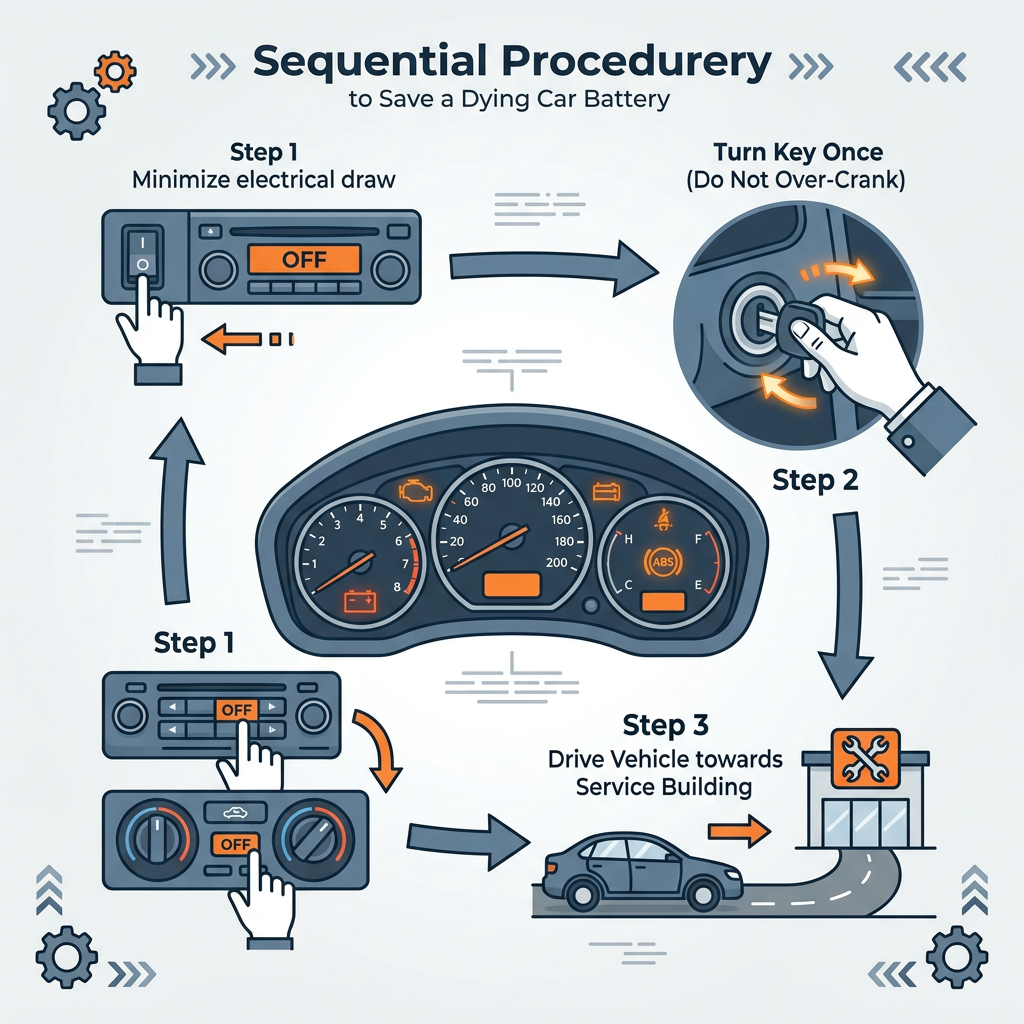
A low car battery can quickly disrupt your day, especially if you are preparing for an early morning commute or heading home after a long afternoon. When you turn the key or press the start button and hear a sluggish, labored crank—or worse, a rapid clicking sound—your vehicle is telling you that its electrical system is struggling. The immediate priority is to preserve whatever remaining charge is left in the cells and avoid leaving yourself stranded.
First, turn off every single electrical accessory in your vehicle. This includes the air conditioning, radio, seat heaters, phone chargers, and all interior lights. By eliminating these secondary draws, you ensure that every drop of remaining amperage is directed solely to the starter motor. If the engine manages to turn over and start, do not turn it off. Keep the vehicle running and drive it directly to a professional service facility. The alternator needs time to send current back into the cells, and shutting the engine down too early will likely leave you unable to restart it.
For drivers navigating the rural routes around Onsted, finding yourself with a weak battery far from home can be stressful. If your vehicle fails to start entirely, do not continuously crank the ignition, as this can overheat the starter motor and completely drain the remaining voltage. Instead, seek professional assistance. You can reach our service team by giving us a call at (517) 456-6555 to discuss your options, or if you need to coordinate a drop-off, you can find our service center location to plan your route. If your vehicle is still under warranty, remember that manufacturer-backed emergency support is available. You can contact Jeep, Dodge, Chrysler, Ram Roadside Assistance: 1-800-521-2779 for reliable towing or a professional jump-start directly to our facility.
Table of Contents
- Recognizing the Early Warning Signs of a Weakening Car Battery
- Understanding Why Extreme Heat and Cold Weather Drain Your Battery
- How to Safely Jump Start a Car with a Low Battery
- Cold Cranking Amps vs Cranking Amps and Trickle Charging Safely
- What Causes Terminal Corrosion and What to Expect During Replacement
- Common Questions About Maintaining and Replacing Your Vehicle Battery
- [Schedule Your Battery Diagnostic and Replacement at your convenience](#schedule-your-battery-diagnostic-and-replacement-at your convenience)
Recognizing the Early Warning Signs of a Weakening Car Battery
Many drivers do not realize their battery is failing until the vehicle completely refuses to start. However, lead-acid batteries almost always exhibit clear warning signs before they fail entirely. Recognizing these indicators early can save you from an inconvenient breakdown on the side of the road.
One of the most common early warning signs is a slow engine crank. If your engine takes several seconds longer to start than usual, or if the cranking sounds heavy and tired, the battery is struggling to deliver the necessary amperage. You might also notice that your headlights and dashboard displays appear dim when the engine is idling, but brighten slightly when you press the gas pedal. This occurs because the alternator is forced to carry the electrical load because the battery can no longer hold a stable charge.
Other physical indicators include a persistent battery warning light on your instrument cluster or electrical glitches in your cabin, such as power windows that roll up slower than usual. If you suspect your vehicle's starting system is losing its strength, it is wise to have it tested immediately. You can drop by to visit our express lane for a quick, diagnostic charge test. To see how our certified technicians perform these digital battery health checks, you can watch our video gallery online. Our team is dedicated to keeping your vehicle reliable, and you can meet our dealership staff to find a service advisor who can walk you through our transparent testing process.
Understanding Why Extreme Heat and Cold Weather Drain Your Battery
It is a common misconception that cold weather is the only seasonal threat to automotive batteries. In reality, summer heat is actually more damaging to the internal chemistry of a car battery, while winter cold simply exposes the damage that has already occurred. Understanding this seasonal cycle is crucial for maintaining vehicle reliability in Michigan's variable climate.
During the hot summer months, extreme under-hood temperatures accelerate the internal chemical reactions inside a lead-acid battery. This acceleration leads to two major problems: internal plate corrosion and the evaporation of the liquid electrolyte solution inside the cells. Once the liquid level drops and the internal structure degrades, the battery's overall capacity is permanently reduced. When winter arrives in Michigan Center, the cold weather causes the engine oil to thicken, requiring much more power to turn the engine over. At the same time, sub-freezing temperatures temporarily reduce a battery's chemical activity, cutting its available cranking power by roughly 30% to 50% on the coldest days.
To prevent seasonal failures, we recommend scheduling a preventative inspection before the extreme weather sets in. You can easily schedule Mopar service with our certified technicians to have your starting system tested. If you are driving an older vehicle and want to ensure absolute winter reliability, you can browse our used inventory under $20,000 for a model equipped with modern cold-weather features. For more information about our comprehensive vehicle care and maintenance tips, feel free to visit our homepage.
How to Safely Jump Start a Car with a Low Battery
When a battery is too weak to turn the engine over, a jump-start is often the quickest way to get back on the road. However, modern vehicles are packed with sensitive electronic control modules, and performing a jump-start incorrectly can cause costly electrical damage. Following a strict safety sequence is essential to protect both vehicles.
To begin, position the booster vehicle close to the disabled car without the two vehicles touching, turn off both ignitions, and set the parking brakes. Identify the positive and negative terminals on both batteries. Connect the first red positive clamp to the positive terminal of the dead battery, then attach the other red positive clamp to the positive terminal of the booster battery. Next, connect the black negative clamp to the negative terminal of the booster battery. Finally, clamp the remaining black negative clamp to an unpainted metal surface on the engine block of the disabled car, away from the battery itself, to prevent sparks near explosive hydrogen gas.
Start the booster vehicle and let it idle for several minutes to transfer charge. Then, attempt to start the disabled vehicle. Once it starts, disconnect the cables in the exact reverse order of how they were connected. If you prefer to have a professional inspect your charging system after a jump, you can schedule your service at your convenience using our online portal. For more detailed step-by-step automotive maintenance guides, you can read our latest blog posts. Additionally, if you are driving an older vehicle and considering upgrading to a newer model with a fresh factory warranty, you can view employee pricing offers currently available at our dealership.
Cold Cranking Amps vs Cranking Amps and Trickle Charging Safely
When shopping for a replacement battery, you will encounter two critical ratings: Cold Cranking Amps and Cranking Amps. Understanding the difference between these two measurements is vital for ensuring your vehicle has enough power to start during harsh Michigan winters.
Cold Cranking Amps measures the number of amps a 12-volt battery can deliver at 0 degrees Fahrenheit for 30 seconds while maintaining a minimum voltage of 7.2 volts. This rating is the most important spec for drivers in northern climates, as it reflects the battery's ability to start an engine in freezing temperatures. In contrast, Cranking Amps measures the same output but at a warmer temperature of 32 degrees Fahrenheit. A battery with high cranking amps but low cold cranking amps may struggle on a freezing morning in Napoleon, where sub-zero temperatures require maximum cold-weather starting power.
If you store a vehicle, such as a summer cruiser or a heavy-duty work truck, over the winter, using a trickle charger is an excellent way to maintain battery health. It is safe to leave a smart trickle charger connected all winter, provided it features an automatic float mode. Unlike older manual chargers that continuously pump current and can boil the battery dry, a smart maintainer monitors the voltage and automatically switches to a low-amperage monitoring mode once the battery is fully charged. If you need help choosing the right battery specifications or maintaining your vehicle's starting system, please schedule service with our team, or feel free to contact our team at your convenience with your technical questions. If you are passionate about automotive technology and want to join our service department, you can also apply for dealership careers through our website.
What Causes Terminal Corrosion and What to Expect During Replacement
The white, blue, or green powdery substance that accumulates around car battery terminals is a common cause of starting issues. This corrosion is typically caused by hydrogen gas venting from the acidic electrolyte solution inside the battery. As the gas escapes, it reacts with the metal terminals and cable connectors, forming lead sulfate or copper sulfate crystals. This buildup acts as an insulator, restricting the flow of electrical current from the battery to the starter motor and preventing the alternator from fully recharging the cells.
During a professional battery replacement at our service center, our certified technicians do more than simply swap the physical unit. We perform a comprehensive starting and charging system diagnostic. This process includes:
- Testing the alternator's voltage output under load to ensure it is recharging the battery properly.
- Checking the starter motor's draw to confirm it is not pulling excessive current.
- Cleaning the cable connectors with specialized terminal brushes and neutralizing agents.
- Applying a protective anti-corrosion spray to the new terminals to prevent future chemical buildup.
When replacing your battery, we always recommend using genuine manufacturer components to ensure perfect fitment and electrical compatibility. You can order genuine Mopar parts directly through our department, or browse our catalog to shop Mopar accessories for protective battery blankets and maintainers. To explore our full inventory of replacement components, you can shop OEM parts online. If you are looking for a specific vehicle and want to ensure it comes equipped with a fresh, reliable starting system, you can use our CarFinder tool to locate the perfect model.
Common Questions About Maintaining and Replacing Your Vehicle Battery
Q: What are the primary signs that my battery is failing?
The most common indicators include a sluggish engine crank when starting, dimming headlights when idling, and a rapid clicking sound when you turn the key. You may also notice the battery warning light illuminated on your dashboard, or experience minor electrical glitches like slow-moving power windows.
Q: How long does a typical car battery last?
On average, an automotive lead-acid battery lasts between three and five years. This lifespan can vary significantly based on local weather extremes, your daily driving habits, and how often the vehicle is left sitting idle for extended periods.
Q: Is labor included in the cost of a battery replacement?
Labor is typically billed as a separate, nominal charge on top of the physical battery price. At our service center, this fee covers the professional installation, terminal cleaning, anti-corrosion treatment, and a full diagnostic scan of your starting and charging system.
Q: Can I use a higher CCA battery than what my vehicle came with?
Yes, installing a battery with a higher Cold Cranking Amps rating than the original equipment is generally safe and can provide extra starting reliability during cold winters. However, you must ensure that the physical group size and terminal configuration match your vehicle's specifications exactly.
Schedule Your Battery Diagnostic and Replacement at your convenience
Maintaining a healthy battery is the single best way to ensure your vehicle starts reliably every time, regardless of the weather. If you have noticed any warning signs of a weak charge, do not wait for a complete breakdown to take action. Our factory-trained technicians are ready to perform a quick, accurate diagnostic test on your starting system. You can easily book an appointment by using our online portal to schedule your service at your convenience.
If your vehicle requires a replacement, we stock a complete inventory of high-quality starting components designed specifically for your Chrysler, Dodge, Jeep, or Ram vehicle. If you want to explore our current maintenance offers before your visit, you can check out our view current offers or look through our view current service information for parts and service discounts. For those driving pre-owned models, we also feature rotating view current maintenance information to help keep your maintenance costs manageable.
To learn more about our commitment to quality maintenance and customer care, you can learn about our dealership online. If you are interested in ordering a brand-new vehicle equipped with the available cold-weather packages and remote starting technology, you can custom order your vehicle directly through our team. For questions about modern cabin amenities and connectivity features, you can also learn about Uconnect technology. For personalized assistance or to speak directly with a service advisor, please give our team a call, or stop by our service drive at 1111 W Michigan Ave, Clinton, MI 49236 to get your battery tested at your convenience.
© 2026 NewGen Chrysler Dodge Jeep Ram of Clinton. All rights reserved.