

Today, we're interviewing Brandon Delaney, our Service Advisor at NewGen Chrysler Dodge Jeep Ram of Clinton. With 1 year of experience, Brandon is uniquely qualified to answer your questions and provide expert insights on this topic. In this interview, Brandon breaks down the critical safety standards for tire repairs, the technical differences between temporary fixes and permanent solutions, and how to maintain the structural integrity of your vehicle's connection to the road. Readers will gain actionable advice on identifying non-repairable damage and ensuring their families remain safe during every commute.
Q: Brandon, when a customer comes in with a nail in their tread, how do you determine if that flat tire can actually be plugged safely?
A: That's a question we handle daily, and the answer really comes down to the precise location and size of the puncture. According to USTMA guidelines, we can only perform a safe repair if the damage is located within the central tread area of the tire. If the puncture is in the shoulder or the sidewall, the tire is unfortunately non-repairable because those areas experience the most flexing while you drive. A plug or patch in those spots will eventually fail due to that constant movement. We also have to measure the diameter of the hole; if it is larger than 1/4 inch or about 6 mm, the structural steel belts inside the tire may be too compromised to hold a repair securely. For drivers coming from Onsted, where gravel back roads can sometimes hide sharp debris, catching these issues early is vital to avoid a high-speed blowout.
A: Beyond the location, we have to look for secondary damage. If a tire has been driven on while significantly underinflated, the internal casing can suffer heat discoloration or sidewall component separation that isn't always visible from the outside. That is why we always recommend that you schedule service rather than attempting a quick fix in the driveway. Our technicians will remove the tire from the wheel to inspect the inner liner for any hidden structural damage. If you are nearby and notice your pressure light is on, you can (517) 456-6555 to see how quickly we can get you in, or simply find our service center on Michigan Avenue. Taking the time to book a professional inspection ensures that a simple nail doesn't turn into a much more dangerous situation on the road.
Q: There seems to be some confusion between a simple tire plug and a professional patch; what is the technical difference that owners should care about?
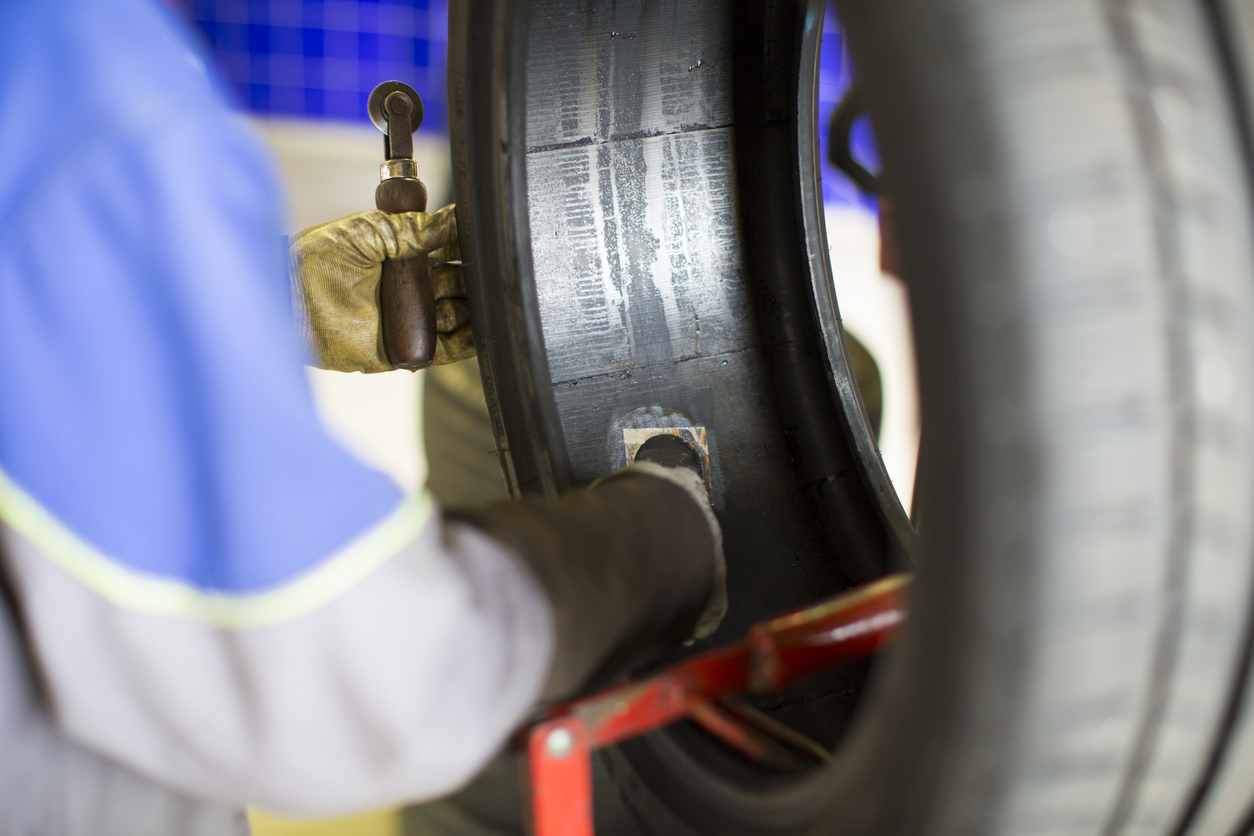
A: Many people are familiar with the "string plug" kits you find at auto parts stores, which are essentially a rubber strip inserted from the outside. While those might get you home in an emergency, they are not considered a permanent or safe repair by industry standards. A professional patch-plug combination is the gold standard we use here. This method involves a single unit with a rubber stem that fills the puncture hole—the plug part—and a reinforced backing that seals the inner liner—the patch part. This dual-action approach prevents moisture from reaching the internal steel belts, which prevents corrosion and eventual tire failure. It’s the kind of reliability you want when you’re driving a Jeep Grand Cherokee through a Michigan winter where road salt can easily find its way into an unsealed puncture.
A: I often tell our customers that a plug alone is like putting a cork in a bottle without a seal; it might hold for a while, but it isn't truly integrated into the tire's structure. When we apply a vulcanizing patch-plug from the inside, it becomes a permanent part of the tire. This maintains the tire's original speed rating and ensures it can handle the weight and performance demands of modern vehicles. For instance, the off-road capability of a Jeep Compass puts unique stresses on the rubber, and a simple external plug just isn't designed to withstand that kind of work. We also want to make sure our long-term customers are taken care of, so we often discuss maintenance programs that help keep your set of tires in top shape for their entire lifespan.
Q: Brandon, are there specific scenarios where you have to tell a driver that a tire simply cannot be repaired at all?
A: Absolutely, and safety is the only factor in that decision. A tire is non-repairable if there are multiple punctures that are too close together—typically less than 16 inches apart—or if they are not at least 90 degrees apart on the circumference. We also cannot repair a tire that has already been plugged or patched in the same area. Furthermore, if the tread depth has worn down to 2/32 of an inch or less, the tire has reached the end of its legal life and must be replaced. In a small town like Chelsea, where families rely on their vehicles for school runs and daily commutes, we take these limits very seriously. If we see visible internal damage or bulges in the sidewall, that tire is a safety hazard and needs to be pulled from service immediately.
"After a year in the service bay, the most important thing I can tell you is that a tire's sidewall is its backbone; once that is compromised by a puncture or a 'run-flat' situation, no amount of patching can make it safe again."
A: Another big factor is the type of tire. Many run-flat tires are designed to get you to safety after a puncture, but the act of driving on them with zero pressure often destroys the internal support structures. In those cases, even if the hole is in the tread, we usually have to replace the unit. To help with the cost of unexpected replacements, we always check our current parts incentives to see if we can save the customer some money. Our authorized parts center stocks the exact OEM specifications for your Ram or Chrysler, ensuring the replacement matches your other tires perfectly. If we don't have a specific specialty tire on the rack, you can easily request genuine components through our system to get your vehicle back to factory standards quickly.
Q: If someone notices a nail but the tire isn't flat yet, is it okay to keep driving, and what should they do in an emergency?
A: I strongly advise against driving with a nail in the tire, even if the TPMS hasn't alerted you yet. As the tire rotates, that nail shifts and acts like a wedge, slowly tearing the internal rubber and potentially causing a sudden blowout at highway speeds. If you are out and about and suffer a total flat, remember that Chrysler, Dodge, Jeep, and Ram vehicles come with manufacturer-backed Roadside Assistance. You can reach Jeep, Dodge, Chrysler, Ram Roadside Assistance: 800-521-2779 for professional help. They can help you install your spare or tow you directly to us. We frequently post tips on our service advice blog about how to locate your jack and spare tire—which in many 2026 SUVs is found under the rear cargo floor—so you aren't searching for tools in the dark.
A: Once you get the vehicle to us, we can assess if a repair is possible or if we need to look at replacement options. We often have seasonal service coupons that cover tire inspections and rotations, which are great opportunities to catch these embedded objects before they cause a failure. For those who are looking for a very specific setup, we can even assist with ordering specialized equipment directly from the factory. The goal is always to keep you moving safely. If you’re commuting from Michigan Center and hit road debris, don't wait for the tire to go flat; bring it in as soon as you spot the object so we can save the tire before the damage spreads.
Q: When a tire can't be repaired, do you always have to replace them in pairs, especially on all-wheel-drive vehicles?
A: This is a critical point for All-Wheel Drive (AWD) and Four-Wheel Drive (4WD) systems. On these vehicles, all four tires need to have a similar tread depth—usually within 2/32 to 3/32 of an inch of each other. If you put one brand-new tire on a vehicle where the other three are half-worn, the difference in rolling circumference can trick the transfer case and differentials into thinking a wheel is slipping. This causes constant mechanical strain and can lead to very expensive drivetrain repairs. In those cases, we usually recommend replacing at least the pair on the same axle, or sometimes all four, to protect the vehicle's long-term health. We have a great selection of new tires designed specifically for the torque requirements of our rugged 4x4 models.
A: For front-wheel or rear-wheel drive vehicles, replacing in pairs on the same axle is the standard to maintain balanced handling and braking performance. If you're concerned about the investment, we can assess your current vehicle's value as part of a larger maintenance discussion, or we can look for discounts on genuine parts to help manage the cost. Using Mopar-approved tires ensures that the load index and traction ratings match what the engineers intended for your specific model. It’s all about maintaining that factory-fresh feel and ensuring the safety systems, like Electronic Stability Control, can function exactly as they were designed to during a sudden maneuver.
Q: How do your technicians find those tiny, "ghost" leaks, and how do you ensure the TPMS is working right after a repair?
A: Finding a slow leak can be tricky, so we use a combination of high-pressure submersion tanks and soapy water solutions to spot the bubbles from even the smallest pinhole. Once the leak is found and repaired, the job isn't done until we've addressed the Tire Pressure Monitoring System (TPMS). Whenever a tire is broken down, we inspect the TPMS sensor, replace the seals and grommets, and install a new valve core. This ensures the system remains airtight and continues to provide accurate data to your dashboard. After the repair, we perform a relearn procedure and a short test drive to confirm the system is calibrated. If you've been seeing a persistent warning light, you can call our service desk or stop by our Clinton location for a quick diagnostic check.
A: We also offer a range of maintenance specials that include comprehensive digital inspections, where we check the battery, brakes, and tires all at once. This proactive approach is the best way to avoid being stranded. A properly calibrated TPMS is your first line of defense against premature tire wear and poor fuel economy. By keeping your tires at the recommended PSI, you're not just saving money at the pump; you're ensuring that the tire's structure isn't being stressed by heat buildup. Our team is here to make sure every part of that system—from the rubber on the road to the sensor in the wheel—is working perfectly for your next journey.
Ensuring your tires are in peak condition is one of the most vital aspects of vehicle ownership, especially when navigating the varying terrains of southern Michigan. From professional patch-plug repairs to maintaining the delicate balance of your AWD system, the team at NewGen Chrysler Dodge Jeep Ram of Clinton is dedicated to providing transparent, expert care. Brandon Delaney and our certified technicians use only the highest industry standards to keep your family safe. If you've noticed a drop in pressure or a suspicious object in your tread, don't leave your safety to chance. Reach out to our team today to ensure your vehicle is ready for the road ahead.
© 2026 NewGen Chrysler Dodge Jeep Ram of Clinton. All rights reserved.