

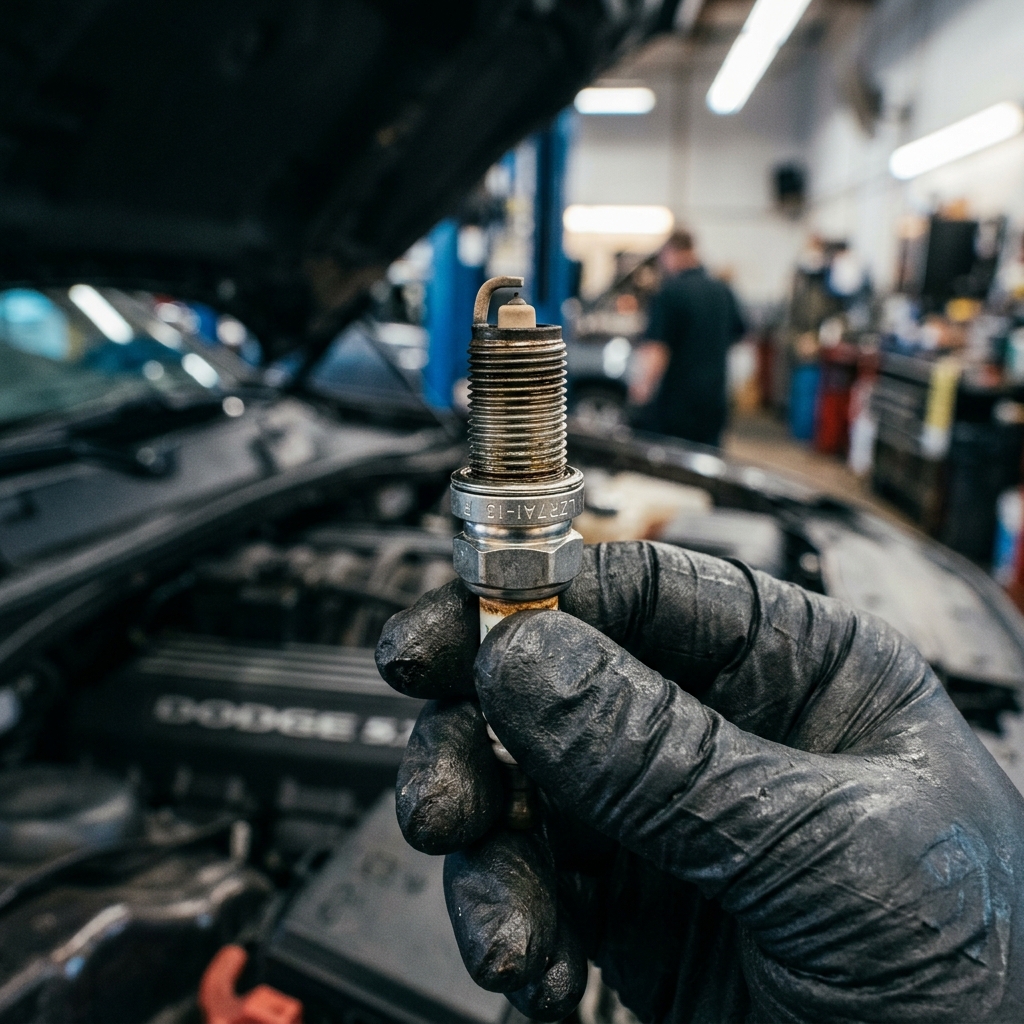
Why Spark Plug Condition is the Window to Your Engine's Health
Reading Your Engine Through Spark Plug Condition
A spark plug serves as a diagnostic report card for your cylinders, reflecting the internal health of Chrysler, Dodge, Jeep, and Ram engines. When we pull a set of plugs in our service bay, we examine the color and texture to determine how the engine is burning fuel. For folks living out in the rural landscape of Onsted, where many of our customers rely on their trucks for agricultural work and heavy hauling, keeping a close eye on these components is the difference between a reliable workhorse and a truck that stumbles during a heavy pull.
Most modern gasoline vehicles are engineered to have their spark plugs replaced somewhere between 30,000 miles and 100,000 miles. The wide range depends heavily on whether your vehicle uses conventional nickel components or the high-end iridium and platinum versions found in many late-model HEMI engines. If you are noticing a slight shudder at red lights or a lack of "get-up-and-go" when merging onto the highway, it is likely time for a professional look. You can easily find our service center location right on Michigan Avenue if you need a quick inspection. If you have questions about a specific symptom you're feeling behind the wheel, give our team (517) 456-6555 a quick call and we can help you figure out if a plug swap is the right move.
Table of Contents
- Identifying a Normal Spark Plug and Healthy Combustion
- Signs of a Worn Out Spark Plug and Performance Degradation
- Diagnosing Oil Fouling and Mechanical Engine Concerns
- Iridium vs Copper Spark Plugs for Modern Chrysler Dodge Jeep Ram Engines
- The Technical Impact of Vehicle Type and Driving Habits on Plug Life
- Essential Tools and Best Practices for Professional Inspection
Identifying a Normal Spark Plug and Healthy Combustion
What does a healthy engine actually look like at the tip of a spark plug? When a plug is performing perfectly, the porcelain insulator should have a light tan or gray appearance. This indicates that the air-fuel mixture is balanced and the engine is operating within its intended heat range. There should be very minimal deposits on the electrodes, and the wear on the center and ground electrodes should be even across all cylinders. This "clean burn" confirms that your fuel injectors and ignition coils are firing correctly.
A small amount of tan coloration is a sign of a healthy combustion cycle. However, if the plug looks stark white, it might be running too hot, whereas a heavy black coating suggests it’s running "rich" or has too much fuel in the mix. Our Mopar Parts Center stocks the exact heat-range plugs specified by the factory to prevent these temperature imbalances. For those who are meticulous about their vehicle’s long-term performance, we offer technical posts where we dive deeper into specific engine behaviors. If you are planning for the future and want a vehicle built to your exact maintenance standards, we can even assist with ordering a vehicle directly from the factory to ensure you start with a fresh maintenance timeline.
Signs of a Worn Out Spark Plug and Performance Degradation
How can you tell your plugs are giving up without actually taking the engine apart? A sudden drop in fuel efficiency is often the first red flag. Worn-out plugs can cause a drop of about 10 percent to 15 percent in your miles per gallon because the engine has to compensate for weak or inconsistent ignition. This is especially noticeable for commuters in Chelsea who are making the daily drive into Ann Arbor or Jackson; that extra fuel consumption adds up fast over a week of highway miles. You might also notice the engine "stumbling" or hesitating when you try to accelerate quickly to pass another vehicle.
Another major sign is a rough idle. If your Jeep Wrangler or Ram 1500 feels like it’s vibrating more than usual while you're sitting at a stoplight, the spark might not be jumping the gap consistently. As the electrodes erode over time, the gap grows, requiring a much higher voltage to fire, which puts a massive strain on your ignition coils. To avoid these headaches, we always have available maintenance coupons to help keep your ignition system in top shape. If you prefer to handle the smaller tasks yourself, you can get the right components online through our parts department. For some, a series of ignition issues might be the sign that it's time for a change, and we can help you see what your current vehicle is worth toward something newer and more efficient.
Diagnosing Oil Fouling and Mechanical Engine Concerns
Oil-fouled plugs often require a more serious discussion about engine health. Unlike the dry, black carbon soot that comes from fuel issues, oil fouling leaves a shiny, wet, black coating on the firing tip. This is a clear signal that oil is bypassing the piston rings or leaking through the valve guides and entering the combustion chamber. If the deposits are thick and wet, it could even point to a breached head gasket. These aren't just "plug issues"—they are mechanical engine concerns that need to be addressed before they cause permanent damage to your catalytic converter.
When we see these symptoms, our first step is to check for consistency across all cylinders. If only one plug is oily while the others are tan, the problem is isolated to that specific cylinder’s hardware. Ignoring a fouled plug can lead to severe engine knocking and a total loss of power. I strongly suggest that you book an inspection online the moment you see a flashing check engine light or smell burning oil. Our team is here to provide a full engine health check to ensure a small leak doesn't turn into a major overhaul. We even offer special programs for eligible buyers if the cost of a major engine repair makes a newer vehicle a more sensible long-term investment.
Iridium vs Copper Spark Plugs for Modern Chrysler Dodge Jeep Ram Engines
One of the most frequent questions we hear in the shop is whether it’s okay to use copper plugs. Modern engines, like the 2.0L Turbo in the Jeep Compass or the Pentastar V6 found across our new Jeep inventory, are designed with specific electrical resistance and heat requirements. Iridium plugs are the gold standard because they have an extremely high melting point—roughly 4,400 degrees Fahrenheit—which allows for a much thinner center electrode. This thin wire requires less voltage to spark, leading to better cold starts and more consistent performance over a 100,000 mile lifespan.
Copper plugs might be cheaper upfront, but they typically only last about 30,000 miles before the electrodes erode. Using them in a vehicle designed for iridium can lead to overheating and even pre-ignition, which can ruin a piston. Whether you are driving a new Jeep Wrangler or a heavy-duty Ram 2500, using the factory-recommended material is crucial. You can see the performance specs for yourself by checking out a new Jeep Grand Cherokee or even the top-tier Grand Cherokee Summit Reserve. We also carry a full selection of Ram trucks and the Dodge Durango, all of which benefit from premium ignition components. Our team can walk you through the latest Ram offers, Jeep incentives, Dodge deals, or Chrysler programs to help you find a vehicle that fits your lifestyle. From the Compass Latitude and Compass Limited to the off-road ready Compass Trailhawk, every model we sell, including the Ram 1500 Big Horn, Durango GT, and Durango RT, is built for longevity. Whether you need a Grand Cherokee Limited or Ram Heavy Duty, or something from our Dodge and Chrysler lineups, we ensure the ignition system is ready for the long haul.
The Technical Impact of Vehicle Type and Driving Habits on Plug Life
Daily driving habits play a huge role in how often you'll need a replacement. Frequent short trips, where the engine doesn't have enough time to reach its full operating temperature, can lead to "carbon fouling" because the plugs never get hot enough to burn off excess deposits. Conversely, heavy towing with a 5.7L V8 or a 6.4L V8 puts much higher thermal stress on the porcelain, which can lead to micro-cracking over time.
For our neighbors in Michigan Center, many of whom use their vehicles for a mix of local farm tasks and longer highway hauls into Jackson, this varied duty cycle means plugs should be inspected every 30,000 miles just to be safe. Even if the manual says they can go longer, catching a wide gap early can save your ignition coils from burning out. If you're currently driving a vehicle that's starting to show its age through poor performance, you might want to use our vehicle finder tool to see what else is available. We often have new vehicle offers and specialized pricing that might make more sense than a series of expensive engine repairs. We also maintain a list of pre-owned vehicle specials for those looking for a reliable second vehicle for the family.
Essential Tools and Best Practices for Professional Inspection
If you are the type of owner who likes to know exactly what's going on under the hood, there are a few tools you simply can't skip for a proper inspection. A dedicated spark plug socket with a rubber insert is essential to prevent cracking the fragile porcelain insulator during removal. A calibrated torque wrench is also necessary; over-tightening a plug can distort the metal shell or strip the threads in your aluminum cylinder head, which is a very expensive mistake to fix. A simple gap gauge or "feeler gauge" ensures the plug is set to the exact thousandth of an inch required by your engine’s specifications.
While DIY work is great for some, modern ignition systems are more sensitive than ever. If a plug isn't seated perfectly, it can lead to a "compression leak" that ruins your power and fuel economy. If you’d rather have a certified pro handle the technical details, you can find our service department easily in Clinton. Feel free to reach out to our team (517) 456-6555 if you want to chat about your vehicle's specific maintenance needs. We also keep an updated list of current service and parts incentives to help you get the best value for your maintenance routine. Keeping your engine firing correctly is the best way to ensure your vehicle stays on the road for years to come.
© 2026 NewGen Chrysler Dodge Jeep Ram of Clinton. All rights reserved.