
Expert Interview: Navigating Engine Overheating with Ray Gutt
Today, we're interviewing Ray Gutt, our Service Technician at NewGen Chrysler Dodge Jeep Ram of Clinton. With 7 years of experience in the shop, Ray has seen every cooling system failure imaginable on the high-mileage trucks and family SUVs that traverse our Michigan roads. In this discussion, he provides professional insight into why engines lose their cool, how to identify specific component failures like thermostats and water pumps, and what steps you must take to protect your vehicle's longevity when the temperature gauge starts to climb. Readers will walk away with a clear understanding of cooling system maintenance and the immediate safety protocols required during a thermal emergency.
Q: Ray, when a driver sees that temperature needle creeping toward the red zone, what is actually happening under the hood to cause that spike?
A: It helps to think of your engine as a massive heat generator that relies on a perfectly balanced loop to stay operational. When that balance breaks, it is usually because the coolant—the lifeblood of the system—can no longer absorb heat or move it away from the engine block. One of the most frequent issues we see at NewGen Chrysler Dodge Jeep Ram of Clinton involves low fluid levels. This can happen due to slow evaporation over years of neglect or more sudden leaks in the radiator or hoses. Without enough liquid to circulate, the engine simply cooks in its own operating heat.
For our neighbors driving through the rural areas around Onsted, the cooling system is under constant pressure, especially when hauling trailers or navigating rolling terrain. If you are worried about your vehicle's reliability, you can always give our service team a call at (517) 456-6555 to discuss a cooling system flush or a pressure test. We often find that a small investment in maintenance prevents the kind of catastrophic failure that sends a car to our pre-owned inventory under $20,000 sooner than the owner intended. If you are already experiencing issues, it is best to find our service center in Clinton and let a certified technician put it on a lift before the heat causes permanent engine warping.
Q: Beyond just being low on fluid, what are the most common mechanical failures you diagnose in the shop?
A: Mechanical failures usually boil down to three main culprits: the water pump, the thermostat, or the radiator fan. The water pump is the heart of the system; it uses an internal impeller to push fluid through the engine and radiator. If that impeller erodes or the pump bearing fails, the flow stops, and heat builds up instantly. We also see a lot of issues with radiator fans. These are critical because they pull air through the radiator fins when you are sitting at a stoplight or moving at low speeds. If the fan motor burns out or a sensor fails, you might notice the engine stays cool on the highway but starts to overheat the moment you exit into local traffic.
Another major concern is radiator health. Over time, internal scale and debris can clog the tiny passages where heat exchange happens. This is particularly relevant for a New Jeep Grand Cherokee or a Ram truck that spends time in the dirt or mud, as external debris can also block airflow. When these mechanical parts fail, the pressure in the system can skyrocket, leading to blown hoses or even a cracked radiator tank. If you suspect a mechanical hitch, you should book a diagnostic appointment immediately. Catching a failing pump early might save you from having to value your trade-in prematurely due to a blown engine.
Q: If someone is driving and the dashboard warning light comes on, what is the safest immediate response?
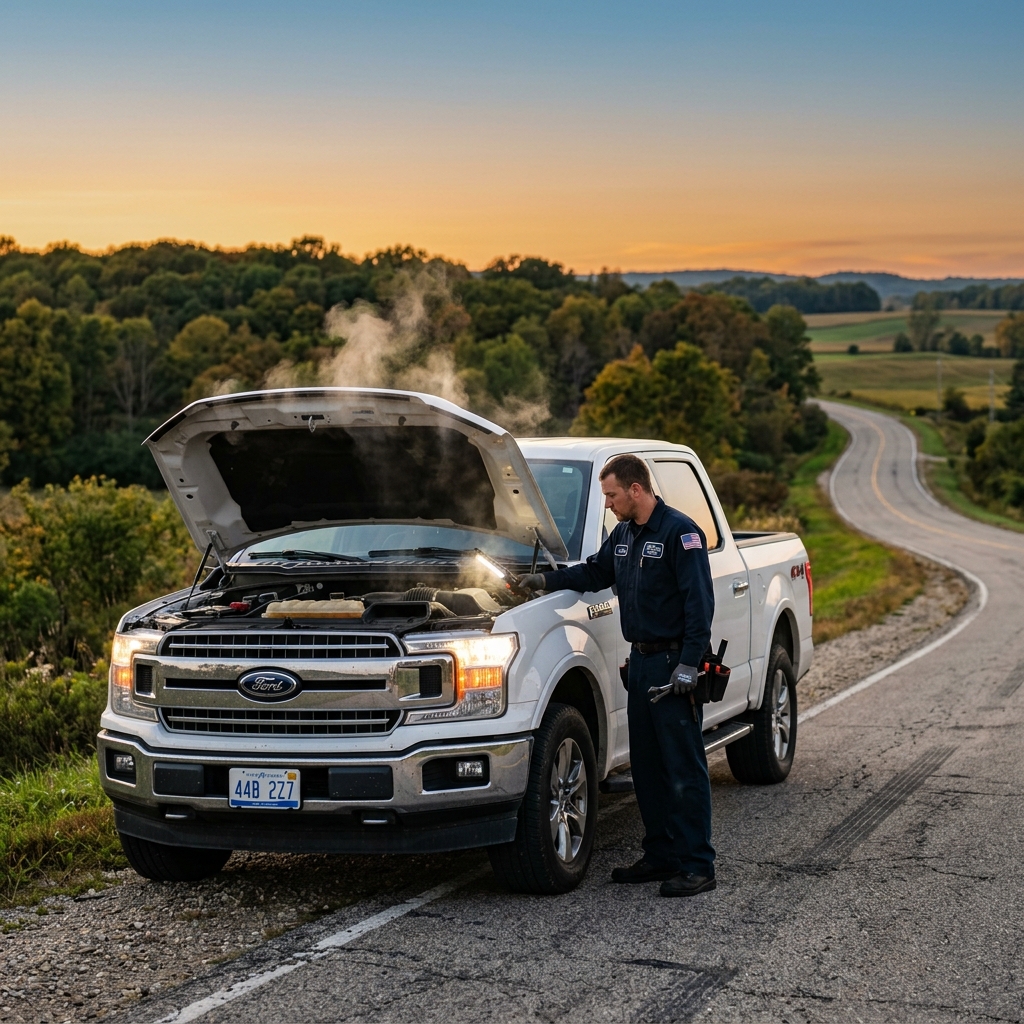
A: The very first thing you must do is pull over safely and shut the engine off. Continuing to drive "just a few more miles" is the fastest way to turn a $200 repair into a $5,000 engine replacement. Once you are stopped, do not—under any circumstances—attempt to open the radiator cap or the coolant reservoir while the engine is hot. The system is under immense pressure, and opening it can cause a geyser of scalding steam and fluid that results in severe burns. You need to let the vehicle sit for at least 30 to 60 minutes before even thinking about touching the cooling system components.
While you wait for the engine to cool, it is a good time to check for obvious signs of trouble, like a bright green, orange, or pink puddle forming under the front of the car. For those driving a New Jeep Compass or any modern vehicle, the sensors are very sensitive, so trust the gauge. If you find yourself stranded, you can check our latest service and maintenance specials to see if we have any current offers on cooling system repairs. Once the engine is cool enough to touch, you can schedule your service visit to have us perform a comprehensive inspection and get you back on the road safely.
Q: Ray, we often hear about thermostats causing trouble. How can a driver distinguish between one that is stuck open versus one that is stuck closed?
A: It is a night-and-day difference in how the vehicle behaves. A thermostat stuck closed is a genuine emergency because it acts like a wall, preventing hot coolant from ever reaching the radiator. You will see the temperature gauge spike toward the red zone within minutes of driving, and if you carefully feel the upper radiator hose, it will likely be cold while the engine block is scorching. Conversely, a thermostat stuck open is more of a performance and efficiency killer. The engine will struggle to reach its proper operating temperature, your cabin heater will feel weak, and your fuel economy will drop because the computer thinks the engine is still in a "warm-up" phase.
I often suggest that customers read through our automotive maintenance blog to learn more about these small but vital components. Replacing a thermostat is a relatively straightforward job during a routine service, and we frequently include it in our available service specials to encourage preventative care. For those taking advantage of exclusive pricing programs on a new vehicle, keeping up with these minor parts ensures your warranty stays in good standing and your engine runs at peak efficiency for years.
Q: Where are the most frequent spots you find coolant escaping from the system?
A: Leaks are rarely a mystery if you know where to look, but they can be sneaky. The most common "leak points" are the radiator seams, where the plastic tanks meet the aluminum core, and the various rubber hoses that carry fluid. Over time, heat and vibration cause the rubber to become brittle and crack. We also see leaks at the water pump weep hole, which is a tell-tale sign that the internal seal has failed. In some cases, the leak is internal, such as a failing head gasket. This is more serious because it allows coolant to enter the combustion chamber, often resulting in white smoke from the exhaust or a milky appearance in the engine oil.
If you are noticing a sweet smell after parking or seeing spots on your driveway in Chelsea, it is time to act. We keep a deep stock of Mopar fluids and seals in our new Jeep inventory support center to handle these repairs quickly. You can also browse our current parts specials if you are a DIY enthusiast looking for the right gaskets or hoses. Keeping the system sealed is vital because a leak prevents the system from holding pressure, and a depressurized cooling system boils at a much lower temperature, leading to rapid overheating even if the fluid level looks "okay" in the tank. Check our latest service incentives to see how we can help with a professional pressure test.
Q: What should a customer expect regarding the cost and process when a water pump needs to be replaced?
A: The cost of a water pump replacement can vary significantly based on the engine layout. On some vehicles, the pump is driven by the serpentine belt and is easily accessible, while on others, it might be tucked behind the timing cover. Generally, you are looking at a range between $400 and $800 for parts and labor. It is a labor-intensive job because we have to drain the system, remove the old pump, clean the mounting surfaces perfectly to ensure a leak-free seal, and then refill and "burp" the system to remove any trapped air pockets. Trapped air is a major cause of "hot spots" in the engine, so we use professional vacuum-filling tools to get it right.
We always recommend using Genuine Mopar Parts for this repair. When you order parts through our dealership, you are getting a component designed specifically for your Ram or Jeep's flow requirements. Independent shops might use a "one-size-fits-all" pump, but our dedicated Mopar parts center ensures the pulley alignment and flow rates are factory-spec. For those who are planning a custom factory order for a new heavy-duty truck, remember that the cooling system is one of the most robust parts of the build, but even the best pumps eventually wear out after 100,000 miles or so.
Q: Finally, Ray, why is it beneficial to bring an overheating issue to a certified dealership rather than a general repair shop?
A: The biggest advantage is specialized knowledge and diagnostic equipment. When you learn about our dealership philosophy, you will see that our technicians are factory-trained specifically on Chrysler, Dodge, Jeep, and Ram systems. We have seen the specific failure patterns unique to these engines—like the oil cooler leaks on certain V6 models or the specific fan clutch issues on older trucks. A general shop might spend hours guessing, whereas we usually know exactly where to look. Plus, we use OEM diagnostic tools that can communicate with every module in the car to see if a cooling issue is being caused by a faulty computer command or a bad relay.
Beyond the technical side, exploring our dealership means you get the peace of mind that comes with a nationwide warranty on parts and labor. Whether you are coming from Michigan Center or just down the road, you can easily get directions to our Clinton location for a quick consultation. We also offer specials on new vehicle maintenance and pre-owned service offers to keep your costs down. If you want to customize your ride while it is in the shop, feel free to browse our Mopar accessories. For any immediate concerns, just give us a quick call at (517) 456-6555 and we will help you figure out the best next step for your vehicle's health.
© 2026 NewGen Chrysler Dodge Jeep Ram of Clinton. All rights reserved.