

Decoding Engine Oil Appearance and Normal Wear Patterns
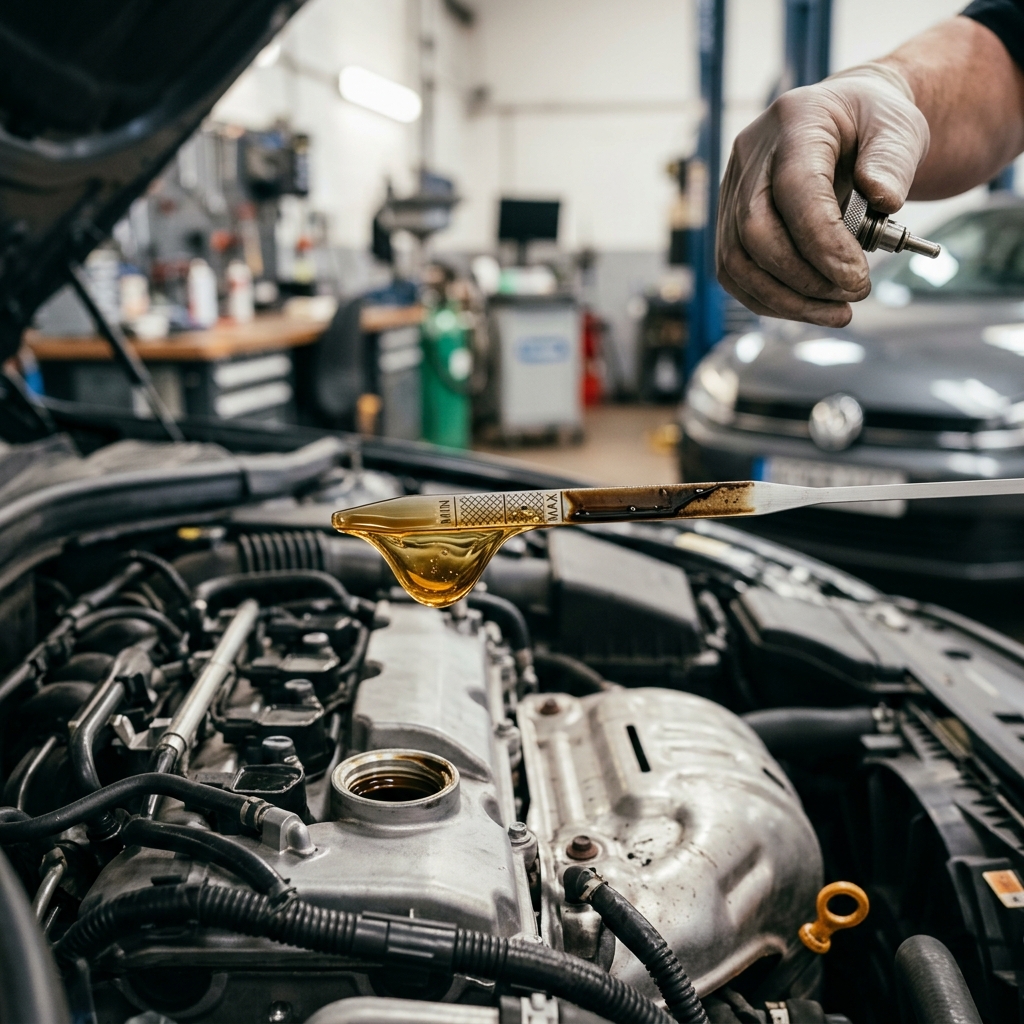
Understanding what your engine oil looks like on the dipstick is a fundamental part of responsible vehicle ownership. When you pull that dipstick to check your levels, the color of the fluid provides a snapshot of your engine's internal environment. New, clean motor oil typically features a translucent, light amber or honey-like appearance. However, it is important to recognize that oil is designed to change as it works. As you drive through Onsted or commute toward larger hubs, your oil actively gathers combustion byproducts, carbon, and heat, which naturally darkens the fluid over time.
Seeing dark brown or even black oil on the dipstick is not an automatic reason for alarm. In many modern engines, high-detergent oils are engineered to suspend contaminants so they don't settle as sludge on critical engine components. This means the oil may turn dark within just a few thousand miles of operation while still providing full lubrication and protection. If the texture remains smooth and the fluid is still somewhat translucent when held up to a light source, it is likely just performing its job. Our team often sees vehicles where the oil has darkened significantly, yet the chemical properties remain well within the safe operating range defined by the manufacturer.
Maintaining a consistent schedule is the best way to ensure these natural color changes don't lead to performance issues. If you notice the oil has become thick, opaque, or has a heavy soot-like smell, it is likely time to schedule your service today. Relying solely on color can be misleading, which is why we recommend following the mileage intervals found in your owner's manual. For a professional assessment of your vehicle's fluids, you can find our service center address online or give us a quick call to discuss any concerns you have about your oil's appearance. Keeping your engine running strong starts with these simple, regular checks.
Table of Contents
- Identifying Serious Contamination and Internal Engine Damage
- How Driving Habits and Environment Impact Oil Longevity
- The Role of High-Detergent Oils in Modern Maintenance
- Essential Steps for Accurate Dipstick Inspections and Level Checks
- Common Questions About Maintenance Intervals and Oil Conditions
- Prioritizing Professional Inspections for Long-Term Vehicle Health
Identifying Serious Contamination and Internal Engine Damage
While darkening is normal, certain colors and textures on the dipstick serve as urgent warning signs of mechanical trouble. One of the most critical symptoms is oil that appears milky, foamy, or resembles a light-colored coffee milkshake. This specific discoloration almost always points to coolant entering the oiling system. This often happens due to a compromised head gasket or a cracked engine block. If you see this "mayonnaise" consistency on the dipstick, it is vital to stop driving the vehicle immediately, as coolant destroys the lubricating properties of the oil and can lead to total engine failure within minutes of operation.
Another red flag to watch for is a gritty texture or a metallic shimmer in the fluid. When you wipe the dipstick on a clean white paper towel, look closely for tiny sparkles or actual flakes of metal. These particles are typically shavings from internal components like bearings, camshafts, or piston rings. If the oil feels abrasive between your fingers, it indicates that the oil filter is bypassed or saturated, allowing debris to circulate through the engine. In these cases, our technicians use specialized diagnostic tools to determine the source of the wear before it results in a permanent breakdown.
If your vehicle is showing signs of significant internal wear, it may be worth considering the long-term costs of major engine repair versus other options. Our team can help you value your trade-in if you decide that a newer, more reliable vehicle is the better path forward. For those committed to a repair, we provide access to high-quality components through our Mopar parts center to ensure the job is done to factory specifications. You can also browse our current service specials to find savings on the diagnostic work and fluid flushes needed to keep your powertrain healthy.
How Driving Habits and Environment Impact Oil Longevity
The way you drive and where you live can accelerate the rate at which your engine oil changes color and degrades. For residents in Michigan Center, many daily trips might involve short hops to the reservoir or quick errands where the engine never reaches its full operating temperature. These short-trip cycles are actually harder on motor oil than long highway hauls. When an engine doesn't get hot enough for long enough, moisture from condensation builds up in the crankcase and doesn't evaporate. This can lead to a slight milky film on the underside of the oil cap or the top of the dipstick, even if the head gasket is perfectly fine.
Environmental factors like dust and debris also play a major role in oil contamination. If you frequently drive on gravel roads or through agricultural areas during harvest season, your engine's air intake system has to work much harder. Eventually, microscopic dust particles can find their way past the air filter and into the oil, turning it a thick, muddy brown color much faster than usual. This is why we categorize most Michigan driving as "severe service," which typically requires more frequent oil and filter changes than the standard intervals might suggest.
To combat these local challenges, we recommend using high-quality filtration to catch as many contaminants as possible. You can order genuine parts through our website to ensure your engine is protected by filters designed specifically for your vehicle's flow requirements. If you are driving a vehicle built for adventure, such as a new Jeep Compass, maintaining clean oil is essential for the variable valve timing systems that provide both power and efficiency. Check our parts specials regularly for deals on the air and oil filters that serve as your engine's first line of defense against the elements.
The Role of High-Detergent Oils in Modern Maintenance
Modern synthetic oils are far more advanced than the lubricants used just a decade ago. These fluids are packed with sophisticated additive packages, including detergents and dispersants designed to keep the inside of your engine spotless. One side effect of these high-performance detergents is that they are very effective at "scrubbing" the engine. Consequently, the oil may pick up dark pigments very quickly after a change. This is especially true if you have recently switched from a conventional oil to a full synthetic, as the new oil begins cleaning out old deposits left behind by the previous fluid.
Because these detergents keep contaminants in suspension rather than letting them settle, the color of the oil is no longer the definitive indicator of its remaining life. A dipstick that looks dark might still have a healthy "Total Base Number" (TBN), which is the measure of the oil's ability to neutralize acids. This is why our service team relies on a combination of visual inspection, mileage tracking, and the vehicle's built-in oil life monitoring system. These systems calculate oil life based on engine revolutions, temperature, and idle time, providing a much more accurate picture than a simple eye test.
For those interested in the latest automotive technology and maintenance trends, we frequently update our automotive blog with tips on how to maximize the lifespan of your vehicle. We believe in providing transparent information so you can make informed decisions about your car's care. If you are looking for a vehicle that features these advanced monitoring systems, you might explore our pre-owned specials to find a late-model car with the latest tech. We also offer exclusive special pricing on many new models, ensuring you get a great deal on a vehicle that is easy and affordable to maintain.
Essential Steps for Accurate Dipstick Inspections and Level Checks
To get a true reading of your oil's color and level, you need to follow a specific procedure. Accuracy begins with parking on a level surface. If the vehicle is tilted, the oil will pool to one side of the pan, giving you a false high or low reading on the dipstick. Most manufacturers recommend checking the oil when the engine is warm but has been turned off for about five to ten minutes. This allows the oil to drain from the upper galleries back down into the oil pan while still being thin enough to provide a clear reading.
When you pull the dipstick out for the first time, do not look at the oil on it yet. Wipe the entire length of the metal clean with a lint-free rag or a heavy-duty paper towel. Reinsert the dipstick fully, ensuring it clicks or seats into the tube, then pull it out again. This second pull provides the accurate measurement. Look for the oil to fall between the "Min" and "Max" marks (sometimes indicated by two holes or a crosshatched area). To avoid misreading the color due to reflections, hold the dipstick at an angle away from direct sunlight and observe the fluid against the clean white background of your rag.
Checking your oil is a great habit to form, especially if you are preparing for a long trip or a weekend at Wamplers Lake. If you find that your oil is consistently low or looking unusually dark, it might be time to consider a vehicle with a fresh warranty. You can browse our new Jeep inventory or look through our used inventory under $20,000 for reliable options that won't stress your budget. We also keep a list of new incentives updated daily to help our customers get into a vehicle that is ready for the road ahead.
Common Questions About Maintenance Intervals and Oil Conditions
Q: Does the oil life monitor in my car replace the need to check the dipstick? While modern oil life monitors are highly accurate at tracking fluid degradation, they cannot measure the actual volume of oil in your engine. A monitor won't tell you if you have a slow leak or if the engine is consuming oil between changes. We recommend checking the dipstick manually at least once a month to ensure the level remains safe, even if the dashboard says you have 80% oil life remaining.
Q: Can I tell the difference between synthetic and conventional oil by looking at the dipstick? It is virtually impossible to distinguish between synthetic and conventional oil just by color or smell once they have been used in an engine. Synthetic oils generally resist darkening from heat better than conventional oils, but they still turn dark as they trap contaminants. The best way to know what is in your engine is to keep your service receipts or check the window sticker provided after your last visit.
Q: What should I do if my oil smells like gasoline? If your dipstick has a strong odor of raw fuel, it could indicate that gasoline is leaking past the piston rings and diluting the oil. This is often caused by frequent short trips where the engine doesn't get hot enough to burn off excess fuel, or it could signal a faulty fuel injector. Diluted oil loses its ability to protect engine bearings, so you should have a technician inspect the vehicle as soon as possible.
Q: Is it normal for oil to look different in a diesel engine? Yes, diesel engine oil often turns jet black almost immediately after an oil change. This is due to the high amount of soot produced during diesel combustion. In a diesel powertrain, black oil is a sign that the fluid is doing its job by keeping that soot in suspension so it can be removed during the next filter change.
Q: Does very thick, "gloppy" oil always mean there is sludge? If the oil doesn't drip off the dipstick and appears to have the consistency of gel, it is a strong indicator of oil sludge. This happens when oil is left in the engine far past its service life or is subjected to extreme heat. If you suspect sludge, you can learn more by visiting our about us page to see how our certified team handles engine flushes and deep cleaning. For those looking for a fresh start, we can help with custom factory orders or help you find a new Jeep Grand Cherokee that is ready for a lifetime of proper care.
Prioritizing Professional Inspections for Long-Term Vehicle Health
Regularly checking your oil is one of the simplest ways to protect the massive investment you’ve made in your vehicle. Whether you are driving through Chelsea or heading out for a weekend adventure, knowing that your engine is properly lubricated provides peace of mind. While the dipstick is a great diagnostic tool, it is only one part of a comprehensive maintenance plan. A professional eye can often spot the subtle differences between normal oxidation and the early stages of a mechanical issue that could lead to an expensive breakdown later.
At NewGen Chrysler Dodge Jeep Ram of Clinton, we value your time and your safety. Our certified technicians are trained to look beyond just the color of the oil, performing multi-point inspections that check for leaks, belt wear, and cooling system integrity. If your oil looks suspicious or if you are simply due for a change, we invite you to visit our Clinton service center for a fast and transparent experience. You can also give us a quick call to ask about our current maintenance packages.
If you are considering moving into a newer vehicle to avoid the maintenance headaches of an older high-mileage car, we are here to help. You can explore our new vehicle specials or check out our used vehicle specials to find a car, truck, or SUV that fits your lifestyle. Our vehicle finder tool is also available to help you track down a specific model with the exact features you need. From keeping your current engine running strong to helping you find your next ride with our latest vehicle offers, our team is dedicated to supporting your journey on Michigan roads.
© 2026 NewGen Chrysler Dodge Jeep Ram of Clinton. All rights reserved.