

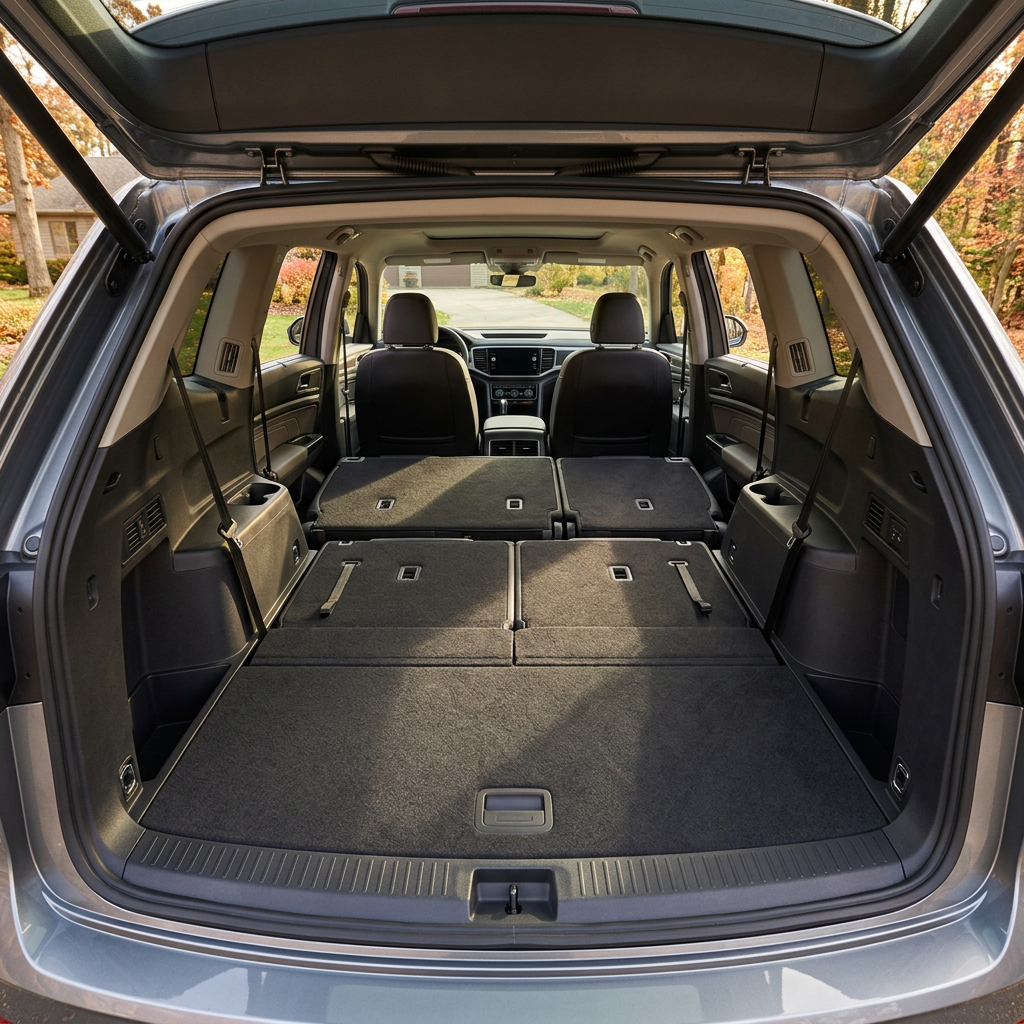
Modern three-row SUVs and minivans with true fold-flat seating include the Chrysler Pacifica, Dodge Durango, Jeep Grand Cherokee L, Ford Expedition, Honda Pilot, and Toyota Grand Highlander. These vehicles feature third-row seatbacks or entire seat assemblies that drop level into recessed floor tubs or deck wells, establishing an unobstructed, continuous horizontal cargo surface without requiring physical seat removal.
Achieving a flush, uninterrupted load deck represents one of the most critical engineering benchmarks in family vehicle design. In three-row utility vehicles, true fold-flat functionality means that when the rear seatbacks are lowered, the resulting surface forms a single plane aligned with the cargo floor latch points. This design enables drivers to slide heavy cargo boxes, plywood sheets, or camping crates straight into the cabin without snagging edges on raised hinges or seat metal frames.
Within our lineup, different engineering approaches deliver this flat floor capability based on vehicle structure and drivetrain architecture:
- Chrysler Pacifica: Utilizes the Stow 'n Go seating and storage system. The third-row seat folds entirely into a dedicated underfloor tub in a single motion. On front-wheel-drive configurations, the second-row seats also tumble completely into floor compartments, expanding cargo capacity from 32 cubic feet behind the third row to 88 cubic feet behind the second row, and up to 141 cubic feet of total flat deck space.
- Dodge Durango: Features a 50/50-split third-row seatback that folds completely flush with the rear carpeted floor. Lowering the third row expands cargo volume from 17 cubic feet to 43 cubic feet, reaching a maximum of 85 cubic feet when the second-row seats are folded forward.
- Jeep Grand Cherokee L: Incorporates a fold-flat third-row mechanism built over the rear axle geometry, ensuring a continuous floor height that accommodates long outdoor equipment and family travel gear.
Selecting a vehicle with an engineered flat floor simplifies loading heavy gear for trips around the region. If you want to measure cargo floor dimensions in person, you can view our Clinton showroom location or give our sales staff a quick call to verify current inventory.
Table of Contents
- Why Did Automakers Shift from Removable Seats to Fold-Flat Third Rows?
- Total Cargo Volume vs Usable Cargo Floor Space: What Is the Difference?
- How Do Manual and Power-Folding Third-Row Seats Operate?
- Can Cargo Mats Stay in Place When Raising Third-Row Seats?
- What Cargo Features Offer the Best ROI at Vehicle Trade-In?
- Common Questions About Fold-Flat Third-Row Utility and Cargo Space
Why Did Automakers Shift from Removable Seats to Fold-Flat Third Rows?
Automakers transitioned from heavy removable bench seats to fold-flat third rows to eliminate physical lifting hazards and garage storage hassles while providing immediate, on-demand cargo flexibility. Legacy SUV and minivan designs forced owners to unbolt or unlatch rear seats weighing anywhere from 50 to 80 pounds, carry them out of the cabin, and find dry storage space in a garage or shed before hauling large cargo.
The transition to integrated fold-flat seats transformed vehicle usability by addressing several major ownership challenges:
- Immediate Cabin Adaptability: Drivers can instantly reconfigure interior passenger and cargo arrangements during unexpected shopping trips or weather shifts without returning home to remove hardware.
- Elimination of Heavy Lifting: Mechanical linkages, counter-balanced springs, and power-folding actuators allow drivers of all physical capabilities to stow or raise the rear seats effortlessly.
- Protected Interior Hardware: Fixed, folding seat mechanisms protect carpeted floor pans and wiring harnesses from the wear and tear caused by repeatedly dragging heavy metal bench legs across trim panels.
- Elimination of Storage Overhead: Stowable seats remain inside the vehicle structure at all times, freeing up valuable garage floor space.
This architectural shift required vehicle engineers to redesign rear frame rails and fuel tank locations. By lowering floor pans or utilizing compact multi-link rear suspensions, manufacturers created dedicated wells beneath the cargo deck where seat frames collapse neatly out of sight.
Whether you choose a new model or explore our pre-owned inventory selection, modern fold-flat seating ensures your vehicle is always ready to transition from a carpool commuter to a heavy gear hauler in seconds.
Total Cargo Volume vs Usable Cargo Floor Space: What Is the Difference?
Total cargo volume measures the entire cubic interior air space from floor to ceiling, whereas usable cargo floor space measures the flat, uninterrupted square footage available for wide or long cargo. Understanding this distinction prevents common packing miscalculations, as high cubic footage ratings do not always translate into practical loading capacity for bulky or rigid items.
When evaluating multi-row vehicles, interior volume numbers can sometimes obscure practical spatial limits:
- Total Cargo Volume (Cubic Feet): Calculated by multiplying maximum interior length, width, and height dimensions across the entire open cabin cabin area behind a given seat row. This metric includes upper window recesses, wheel well gaps, and ceiling clearance that are only usable for soft, stackable items like duffel bags or sleeping pads.
- Usable Cargo Floor Space (Square Feet & Floor Length): Represents the continuous, flat surface area lying directly on the floorboard. This metric dictates whether rigid, broad items—such as a 4x8 sheet of building materials, furniture frames, or large dog crates—can lay completely flat without propping up against seatbacks or side trim panels.
The shape of the rear opening and the presence of wheel well intrusions also influence real-world utility. For example, a vehicle with 85 cubic feet of total volume with vertical side walls and a wide tailgate opening offers far greater practical loading efficiency than a vehicle with higher total volume compromised by sloped rear hatch glass or protruding interior armrests.
Maintaining proper floor alignment and securing heavy loads is essential for vehicle longevity. If you ever notice uneven floor trim or latch binding after hauling heavy gear, scheduling a service appointment online with our certified technical team ensures your cargo components and seat latches operate properly.
How Do Manual and Power-Folding Third-Row Seats Operate?
Manual third-row seats use spring-loaded floor latches and pull-straps to fold flat, while power-folding third-row seats rely on dedicated electric motors controlled by cargo area push buttons to unlatch and stow the seatbacks automatically. Both systems accomplish the same flat floor objective, but they differ in mechanical complexity, operation speed, and user convenience.
Understanding the mechanical differences helps buyers choose the setup that best aligns with their daily routine:
- Manual Fold Mechanisms: Operate through release handles or nylon pull-straps located on the rear seatbacks. Pulling the primary strap disengages the floor hooks, causing headrests to drop automatically while spring-assisted hinges fold the seatback forward into the floor tub. These systems are lightweight, fast to operate, and free from electrical dependencies.
- Power-Folding Systems: Utilize dual electric motors linked to worm-gear drives inside the seat frame. Pushing a toggle switch located inside the rear cargo trim panel triggers an electronic module that releases the latch, drops the headrests, and motorized seat linkages flatten the seat assembly flush into the floor. Advanced systems offer 60/40 split independent control and feature obstacle-detection sensors that pause movement if cargo impedes the travel path.
Our advisors frequently note that families test-driving three-row SUVs check the third-row fold sequence and carpet clearance before even looking at the dashboard technology.
Choosing between mechanical simplicity and motorized convenience comes down to personal preference and operational needs. You can explore how these features fit into your vehicle budget by submitting an online credit application before visiting our showroom.
Can Cargo Mats Stay in Place When Raising Third-Row Seats?
Custom split-folding or hinged cargo mats stay installed when third-row seats are raised, bending cleanly along factory hinge lines behind the upright seatbacks without needing removal. Standard one-piece rigid cargo liners must be removed or rolled back when the third row is elevated to allow the seatbacks to rotate upward into position.
Keeping cargo areas protected against mud, road salt, and liquid spills requires choosing the correct style of protective liner based on how frequently you carry passengers in the third row:
- Hinged & Flex-Joint Liners: Designed specifically for three-row utility vehicles, these liners incorporate flexible thermoplastic elastomer joints or hook-and-loop backings that stick directly to the carpeted seatbacks. When you raise a 50/50-split or 60/40 split third row, the liner folds seamlessly along the seat seam, maintaining backrest protection without bunching.
- Split-Back Protective Covers: Individual cover segments mount directly to each third-row seat section. They provide continuous floor protection when seats are stowed flat and remain attached to the back of the seats when raised, leaving the deep rear tub open for grocery storage.
- One-Piece Rigid Trunk Liners: These heavy-duty trays cover the entire flat cargo floor when the third row is folded down. While they offer maximum liquid containment, they must be removed from the vehicle or folded over when raising the rear seats.
Selecting all-weather protective gear tailored specifically to your vehicle's seating layout prevents carpet staining and wear. You can view vehicle-specific protection options by ordering genuine Mopar accessories designed for exact floorboard dimensions.
For local outdoor enthusiasts heading toward Onsted for weekend fishing and boating gear hauling, keeping protective mats installed on split seatbacks prevents wet gear from ruining factory interior fabrics.
What Cargo Features Offer the Best ROI at Vehicle Trade-In?
Fold-flat third-row seating, durable custom floor liners, and hands-free power liftgates deliver strong return on investment at trade-in by preserving interior condition and attracting pre-owned buyers. Vehicles equipped with functional cargo management systems command higher appraisal values because pre-owned buyers prioritize versatile, well-maintained interiors.
Certain factory cargo features and aftermarket protective upgrades directly protect your vehicle's resale value over time:
- Integrated Fold-Flat Seating Systems: Vehicles with intuitive fold-flat seat mechanisms hold value better than models requiring manual seat removal, as secondary market buyers seek modern convenience.
- All-Weather Cargo Trays and Floor Liners: Shielding factory carpeting from mud, snow, and chemical stains preserves the interior condition rating during trade-in evaluations.
- Power Liftgates with Hands-Free Motion Sensors: Highly desirable on the pre-owned market, this convenience feature adds functional appeal that speeds up re-sale turn times.
- Factory Towing Packages & Cargo Management Rails: Integrated tie-down tracks, roof rack rails, and hitch receivers demonstrate multi-use utility, broadening the potential buyer pool.
Taking steps to protect your vehicle's cabin today pays dividends when you decide to upgrade your ride. When you are ready to evaluate your current vehicle's market value, start by exploring our current new vehicle inventory, requesting a trade-in appraisal, or starting a custom factory order tailored to your exact specifications.
Drivers commuting around Michigan Center often rely on durable cargo setups to manage daily work gear and family equipment, keeping their vehicle's interior in prime condition for future trade-in value.
Common Questions About Fold-Flat Third-Row Utility and Cargo Space
Q: Do custom all-weather cargo liners interfere with power-folding third-row seat motors?
Precision-molded split cargo liners engineered for your specific make and model do not interfere with power-folding seat motors. These liners utilize flexible hinge joints and low-profile edge profiles that clear the motor travel path without binding or triggering resistance safety stops during operation.
Q: What happens to second-row seats when folding the third row flat for maximum cargo capacity?
Second-row seat behavior depends on vehicle design. In minivans like the Chrysler Pacifica with Stow 'n Go, front-wheel-drive second-row seats fold entirely into underfloor tubs. In most midsize and full-size SUVs, second-row seats slide, fold forward, or tumble against the front seatbacks to create a continuous load floor.
Q: How do you clean debris out of the floor tub where fold-flat third-row seats stow?
To clean the floor tub, fold the third-row seats into their upright position to expose the lower recess. Use a shop vacuum with a narrow crevice tool to remove dirt, sand, and small items, then wipe the heavy-duty plastic tub surfaces with a mild automotive detergent and microfiber cloth before stowing the seats back down.
Q: Will folding the third row flat affect a vehicle's towing capacity or payload limits?
Folding the third row flat does not alter official manufacturer towing capacity or maximum gross vehicle weight ratings ( GVWR). However, shifting heavy cargo forward onto the flat floor board balances payload weight distribution across both axles, improving handling stability when towing a trailer.
Q: How do split-folding third rows help balance passenger seating with long cargo items?
A 50/50-split or 60/40 split third row allows drivers to fold down one side of the seat deck flat for long cargo like skis or lumber while keeping the remaining seat upright and belted for a third-row passenger, maximizing cabin versatility.
Finding the ideal three-row SUV or minivan layout requires evaluating real-world space, seat mechanisms, and cargo protection in person. Our team is ready to walk you through seat fold operations, measure floor dimensions, and demonstrate cargo management systems across our lineup. Plan your visit today by visiting our Clinton dealership, calling our showroom team directly at (517) 456-6555, or learning more about our team and values to get started.