

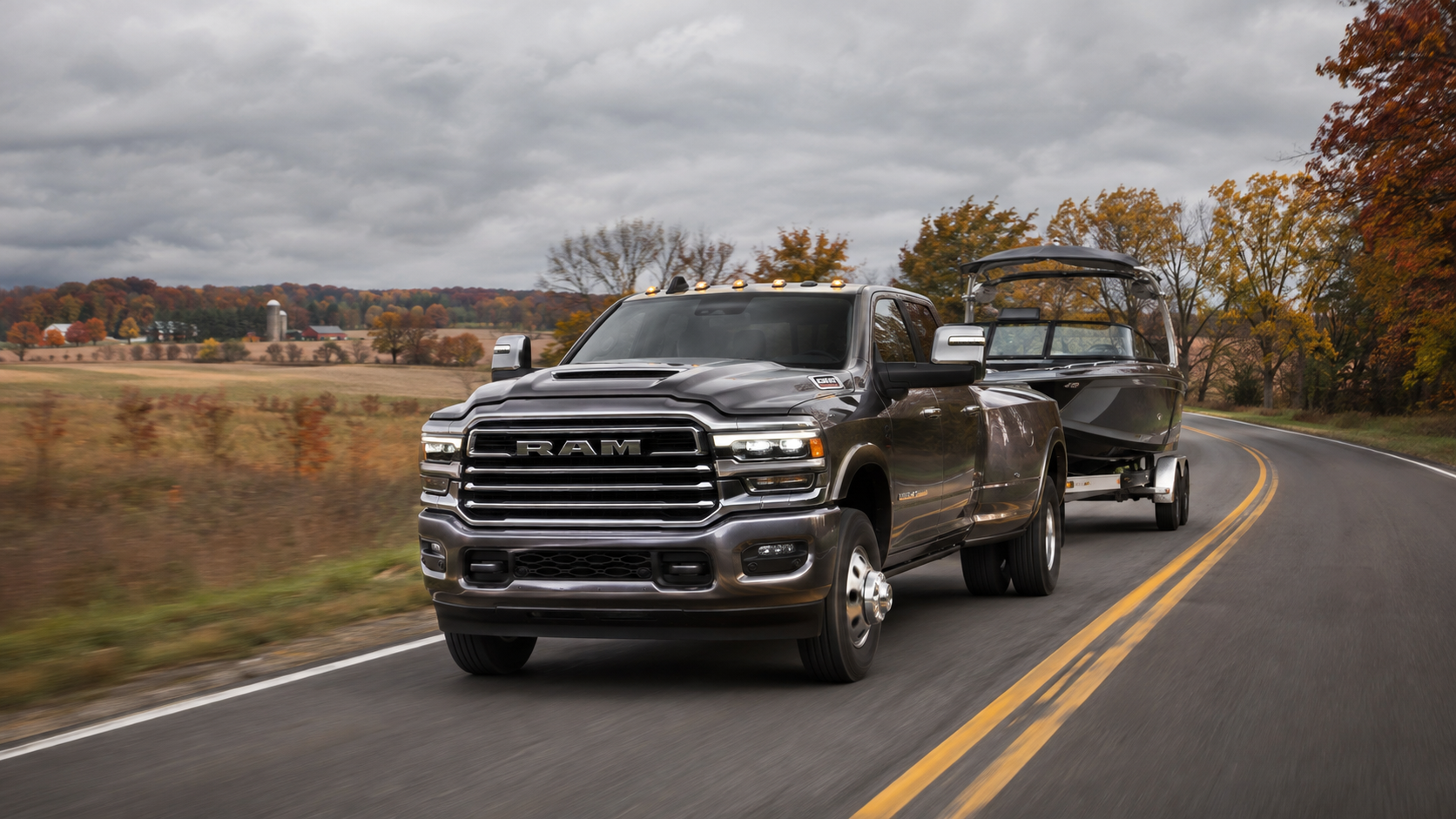
Adaptive steering dynamically alters the vehicle steering ratio based on travel speed by utilizing an actuator unit integrated within the steering system mechanism. At low speeds, the system increases wheel turn angle relative to driver input to reduce hand over hand effort during parking or trailer maneuvering. At highway speeds, it reduces steering sensitivity for stable, predictable tracking without breaking the permanent mechanical connection between the steering wheel and tires.
Unlike traditional power steering systems that only vary hydraulic or electric motor resistance, adaptive steering changes how far the front road wheels turn in response to every turn of the steering wheel. Heavy-duty trucks like the Ram 2500 and Ram 3500 HD utilize this technology to help a full-size pickup feel more nimble in tight spaces. In contrast, specific Jeep models approach directional control primarily through driver-assist technology. Models like the 2026 Jeep Grand Cherokee employ Active Driving Assist and Active Lane Management to monitor lane markings and provide subtle electric motor steering inputs rather than mechanically altering the gear ratio inside the steering shaft.
The core benefit of an adaptive steering mechanism is solving the compromise inherent in fixed-ratio steering boxes. Standard steering setups must balance low-speed agility against high-speed stability. With an adaptive steering module onboard, the electronic control unit adjusts the steering ratio on the fly. Drivers handling agricultural equipment transport or towing recreational boats around the rural roads of Onsted experience effortless low-speed turning without sacrificing on-center tracking when cruising on open highways.
To explore how these capabilities operate on current models, you can check out our new Jeep inventory or visit our team directly. To learn more about current model availability, stop by our Clinton showroom or give our team a quick call today.
Table of Contents
- What Sensors Adjust Steering Ratios and Effort at Different Speeds?
- How Does Adaptive Steering Assist Heavy Trailer Backing and Off-Road Crawling?
- Which Trims Offer Adaptive Steering and Can Drivers Turn It Off Manually?
- How Does Adaptive Steering Compare to Air Suspension for Heavy-Duty Towing?
- Quick Answers to Frequently Asked Questions About Adaptive Steering
- Test Drive Current Jeep and Ram Vehicles
What Sensors Adjust Steering Ratios and Effort at Different Speeds?
Ram and Jeep steering systems rely on a network of high-speed sensors to calculate continuous vehicle movement and determine the exact steering assist and ratio adjustments required. The electronic steering control unit processes data from vehicle speed sensors, steering wheel angle sensors, driver torque sensors, and yaw rate sensors multiple times per second. By evaluating how fast the vehicle is traveling alongside how quickly the driver turns the wheel, the module commands the electric steering actuator to add or subtract steering angles seamlessly.
At parking lot speeds, the system detects zero or low wheel motion and increases the steering ratio. A minor quarter-turn of the wheel results in significant front wheel articulation, removing the tedious hand-over-hand effort typically required to navigate tight spots. As vehicle velocity increases on regional routes during a daily commute toward Jackson from Michigan Center, the sensor network feeds high-speed data to the controller. The control unit then widens the steering ratio, requiring larger steering wheel turns for front-wheel movement to prevent twitchy or overly sensitive lane changes.
- Vehicle Speed Sensors: Provide continuous ground speed readings to determine whether low-speed maneuvering or high-speed stability programming should apply.
- Steering Angle Sensors: Measure the exact rotational position and turning speed of the steering column.
- Torque Sensors: Detect how much physical force the driver exerts on the wheel to tune power assist thresholds instantly.
- Yaw Rate & Lateral Acceleration Sensors: Monitor chassis movement and side-to-side forces to maintain directional stability during sudden evasive maneuvers.
For buyers researching pre-owned vehicles equipped with Current safety tech, evaluating steering feel during a test drive helps confirm proper system alignment. Drivers can review our pre-owned vehicle lineup to compare various driver-assist and steering configurations.
How Does Adaptive Steering Assist Heavy Trailer Backing and Off-Road Crawling?
Adaptive steering reduces driver physical workload during low-speed, high-demand scenarios like backing up a heavy gooseneck trailer or crawling over uneven terrain off-road. When maneuvering a long trailer into a narrow campsite or work stall, small steering wheel turns translate into greater wheel angle, allowing precise alignment corrections without continuous arm rotation.
When hauling heavy loads, heavy-duty Ram trucks equipped with the 6.7L Cummins® Turbo Diesel engine benefit significantly from adaptive steering assist. Turning large front tires loaded under thousands of pounds of front axle weight can strain driver endurance during prolonged backing procedures. The adaptive actuator handles the increased angular movement, while the underlying power assist absorbs resistance. This low-speed gear ratio modification means drivers spend less time spinning the wheel from lock to lock and more time focusing on clear line-of-sight and mirror checks.
Off-road enthusiasts benefit from similar advantages when crawling across rocky trails or deep ruts. In low-range four-wheel drive, quick steering corrections are essential to prevent tires from slipping off elevated ledges or dropping into hidden obstacles. Adaptive steering lets drivers flick the front tires around obstacles rapidly with minimal wrist motion. Because the mechanism uses an internal planetary gear or motor drive that maintains a continuous mechanical steering shaft connection, full steering control remains functional even if electrical power assist is ever interrupted.
Regular maintenance ensures that all electronic steering modules, fluid levels, and steering linkage components remain in peak operating condition. Vehicle owners can book a certified service visit online to have steering linkages, alignments, and system software inspected by factory-trained technicians.
Which Trims Offer Adaptive Steering and Can Drivers Turn It Off Manually?
Adaptive steering is typically reserved for upper-tier trim levels or specific heavy-duty towing packages rather than base fleet trims like the Tradesman or entry-level Laredo. On Ram 2500 and Ram 3500 heavy-duty trucks, the feature is available as part of premium equipment groups on trims like the Laramie, Limited, and Power Wagon.
Truck owners evaluating heavy-duty pickups for commercial work or trailer hauling often ask whether adaptive steering can be manually turned off through the touchscreen menu before trying a low-speed backing maneuver. The system operates fully automatically in the background without a manual override switch. Because the variable ratio calibration is continuously tuned for vehicle safety and high-speed stability, steering control units run preset algorithms to prevent sudden ratio changes that could startle an operator.
To help buyers determine which trim package includes specific steering and towing technologies, comparing equipment sheets before purchase is essential. Truck shoppers can get a trade-in appraisal to evaluate their current vehicle's value when upgrading to an Current heavy-duty pickup equipped with adaptive steering options.
How Does Adaptive Steering Compare to Air Suspension for Heavy-Duty Towing?
Adaptive steering and rear air suspension systems target two completely different aspects of towing performance: directional control and chassis load management. While adaptive steering dynamically adjusts steering ratios to reduce arm fatigue and speed up low-speed maneuvers, an auto-leveling air suspension system uses air bags to maintain level ride height, reduce driveline angle stress, and smooth out road impacts under heavy tongue weights.
| Feature / Capability | Adaptive Steering System | Auto-Leveling Rear Air Suspension |
|---|---|---|
| Primary System Objective | Adjusts steering wheel ratio and turning effort automatically | Maintains vehicle ride height and levels heavy trailer loads |
| Driver Experience | Eliminates hand-over-hand steering clutter during parking and backing | Eliminates headlight aim drift and stabilizes hitch bounce |
| Low-Speed Towing Impact | Requires fewer steering wheel rotations when maneuvering trailers | Keeps bumper and gooseneck height consistent across loading steps |
| High-Speed Towing Impact | Firms up steering center feel for confident highway tracking | Prevents rear-end sag and reduces sway under heavy wind loads |
| Manual Driver Controls | Fully automatic background operation with no manual shutoff | Features manual bed-lowering modes for easier trailer hitching |
When paired together on a Ram 2500 or 3500 powered by the 6.4L HEMI® V8 or 6.7L Cummins® Turbo Diesel, these systems complement each other. The suspension maintains level ground geometry so front-wheel steering contact remains firm and planted, while the adaptive steering system minimizes driver effort behind the wheel. Heavy-duty buyers looking for maximum towing efficiency often choose models equipped with both technologies.
To browse current heavy-duty inventory equipped for heavy hauling, buyers can explore our new Ram HD selection. Shoppers can also apply for credit online to review flexible financing options tailored to their budget.
Quick Answers to Frequently Asked Questions About Adaptive Steering
Q: Does adaptive steering break the physical mechanical link to the front wheels?
No, adaptive steering retains a continuous physical mechanical connection between the steering wheel and front tires. The actuator system sits inside the steering column or shaft mechanism to add or subtract steering angle electronically, but mechanical steering remains intact if electronic power is lost.
Q: Is adaptive steering available on standard light-duty trucks and compact SUVs?
Adaptive steering variable-ratio mechanisms are primarily engineered for heavy-duty truck platforms where turning effort under high axle loads is significant. Light-duty trucks and SUVs generally utilize speed-sensitive electric power steering with fixed mechanical ratios, paired with lane-keeping technology like Active Lane Management.
Q: Which heavy-duty truck manufacturer first brought adaptive steering to market?
Ford was the first major truck manufacturer to introduce an adaptive steering unit in its Super Duty line prior to Ram implementing variable steering ratio technologies across its heavy-duty pickup lineup. Today, Ram offers Current steering assist features across its heavy-duty trucks to enhance driver control.
Q: Can I add adaptive steering as an aftermarket accessory to a base trim truck?
Retrofitting factory adaptive steering onto a base vehicle is not practical because the system requires integrated electronic control modules, specialized steering shafts, custom wiring harnesses, and specific factory software calibrations. Buyers desiring this technology should select a factory model equipped with the option package.
Q: What warranty coverage applies to adaptive steering components on new vehicles?
Factory adaptive steering components are covered under the standard bumper-to-bumper limited warranty, which typically spans 3 years or 36,000 miles. Powertrain and heavy mechanical steering gear components may fall under extended coverage tiers depending on vehicle brand specifics.
To learn more about original equipment options, buyers can read about our dealership history and values or contact our team to order genuine Mopar parts for maintenance needs.
Test Drive Current Jeep and Ram Vehicles
Experiencing adaptive steering and driver-assist technology in person is the best way to understand how these systems transform daily driving and heavy towing performance. Whether maneuvering a heavy trailer or tackling long highway trips, Current steering assist makes every mile smoother and less exhausting. Our dedicated sales team is ready to walk you through trim options, feature packages, and capability specs across our entire showroom.
Visit NewGen Chrysler Dodge Jeep Ram of Clinton to test drive our latest lineup. Explore our Jeep 4xe hybrid models to experience cutting-edge efficiency and Current safety tech firsthand. Stop by our showroom on W Michigan Ave or call (517) 456-6555 to schedule your test drive today.
© 2026 NewGen Chrysler Dodge Jeep Ram of Clinton. All rights reserved.