

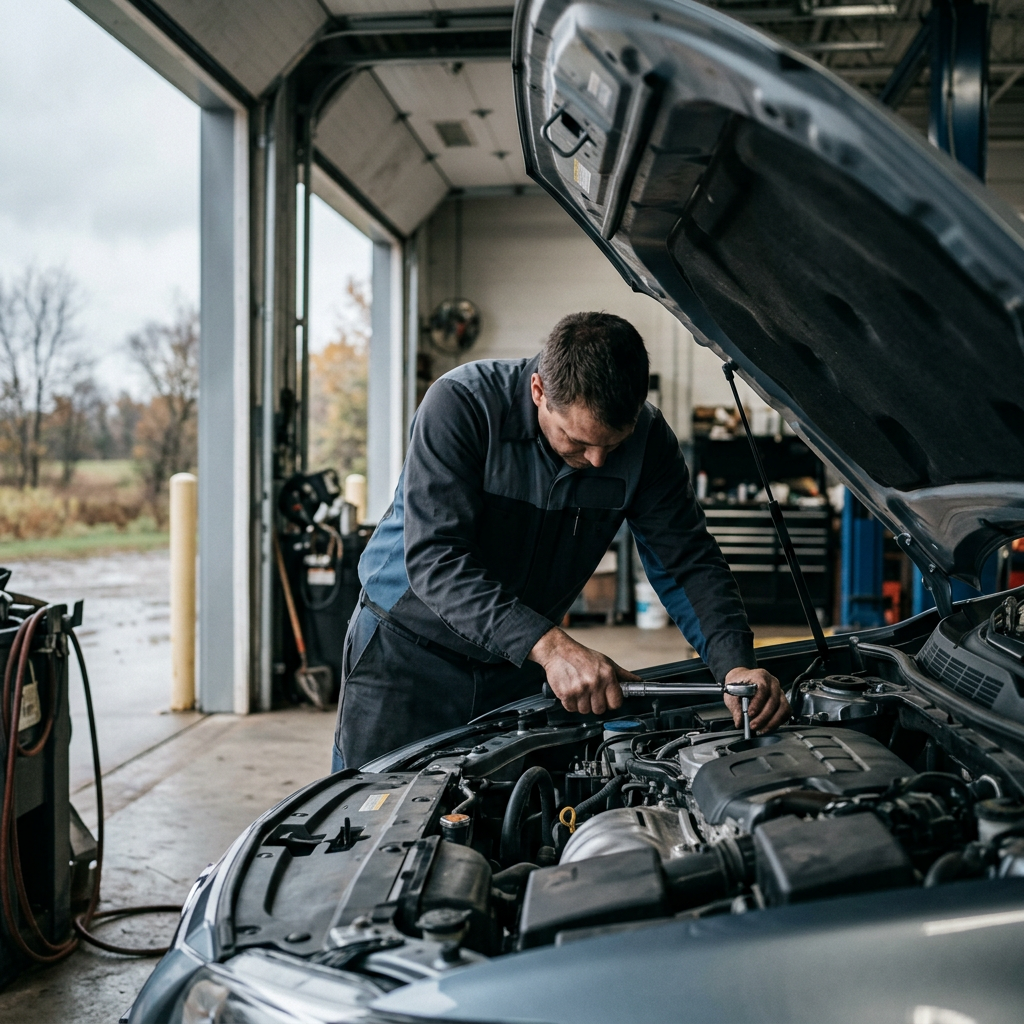
Essential vehicle maintenance milestones occur at 30,000 miles, 60,000 miles, and 100,000 miles, with cumulative routine maintenance costing between $5,000 and $9,000 over a vehicle's first 100,000 miles. The 30,000-mile service focuses on fluid refreshes and air filter replacements; the 60,000-mile milestone addresses brake fluid, drive belts, and early spark plug intervals; and the 100,000-mile service covers major component replacements, including long-life spark plugs, engine coolant, and deep drivetrain fluid flushes.
Adhering to these scheduled service intervals preserves mechanical integrity, protects factory warranty coverage, and prevents costly system failures. Modern vehicles, including the 2026 Jeep Grand Cherokee equipped with a 2.0L engine and TorqueFlite® transmission, feature automatic oil-change indicators. However, manufacturer guidance mandates that oil and filter services must never exceed 10,000 miles, 12 months, or 350 engine hours. Operating under severe driving conditions—such as frequent towing, off-road driving, or prolonged idling—requires shorter service intervals to safeguard internal components against premature wear.
| Service Milestone | Primary Service Items | Key Inspection Focus |
|---|---|---|
| 30,000 Miles | Engine air filter, cabin air filter, oil & filter change, tire rotation | Brake pads, rotors, suspension joints, steering linkage, fluid levels |
| 60,000 Miles | Spark plugs (select engines), brake fluid flush, air filters, oil service | Serpentine belts, cooling hoses, fuel system, brake line integrity |
| 100,000 Miles | Platinum/iridium spark plugs, engine coolant flush, transmission fluid, axle fluids | Water pump, timing chain condition, engine mounts, suspension struts |
For drivers in Onsted who use their trucks and SUVs for hauling equipment across local farmland or towing boats to nearby lakes, maintaining severe-duty fluid schedules is critical. Routine maintenance performed on schedule prevents unexpected breakdowns during heavy work routines or long road trips. If you are operating an older model or evaluating pre-owned vehicle reliability, explore our pre-owned vehicle specials to review multi-point inspected models that have already completed these critical maintenance checkpoints. To clarify your vehicle's specific maintenance requirements or speak directly with our service advisors, give us a quick call or drop by our Clinton service center for personalized support.
Table of Contents
- What Services Are Required at 30,000 Miles and Can You Do Them Yourself?
- What Happens If You Skip 60,000-Mile Maintenance and Do Spark Plugs Need Replacement?
- What Does 100,000-Mile Service Include and Does a Timing Chain Need to Be Replaced?
- Which Service Schedule Is Most Expensive and What Does 100,000-Mile Care Cost?
- How Do Electric Vehicle Maintenance Intervals Compare to Gas Vehicles?
- Scheduled Maintenance FAQ and Expert Service
What Services Are Required at 30,000 Miles and Can You Do Them Yourself?
At 30,000 miles, required maintenance includes replacing the engine air filter and cabin air filter, changing the engine oil and filter, rotating all four tires, and conducting a thorough inspection of the braking system, steering gear, and suspension components.
Vehicle owners can easily perform basic 30,000-mile maintenance items at home, such as swapping out the engine air filter, changing the cabin air filter, and replacing windshield wiper blades with standard hand tools. However, comprehensive fluid inspections, brake rotor thickness measurements, and electronic diagnostic scans are best handled by certified technicians equipped with professional diagnostic gear.
Under the federal Magnuson-Moss Warranty Act, completing 30,000-mile service items yourself or at an independent facility will not void your factory warranty, provided you keep detailed receipts and service records proving the maintenance was performed according to manufacturer specifications. Retaining documentation protects your coverage if a mechanical failure occurs later during the warranty period.
For family vehicles like the 2026 Chrysler Pacifica powered by a 3.6L V6 engine paired with an automatic 9-speed transmission, the 30,000-mile milestone represents the first major preventative service checkpoint. Replacing dirty cabin filters ensures clean climate-control airflow for passengers, while a clean engine air filter maintains optimal fuel efficiency across both daily commutes and highway travel.
Our service advisors notice that truck and SUV owners frequently ask whether 30,000-mile service is strictly required to keep their factory warranty valid before bringing their vehicle into the bay. The answer is straightforward: completing scheduled services on time prevents component neglect, which is the primary reason warranty claims get denied.
What Happens If You Skip 60,000-Mile Maintenance and Do Spark Plugs Need Replacement?
Skipping 60,000-mile vehicle maintenance leads to accelerated component wear, decreased fuel economy, unexpected belt or hose failure, and expensive engine or transmission damage caused by degraded thermal fluids.
Spark plug replacement at 60,000 miles depends entirely on your vehicle's engine design and the spark plug material specified by the manufacturer. For example, the 3.0L engine in the 2026 Ram 1500 requires new spark plugs at the 60,000-mile mark, whereas standard copper plugs on older powertrains need replacement every 30,000 to 60,000 miles. In contrast, vehicles using long-life iridium or platinum plugs typically extend that interval to 100,000 miles.
Drive belts and cooling hoses deteriorate due to both age and mileage, making the 60,000-mile inspection essential regardless of how quickly those miles were driven. Heat cycling, ozone exposure, and engine oil vapor cause rubber serpentine belts to crack, glaze, or lose tension over time. A worn belt can snap without warning, instantly disabling the alternator, power steering, and water pump.
Brake fluid also requires a complete flush every 24 months or 60,000 miles because glycol-based brake fluid absorbs moisture from the atmosphere. Excess moisture lowers the boiling point of the fluid, causing pedal sponginess under heavy braking and internal corrosion inside brake calipers and master cylinders.
When replacing worn drive belts, air filters, or ignition components during major maintenance, install genuine OEM Mopar parts engineered precisely for your powertrain to preserve factory performance and long-term durability.
What Does 100,000-Mile Service Include and Does a Timing Chain Need to Be Replaced?
A standard 100,000-mile service includes replacing the spark plugs, flushing the engine cooling system, changing transmission fluid and filters, renewing differential and transfer case lubricants, and replacing engine drive belts.
A metal timing chain does not need to be replaced at 100,000 miles because it is designed to last the entire lifespan of the engine under normal operating conditions with regular oil changes. Unlike rubber timing belts found on older engine designs—which require mandatory replacement between 90,000 and 100,000 miles to prevent catastrophic valve damage—modern timing chains rely on clean engine oil for lubrication and tensioning.
At 100,000 miles, cooling system maintenance becomes critical. Over time, engine coolant anti-corrosion additives break down, allowing rust and scale to accumulate inside the radiator and heater core. A complete coolant flush restores thermal protection, preventing severe overheating issues during summer driving or heavy towing.
Drivetrain components on four-wheel-drive and all-wheel-drive models also require fresh lubricants at this milestone. The front axle, rear axle, and transfer case gear oils degrade under heat and shear forces, accumulating microscopic metal wear particles that must be drained and refilled with fresh synthetic gear lube to prevent differential failure.
| Component | 60,000-Mile Requirement | 100,000-Mile Requirement |
|---|---|---|
| Spark Plugs | Required for 3.0L Ram engines; inspect others | Required for 5.7L V8 and 3.6L Pentastar engines |
| Engine Coolant | System inspection and freeze-point check | Complete drain, flush, and refill with factory coolant |
| Transmission Fluid | Fluid inspection; flush under severe-duty use | Complete fluid change and filter replacement |
| Timing Component | Inspect serpentine drive belt for cracking | Inspect timing chain tensioner and wear guides |
Which Service Schedule Is Most Expensive and What Does 100,000-Mile Care Cost?
The 100,000-mile maintenance schedule is the most expensive service milestone, with single-visit costs typically ranging from $500 to $1,500 depending on drive configuration, fluid capacities, and required ignition hardware.
The 100,000-mile service carries a higher price tag because it combines multiple labor-intensive tasks into a single appointment, including multi-cylinder spark plug installation, full cooling system flushes, and deep fluid services for the transmission, transfer case, and axles. By comparison, 30,000-mile service visits concentrate primarily on filters, oil, and inspections, making them significantly less costly.
Over a vehicle's initial 100,000 miles of ownership, total cumulative routine maintenance costs average between $5,000 and $9,000. Factors influencing overall expenditure include labor rates, severe-duty operating cycles, towel to hitch usage, and whether maintenance items are completed proactively or delayed until component failure occurs.
For drivers commuting daily from Michigan Center into nearby Jackson for work or towing recreational watercraft to the reservoir, staying ahead of maintenance costs is simple with structured planning. Spreading service items across regular oil-change visits prevents large, unexpected repair bills and maintains optimal fuel economy year-round.
To keep your vehicle performing at its best without stress, easily book your service appointment online to select a time that fits your busy schedule.
How Do Electric Vehicle Maintenance Intervals Compare to Gas Vehicles?
Electric vehicle maintenance intervals require significantly fewer service procedures than internal combustion engine vehicles, eliminating engine oil changes, spark plug replacements, air filter swaps, and timing belt services entirely.
While gas-powered vehicles require engine oil and filter changes every 10,000 miles or 12 months, electric vehicles bypass engine lubrication maintenance completely. However, electric models still require routine chassis maintenance at 30,000, 60,000, and 100,000 miles, including cabin air filter replacements, tire rotations, suspension inspections, and brake fluid moisture testing.
Thermal management systems in electric vehicles utilize specialized battery coolant that requires flushing and renewal near the 100,000-mile mark. Maintaining fresh battery coolant is essential for regulating high-voltage battery temperatures during fast-charging cycles and protecting battery pack longevity.
Winter weather conditions impact electric vehicle operation, with sub-freezing regional temperatures causing temporary range reductions between 15% and 30%. Regular tire rotations every 7,500 to 10,000 miles are vital for EVs due to high instant electric torque, which can accelerate tire tread wear if left unrotated.
If you are interested in ordering an electric or hybrid model tailored to your exact specifications, you can custom order your vehicle directly through our dealership, or explore our new vehicle specials to review current offers on advanced electrified models.
Scheduled Maintenance FAQ and Expert Service
Q: Is 30,000-mile maintenance mandatory to keep my vehicle warranty valid?
Completing recommended maintenance is required to protect your warranty against claims caused by neglect, but you are not obligated to have services performed exclusively at a dealership. You may complete basic tasks yourself or use an independent shop, provided you keep itemized receipts proving all manufacturer maintenance requirements were fulfilled on schedule.
Q: Do engine belts deteriorate based on age or total mileage?
Engine drive belts deteriorate due to both age and mileage. Heat cycles, engine oil exposure, and environmental conditions degrade belt rubber over time, meaning a serpentine belt can fail after five to six years even if the vehicle has not reached the standard 60,000-mile service mark.
Q: What happens if I delay my 60,000-mile transmission fluid service?
Delaying transmission fluid service allows heat and friction to break down fluid viscosity and protective additives. Degraded transmission fluid causes harsh shifting, internal clutch slipping, valve body varnish buildup, and eventual transmission overheating that can lead to total unit failure.
Q: How do severe driving conditions change my maintenance schedule?
Severe driving conditions—such as commercial towing, extended idling, off-road driving, or frequent short trips in sub-zero weather—accelerate fluid oxidation and filter clogging. Under severe conditions, engine oil, differential fluids, and air filter replacement intervals are cut roughly in half compared to standard schedules.
Q: What service records should I keep for resale value and warranty proof?
Maintain a dedicated service log containing dated repair orders, parts receipts, mileage records, and invoice descriptions for every service performed. Documented maintenance history increases resale value by proving proper vehicle care and satisfies factory warranty audit requirements if a major mechanical claim arises.
Maintaining your vehicle according to factory milestone recommendations ensures long-term reliability, optimal safety, and maximum resale value. Our factory-trained service team is ready to assist with everything from routine oil changes to major milestone services. To discuss your maintenance plan or set up your next visit, give us a quick call or get directions to our Clinton showroom and service center today.