

Winter Jeep Wrangler Preparation: Q&A With NewGen CDJR
To keep a Jeep Wrangler performing safely through Michigan freezing spells, set cold tire pressure strictly to the door-jamb placard spec and test the battery before sub-zero mornings arrive. Today, we sit down with Josh Lewis, Service Advisor at NewGen Chrysler Dodge Jeep Ram of Clinton, who brings 6 years of hands-on technical experience helping local drivers navigate winter maintenance.
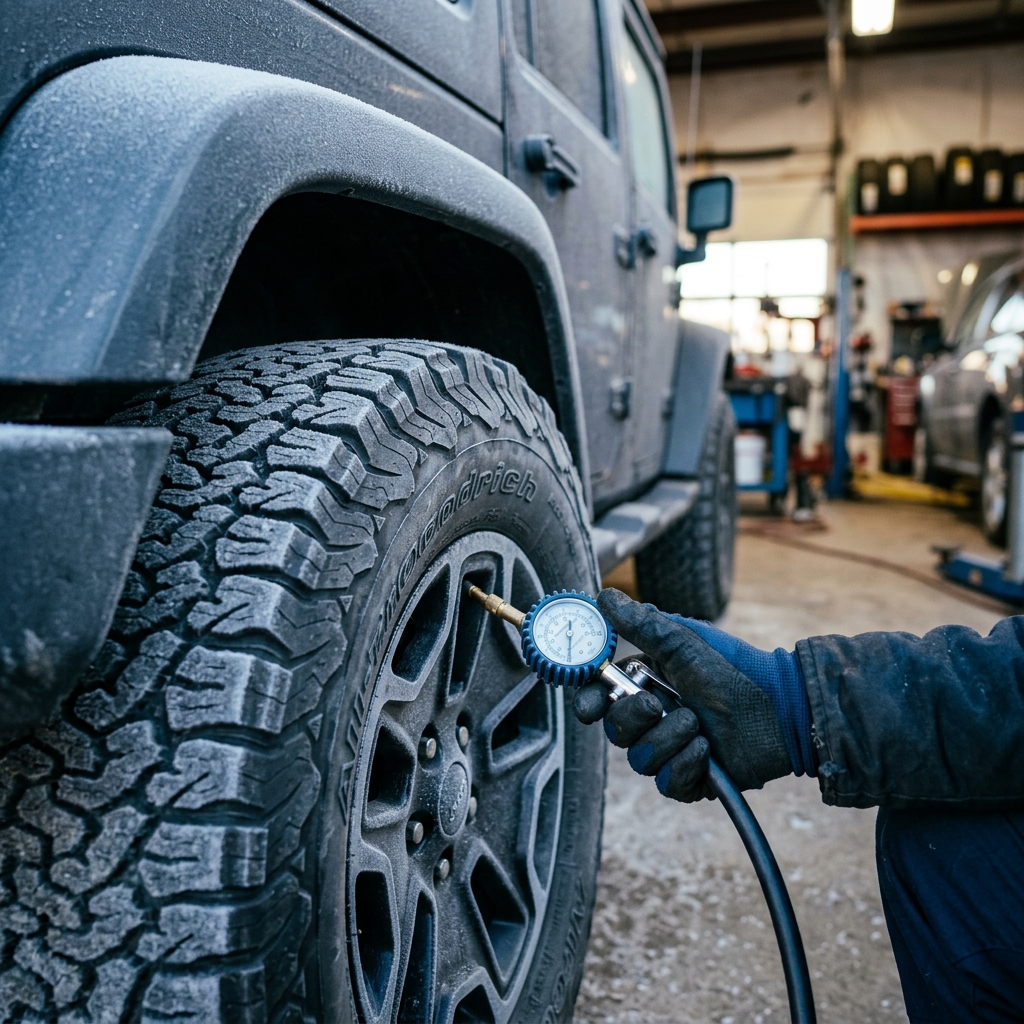
Q: How should I adjust and monitor tire pressure on a Jeep Wrangler as temperatures drop?
A: You should check tire pressure when the tires are cold and inflate them directly to the recommended pounds per square inch listed on your driver door-jamb placard. For every 10-degree Fahrenheit drop in ambient temperature, tire pressure decreases by approximately 1 psi, which frequently triggers the tire pressure monitoring system indicator during sudden Michigan cold snaps. Maintaining proper inflation is essential because underinflated tires compromise handling, accelerate tread wear, and reduce fuel efficiency across freezing pavement.
When local drivers experience early morning pressure drops, many make the mistake of setting pressure while tires are warm from driving, which leads to underinflation once the rubber cools down again. If you routinely travel around Onsted near freezing lakes, checking pressure weekly using a high-quality digital gauge gives you the most reliable reading. You can always stop by our Clinton service center or call us at (517) 456-6555 if your pressure warning light stays illuminated after adjusting your tires.
Q: Which pre-winter maintenance checks are essential for a Jeep Wrangler driven in Michigan?
A: A thorough pre-winter inspection must focus on battery health, cooling system protection, brake component integrity, and wiper blade performance before icy weather sets in. Cold weather dramatically reduces battery cranking output while requiring extra power to start cold engines and run heating systems, so testing a battery that is more than three years old is critical. Additionally, verifying that your engine coolant contains the proper water-to-antifreeze ratio prevents internal engine block freezing and ensures rapid cabin heater delivery during sub-freezing commutes.
Brake inspections are equally vital because worn brake pads or uneven rotor wear can cause unpredictable sliding on slippery winter roads. On models equipped with advanced transfer cases like Command-Trac or Selec-Trac, verifying fluid condition ensures smooth four-wheel drive engagement when snow begins to stack up. Drivers can prepare their vehicles for harsh winter conditions by scheduling a Mopar service appointment online to have certified technicians inspect all critical systems. If you are operating Jeep 4xe plug-in hybrid models, winter maintenance also includes inspecting high-voltage battery charging cables and ensuring thermal management systems are working efficiently in freezing weather.
Q: Is a hardtop better than a softtop for winter driving, and do insulation headliners work?
A: A factory hardtop provides significantly better thermal insulation, structural rigidity against heavy snow loads, and reduced interior wind noise compared to a softtop during winter months. While softtops are engineered from durable materials, freezing temperatures can make vinyl windows brittle and prone to scratching during ice removal, whereas a hardtop handles scraper use and heavy slush accumulations without issue. Installing dense foam insulation headliners directly to the inner panels of the factory hardtop further improves cabin heat retention and creates a quieter driving environment.
"A dense foam hardtop headliner creates an immediate barrier against radiant cold, keeping heat inside the cabin where you need it most."
Adding Mopar insulation headliners helps the climate control system warm the interior faster while reducing the load on your blower motor during bitter cold snaps. The molded panels fit precisely into the recessed sections of the hardtop, offering a factory-finished appearance while dampening ambient road vibration. For drivers who tackle long winter trips across rural roads, this added thermal layer makes an appreciable difference in passenger comfort without modifying the vehicle's structural components.
Q: How do studless winter tires compare to studded tires on icy roads for 4x4 vehicles?
A: Studless winter tires utilize advanced hydrophilic rubber compounds and high-density siping to provide superior grip across snow, slush, and cold dry pavement, while studded tires excel specifically on hard glaze ice. Modern studless tires remain flexible in sub-zero temperatures, allowing thousands of microscopic sipes to bite into packed snow without causing asphalt damage or road noise associated with metal studs. For general winter driving in Michigan, studless tires represent the most versatile choice for four-wheel drive vehicles.
Metal studs physically dig into sheet ice to offer maximum mechanical traction, but they suffer from reduced stopping performance and increased sliding risks on clear, dry highway pavement. Additionally, studless winter tires pair seamlessly with Jeep's advanced 4x4 hardware, allowing systems like Rock-Trac to deliver balanced torque to all four wheels without disrupting electronic stability controls. If you are planning a specialized vehicle build for harsh environments, our service team can guide you when custom ordering a winter-ready vehicle build with factory winter-grade wheel packages.
Q: Is rust protection or undercoating worth the investment to prevent Jeep Wrangler frame corrosion?
A: Professional undercoating and oil-based rust protection are highly worthwhile investments in Michigan because liquid road salt and calcium chloride aggressively attack exposed steel frames and suspension components. Untreated steel boxed frame rails tend to trap moisture, dirt, and salt slurry, which causes hidden internal oxidation over several seasons of salt-belt winter driving. Applying lanolin-based or petroleum-based rust preventatives creates a self-healing moisture barrier that repels corrosive brine from vital underbody components.
Regular high-pressure undercarriage washes are equally essential to clear salt residue out of frame drain holes and skid plate crevices. When maintaining new Jeep Wrangler models equipped with a 3.6-liter V6 or 2.0-liter turbocharged four-cylinder engine, protecting the frame, steering linkage, and exhaust mounts ensures long-term structural integrity and preserves resale value. Investing in seasonal underbody treatments pays massive dividends by preventing costly chassis repairs down the road.
Q: How does the engine block heater support cold starts, and can factory remote start be added?
A: An engine block heater warms the engine block and motor oil by plugging into a standard 120-volt household electrical outlet, which reduces cold-start mechanical friction and speeds up cabin heater delivery in sub-zero weather. Warming the engine coolant prior to starting allows oil to circulate immediately through critical valvetrain components, minimizing engine wear during frigid morning starts. On vehicles parked outdoors in sub-zero conditions, plugging in the block heater for two to three hours before driving provides smoother idling and reduces battery strain.
For Wranglers that did not come from the factory with remote start, genuine Mopar remote start kits can be professionally installed by dealer technicians to integrate seamlessly with your vehicle's electronic architecture. Factory-backed remote start allows you to warm up the engine and precondition the cabin climate control, defrosters, and heated seats from the comfort of your home. When customers ask about upgrading their vehicles for winter, I always walk them through how dealer-installed Mopar remote start maintains full factory warranty coverage while offering reliable key fob integration.
Q: What is the value difference between OEM winter accessories and aftermarket options at NewGen CDJR?
A: Genuine Mopar winter accessories deliver precise factory fitment, matched interior materials, and complete backing under Chrysler, Dodge, Ram, and Jeep warranty standards, whereas aftermarket options often compromise on fit and durability. While aftermarket floor liners or slush mats may offer lower initial costs, Mopar all-weather floor mats feature custom-engineered drain plugs and retention hooks designed specifically for the Wrangler floor pan to keep snow melt from soaking underlying carpet.
Factory winter equipment, including heavy-duty wiper blades, molded splash guards, and battery warmers, undergoes rigorous testing to handle extreme physical stress without degrading. When drivers from Michigan Center commute into Jackson during heavy snowfall, having genuine accessories engineered specifically for their vehicle provides complete peace of mind. You can explore our complete catalog of genuine Mopar accessories online, or visit our team at 1111 W Michigan Ave, Clinton, MI 49236 or call (517) 456-6555 to order factory-tested winter gear today.
© 2026 NewGen Chrysler Dodge Jeep Ram of Clinton. All rights reserved.