

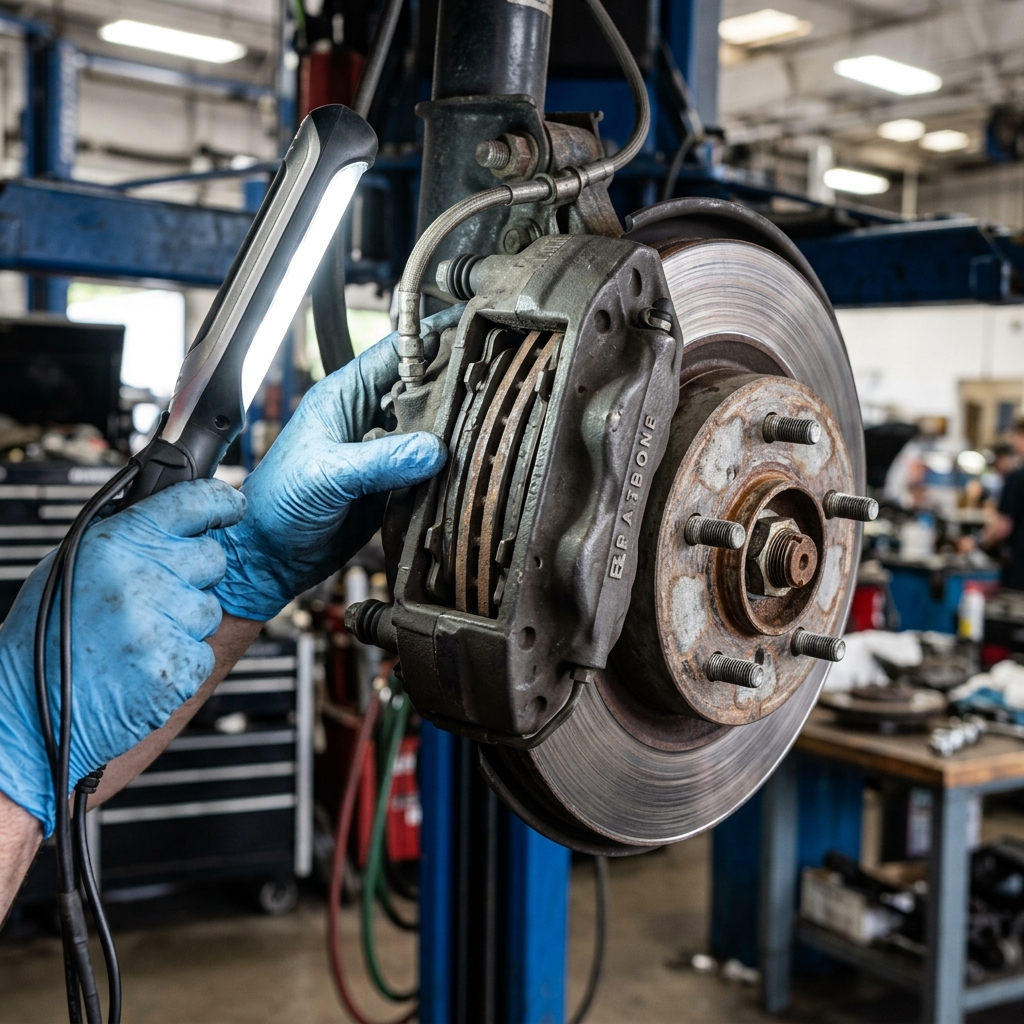
Brake calipers require service when you notice vehicle is pulling to one side while braking, severe uneven pad wear, fluid leaking around the wheel, a soft brake pedal, or a burning smell caused by a sticking piston. While calipers lack a set mileage replacement schedule, they typically require inspection around 75,000 miles or whenever servicing brake pads.
Mechanical components inside the wheel well face constant exposure to road spray, dirt, and extreme thermal cycles. Driving conditions around Onsted, where rural gravel roads and seasonal lake moisture accelerate undercarriage grime buildup,, make regular visual checks essential during routine oil changes and tire rotations. When a caliper fails to apply or release pressure evenly, stopping distances increase and vehicle stability is compromised.
Our certified service team can pressure-test hydraulic lines, check piston movement, and inspect rubber seals to determine whether hardware needs cleaning, lubrication, or complete replacement. If you notice unusual resistance or excessive heat coming from a wheel hub, contact our service desk at (517) 456-6555 or bring your vehicle to our Clinton service center location to help prevent secondary rotor score marks and suspension damage.
Table of Contents
- What Is a Brake Caliper and How Does It Function in Your Braking System?
- What Are the Primary Signs and Symptoms of a Failing or Sticking Brake Caliper?
- How Often Do Brake Calipers Need Service or Replacement?
- Is It Recommended to Replace Brake Calipers in Pairs or Rebuild Them?
- How Often Should Vehicle Brake Fluid Be Flushed Under Normal Driving?
- Quick Answers to Common Questions About Brake Caliper Service
- Schedule Brake Caliper Inspection at NewGen Chrysler Dodge Jeep Ram
What Is a Brake Caliper and How Does It Function in Your Braking System?
A brake caliper is a hydraulic clamping housing that forces brake pads against the spinning rotor to convert kinetic energy into stopping friction. When you press the brake pedal, hydraulic fluid pressurizes the system, forcing internal pistons outward against the back of each pad.
Modern light trucks, SUVs, and passenger cars rely on two primary caliper structural designs:
- Floating calipers (or sliding calipers): These feature one or two pistons on the inboard side of the assembly. When fluid pushes the inboard pad against the rotor, the sliding body pulls the outboard pad against the outer rotor face.
- Fixed calipers: These remain rigidly mounted to the steering knuckle or axle housing. They house pistons on both the inboard and outboard sides, squeezing the rotor simultaneously for immediate pedal response and high thermal stability under heavy loads.
Critical internal components that maintain this operation include:
- Rubber square-cut piston seals that retain high hydraulic pressure and pull the piston back slightly when pedal force is released
- Protective dust boots that keep moisture, road salt, and abrasive grit out of the finely machined piston bore
- Caliper slide pins and guide bushings that allow a floating caliper housing to move laterally with minimal friction
- Bleeder valves that allow technicians to purge air bubbles and contaminated fluid from the hydraulic housing
What Are the Primary Signs and Symptoms of a Failing or Sticking Brake Caliper?
Primary signs of a failing or sticking brake caliper include directional pulling during deceleration, heavy drag at a single wheel, localized burning smells, rapid wear on one brake pad, and visible brake fluid leaks. Identifying these warning signals early protects adjacent brake rotors and wheel bearings from severe thermal damage.
A seized piston or stuck guide pin prevents the brake pad from retracting away from the disc. This constant drag generates high heat, which can warp the rotor, crystallize pad compound, and produce a sharp burning odor after short drives. Drivers often notice the engine working harder to maintain speed, resulting in sluggish performance.
When fluid leaks past a damaged piston dust boot or degraded internal seal, system hydraulic pressure drops. This creates a soft, spongy, or sinking brake pedal feel. If a front caliper applies uneven pressure compared to the opposite side, the vehicle will pull toward the functional caliper during hard stops.
Our technicians frequently find that vehicles brought in for squealing or grinding show accelerated wear on an inner pad while the outer pad retains plenty of material. This severe inner-to-outer pad wear variance points directly to frozen sliding hardware or a damaged piston that fails to release hydraulic pressure.
How Often Do Brake Calipers Need Service or Replacement?
Brake calipers do not have a fixed mileage replacement schedule, but they typically require inspection starting around 75,000 miles and generally last between 75,000 and 100,000 miles. Slide pins, guide boots, and hardware should be cleaned, inspected, and lubricated during every brake pad replacement, usually every 30,000 to 50,000 miles.
Environmental conditions heavily influence how long caliper hardware lasts. Towing heavy trailers with a Ram 1500 equipped with a 5.7L HEMI V8 or navigating wet, muddy agricultural routes around Michigan Center subjects wheel components to road salt, grit, and high thermal loads that accelerate corrosion inside guide pin bores. Routine cleaning clears out accumulated road debris before it causes mechanical binding.
Replacing hardened dust boots, wire-brushing slider channels, and applying high-temperature silicone grease keeps floating calipers sliding smoothly. If internal metal bores become pitted by rust or threads strip during hardware service, complete assembly replacement becomes necessary. Drivers can conveniently keep up with maintenance by booking a brake inspection online or ordering genuine Mopar brake components directly through our parts center.
Is It Recommended to Replace Brake Calipers in Pairs or Rebuild Them?
Replacing brake calipers in axle pairs is strongly recommended to preserve balanced hydraulic pressure, uniform stopping force, and even pad wear across both sides of the vehicle. Rebuilding a caliper with new rubber seals is possible, but complete replacement is generally safer and more practical when severe rust or cylinder bore pitting is present.
Installing a new caliper on one side while leaving an aged, partially worn unit on the opposite wheel can create minor hydraulic response variations. The new caliper moves freely with minimal resistance, while the older unit may lag slightly, causing subtle vehicle pulling under panic-stop conditions. Replacing both left and right assemblies simultaneously restores factory-balanced braking performance.
A standard caliper rebuild kit contains:
- Fresh rubber piston seals and dust boots
- New slide pin boots and mounting hardware
- Replacement copper crush washers for the hydraulic banjo fitting
- Bleeder valve caps and retaining clips
Rebuilding is effective only if the internal cylinder walls and bleeder valve threads remain completely free of deep corrosion. If road salt has pitted the metal bore, fresh rubber seals will quickly wear and leak fluid. Installing factory-assembled replacement units ensures reliable sealing and long-term durability.
How Often Should Vehicle Brake Fluid Be Flushed Under Normal Driving?
Vehicle brake fluid should be flushed every 2 to 3 years or roughly 30,000 miles under normal driving conditions to remove absorbed moisture and prevent internal hydraulic corrosion. Because standard glycol-based brake fluid is hygroscopic, it naturally absorbs water vapor through microscopic pores in rubber hoses and reservoir caps.
Water contamination significantly lowers the fluid's boiling point and oxidizes metal lines, master cylinders, and internal caliper pistons. During heavy braking or mountain driving, contaminated fluid can boil, generating compressible steam pockets that cause sudden pedal fade. Trapped moisture also causes pitting inside iron or aluminum caliper bores, tearing internal seals and seizing pistons.
Performing regular fluid flushes purges suspended water, metal debris, and degraded chemical additives before internal corrosion forms. Maintaining clean fluid is especially critical if you plan to factory order a heavy-duty truck for regular towing, as elevated braking temperatures accelerate fluid degradation.
Quick Answers to Common Questions About Brake Caliper Service
Q: How long do brake calipers typically last on trucks and SUVs?
Brake calipers on heavy-duty trucks and SUVs generally last between 75,000 and 100,000 miles under typical driving conditions. Regular maintenance, such as flushing brake fluid every 30,000 miles and inspecting slide pins during pad changes, can extend their lifespan. Frequent towing, off-road driving, or continuous exposure to winter road salt may require earlier service.
Q: Can you safely drive a vehicle with a sticking brake caliper?
Driving with a sticking brake caliper is unsafe and causes severe secondary component damage. Continuous contact between the pad and rotor creates extreme heat that warps the rotor, wears out pad material rapidly, and can boil brake fluid, causing pedal failure. If you detect dragging, pulling, or a burning odor, have the vehicle inspected immediately.
Q: Do brake calipers always need to be replaced when installing new pads and rotors?
Brake calipers do not require automatic replacement during every pad and rotor installation. Calipers only need replacement or rebuilding if inspection reveals fluid leakage, a seized piston, torn dust boots, or frozen slide pins. If the caliper operates smoothly and seals tightly, replacing pads and rotors alone is completely sufficient.
Q: What causes a brake caliper piston to freeze or seize in place?
A caliper piston typically freezes due to internal rust caused by moisture in old brake fluid or external corrosion entering through a torn rubber dust boot. Road salt, road debris, and thermal degradation of internal rubber seals also prevent the piston from sliding smoothly back into its bore when pedal pressure is released.
Q: How does regenerative braking affect caliper service on hybrid vehicles?
Vehicles utilizing regenerative braking rely on electric resistance for routine deceleration, meaning hydraulic friction brakes are engaged less frequently. While this extends pad life, it can allow caliper slide pins and pistons to seize from underuse and moisture exposure. Periodic physical inspection and lubrication remain essential. Learn more about our dealership history and service team standards to see how we maintain all powertrain types.
Schedule Brake Caliper Inspection at NewGen Chrysler Dodge Jeep Ram
Maintaining responsive, reliable braking requires timely inspection of calipers, pads, rotors, and hydraulic fluid. Whether you operate a heavy-duty Ram truck or drive Jeep 4xe plug-in hybrid models, addressing dragging, leaks, or pulling promptly ensures complete stopping confidence.
Our factory-trained technicians use specialized diagnostics and genuine parts to restore your vehicle to factory braking specifications. Contact our team by calling (517) 456-6555 or stop by our Clinton service department location today for comprehensive brake system care.
© 2026 NewGen Chrysler Dodge Jeep Ram of Clinton. All rights reserved.