

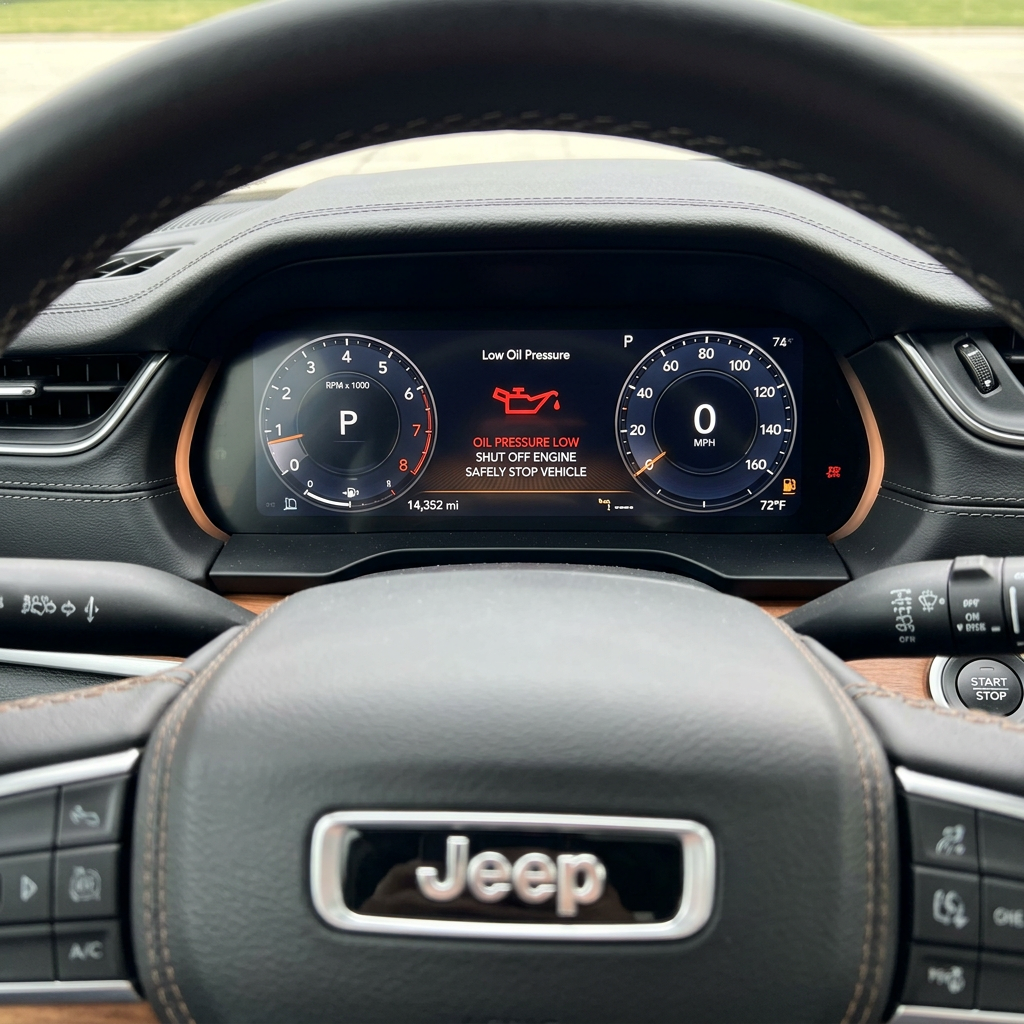
When an oil pressure warning light turns on while driving, safely pull off the road immediately and shut off the engine. Continuing to operate a vehicle with low oil pressure deprives vital internal components of hydraulic lubrication, which can cause catastrophic mechanical engine damage within minutes. Once stopped safely on level ground, wait several minutes for oil to settle back into the oil pan, then check the dipstick level and look beneath the engine bay for visible fluid leaks before attempting any further vehicle operation.
- Pull Over Safely: Activate your hazard lights, guide your vehicle out of traffic onto a safe shoulder or parking area, and turn off the ignition right away.
- Allow Oil to Settle: Wait 3 to 5 minutes with the engine off so the oil drains completely back into the oil pan for an accurate dipstick measurement.
- Inspect the Dipstick: Pull the oil dipstick, wipe it clean with a rag, reinsert it fully, and remove it again to verify whether the oil level falls between the minimum and maximum fill indicators.
- Top Off Engine Oil: If the oil level registers below the lower mark, add the manufacturer-recommended oil viscosity in small increments until the proper level is restored.
- Check for Active Leaks: Look under the engine and around the oil filter housing for puddles, dripping fluid, or severe impact damage.
- Keep Engine Off if Warning Persists: If the oil level is already full, if engine knocking or ticking sounds are present, or if the warning remains illuminated after adding fluid, do not restart the vehicle. Arrange for professional towing or tow coordination directly to our Clinton service center location.
If you experience a roadside emergency or low pressure event on the road, Chrysler, Dodge, Jeep, Ram Roadside Assistance provides manufacturer-backed support and emergency towing to authorized service facilities; you can reach them directly at 1-800-521-2779 or by giving our local team a quick phone call at (517) 456-6555 for guidance.
Table of Contents
- What Does the Oil Pressure Warning Light Mean and How Do You Identify It?
- Can an Engine Have Full Oil Level But Still Experience Low Oil Pressure?
- How Do Technicians Verify If an Oil Pressure Sensor Is Faulty?
- What Is the Part Cost for a DIY Oil Pressure Sensor Replacement Versus Professional Care?
- Common Questions About Engine Oil Pressure and Warning Indicators
- Schedule Certified Engine and Oil Service
What Does the Oil Pressure Warning Light Mean and How Do You Identify It?
An illuminated oil pressure light indicates that hydraulic pressure within the engine's lubrication system has dropped below safe operational limits, preventing oil from circulating effectively across vital moving parts. It is represented on the instrument cluster by an icon shaped like an oil can, often depicted in red or amber with a small drop falling from the spout.
Understanding the visual presentation and underlying mechanics of dashboard alerts helps drivers react appropriately:
- Red Oil Can Symbol: Indicates a critical loss of engine oil pressure or an severely depleted fluid supply. This alert requires immediate engine shutdown to prevent metal-on-metal friction across crankshaft bearings, camshafts, and cylinder walls.
- Amber or Yellow Oil Symbol: Typically alerts the driver that the engine oil level is approaching the minimum mark or that a routine oil change interval is due, depending on vehicle design. While less urgent than a red warning, it requires prompt topping off or maintenance.
- Text Alerts: Display messages such as Low Oil Pressure or Engine Oil Low on digital driver information displays, accompanying the illuminated dashboard icon.
Engine oil serves as both a lubricant and a hydraulic fluid. The oil pump draws oil from the pan and forces it under pressure through internal galleries to cushion moving metallic components. When pressure drops below required thresholds—typically around 5 psi to 10 psi at idle—the spring-loaded oil pressure switch closes its circuit, triggering the warning light on your display.
Can an Engine Have Full Oil Level But Still Experience Low Oil Pressure?
A vehicle can maintain a full oil level on the dipstick yet still register critically low engine oil pressure. Dipstick measurements confirm only the volume of fluid stored in the oil pan, whereas pressure represents the force generated by the oil pump to push that fluid through restricted galleries and tight bearing clearances.
Several mechanical conditions can cause a loss of pressure despite adequate oil volume:
- Failing Oil Pump: Mechanical wear on pump gears or internal housing surfaces reduces the pump's capacity to build and sustain hydraulic pressure throughout the engine.
- Clogged Pickup Tube Screen: Debris, metallic particles, or engine sludge settling in the oil pan can block the mesh screen at the intake of the oil pickup tube, starving the pump of fluid.
- Stuck Pressure Relief Valve: The oil pump includes a spring-loaded relief valve designed to bleed off excessive pressure at high engine speeds. If debris causes this valve to stick open, oil bypasses the engine galleries and drains straight back into the pan.
- Excessive Bearing Wear: Crankshaft main bearings and connecting rod bearings operate with clearances measuring thousandths of an inch. As bearings wear down over high mileage, internal clearances widen, allowing pressurized oil to flow out too quickly and causing overall system pressure to drop.
- Thermal Breakdown and Incorrect Viscosity: Using engine oil with a viscosity lower than specified—or running oil that has broken down from extreme heat—reduces fluid resistance, leading to pressure drops under heavy engine loads.
Farmers and truck owners hauling heavy utility trailers across the unpaved back roads around Onsted subject engines to high thermal loads, where fluid breakdown or oil sloshing across uneven terrain can exacerbate internal hydraulic drops if oil viscosity or pickup screens are degraded.
How Do Technicians Verify If an Oil Pressure Sensor Is Faulty?
Technicians verify a faulty oil pressure sensor by removing the electrical sending unit from the engine block and installing a calibrated mechanical pressure gauge directly into the primary oil galley port. If the physical gauge measures pressure within manufacturer specifications while the electronic sensor or instrument cluster reports low pressure, the sensor or its electrical circuit is confirmed as the root cause.
The diagnostic verification process involves systematic testing procedures:
- Diagnostic Scan and Visual Inspection: Technicians connect a scan tool to retrieve diagnostic trouble codes—such as P0520 (Oil Pressure Sensor Circuit) or P0522 (Low Voltage)—and inspect the sensor body and wiring harness for oil saturation, melted insulation, or loose connector pins.
- Mechanical Pressure Testing: Unplugging the electronic sending unit allows technicians to thread a master hydraulic pressure gauge into the threaded oil port using specialized adapters.
- Operational Testing Across RPM Ranges: With the mechanical gauge attached, the technician starts the engine, brings it to normal operating temperature, and records physical pressure readings at idle (typically 10 psi to 25 psi) and at 3,000 rpm (typically 35 psi to 65 psi).
- Multimeter Electrical Testing: If mechanical pressure is normal, technicians check reference voltage (typically 5 volts) supplied to the sensor from the powertrain control module and measure signal wire resistance to identify broken wires, bad grounds, or internal sensor short circuits.
When vehicles arrive at our service department with an active oil pressure warning, our technicians always verify actual engine hydraulic pressure with a mechanical gauge before replacing electrical components or clearing diagnostic codes.
What Is the Part Cost for a DIY Oil Pressure Sensor Replacement Versus Professional Care?
A replacement oil pressure sensor part generally costs between $15 and $60 at retail auto parts outlets, making DIY replacement seem like an inexpensive fix. However, replacing the sensor without performing a mechanical pressure check creates substantial mechanical risk if the warning light was actually caused by a failing oil pump, severe bearing wear, or a clogged pickup screen.
| Service Aspect | DIY Replacement | Professional Certified Care |
|---|---|---|
| Standalone Part Cost | $15 to $60 (aftermarket sensor) | $30 to $90 (Genuine Mopar OEM sensor) |
| Specialized Tools Needed | Deep socket set, catch pan, basic wiring tools | Master mechanical pressure gauge, diagnostic scan tool, digital multimeter |
| Pressure Verification | Unverified (assumes electrical failure) | Confirmed via physical hydraulic gauge testing |
| Engine Protection | High risk if underlying pressure loss is ignored | Complete system inspection with labor and parts warranty coverage |
Attempting a DIY swap on modern engines often presents access challenges, as sensors are frequently tucked behind intake manifolds or near steering components. Over-tightening an aluminum-threaded sensor can crack the engine block casting, while under-tightening leads to severe oil leaks under operating pressure. Utilizing factory-trained technicians ensures correct torque specifications, proper harness routing, and genuine OEM component compatibility.
Drivers seeking accurate diagnostics can streamline their maintenance by scheduling a service appointment online or ordering genuine Mopar parts through our dedicated parts department.
Common Questions About Engine Oil Pressure and Warning Indicators
Q: How does oil viscosity affect pressure readings during cold winter starts?
Cold weather causes engine oil to thicken, increasing fluid resistance as the oil pump forces viscous oil through narrow passages. This temporary flow resistance can cause elevated oil pressure readings on instrument cluster gauges until the engine reaches operating temperature. Using engine oil with a cold-viscosity rating heavier than specified (for example, 10W-30 instead of 0W-20) delays oil flow to overhead camshafts during sub-zero starts, triggering brief warning lights or elevated pump relief valve bypass events.
Q: Does a flickering oil pressure light at idle speed indicate immediate engine failure?
A flickering oil pressure light at idle speed indicates that hydraulic pressure is hovering precisely around the oil pressure switch threshold, often around 4 psi to 7 psi. While a flicker at hot idle does not mean the engine has completely seized, it warns of diluted oil, elevated engine operating temperatures, severe fluid breakdown, or wear across internal main bearings. The vehicle should be inspected immediately before bearing damage progresses.
Q: How can onboard vehicle technology alert drivers to oil pressure issues before a dashboard light triggers?
Modern vehicle architectures continuously monitor engine telemetry through powertrain sensors. Digital driver displays and telematics platforms transmit vehicle health updates directly to instrument clusters and mobile applications, alerting owners to reduced oil life percentages or pending diagnostic codes before severe pressure drops occur. Drivers can review Uconnect vehicle health reporting features to stay informed about active sensor alerts and scheduled maintenance windows.
Q: Can a clogged oil filter bypass valve cause a low pressure warning?
If an oil filter becomes saturated with contaminants, its internal pressure differential increases. An internal bypass valve is engineered to open, allowing unfiltered oil to flow so the engine does not starve. However, if the bypass valve sticks closed or if the filter media completely collapses under high pressure, oil flow to the main galleries is severely restricted, causing pressure downstream of the filter housing to drop rapidly.
Q: What role does the oil pump pressure relief valve play in regulating system pressure?
The oil pump pressure relief valve maintains safe hydraulic levels by bleeding off excess volume when engine speed rises. A internal spring holds the valve closed during idle. As engine rpm increases and the pump moves more fluid, hydraulic force pushes the valve open against spring tension, routing excess oil back into the oil pan. If varnish or metal shavings cause the relief valve to stick in the open position, pressure escapes constantly, keeping system pressure dangerously low even at higher speeds.
Commuters taking route connections between Michigan Center and nearby industrial parks depend on consistent engine lubrication during highway acceleration, where telematics and physical pressure monitoring prevent unexpected roadside delays. You can learn more about our Clinton service center history and expertise to see how our facility supports local drivers.
Schedule Certified Engine and Oil Service
Resolving an illuminated oil pressure light quickly protects your vehicle's engine from costly mechanical damage and keeps your vehicle performing reliably on every drive. Whether your vehicle requires a simple oil level adjustment, diagnostic sensor verification with a mechanical pressure gauge, or complete lubrication system service, our factory-certified technicians provide thorough inspections using genuine original equipment parts.
Visit our team at our convenient location on West Michigan Avenue for complete diagnostic support and routine vehicle maintenance. You can speak with our service advisors directly by calling (517) 456-6555 or explore our current service offers before your appointment.
© 2026 NewGen Chrysler Dodge Jeep Ram of Clinton. All rights reserved.