

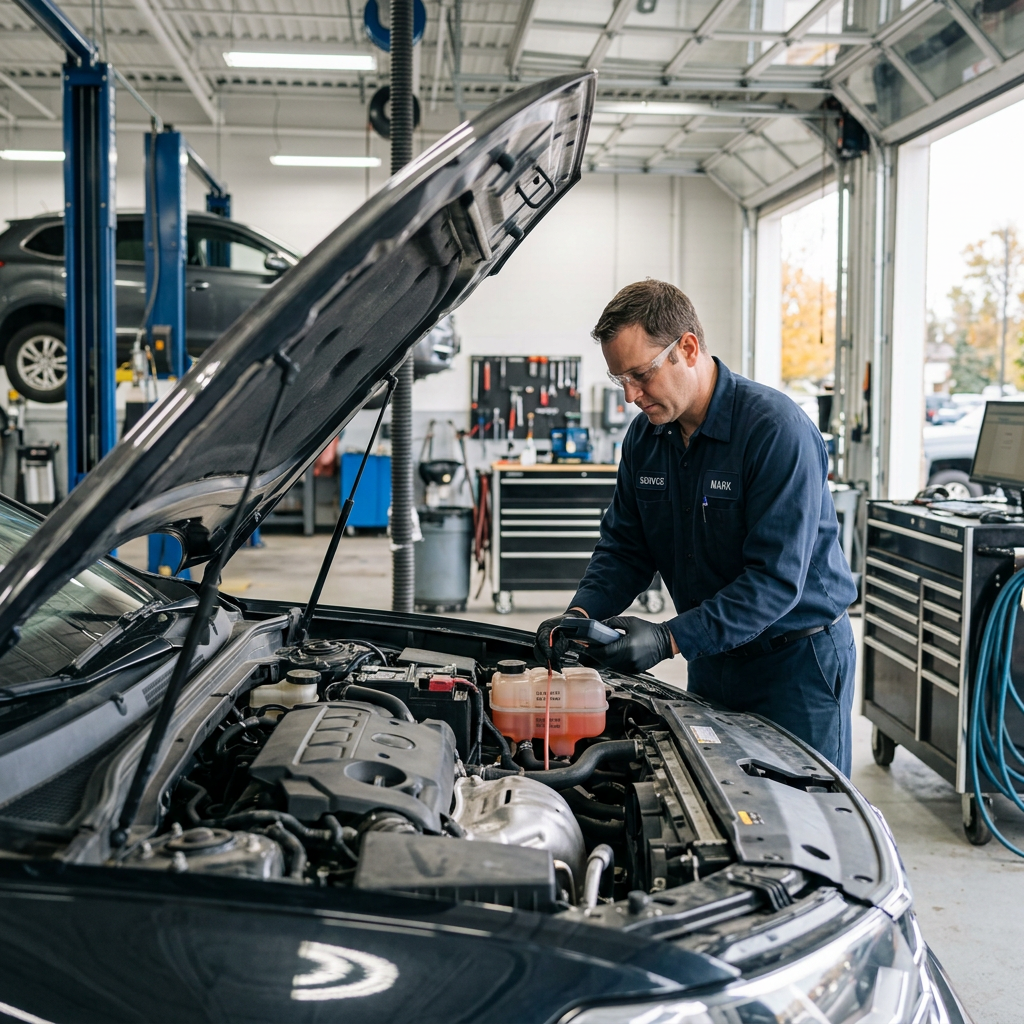
Pull over safely, turn off the engine immediately, and let the cooling system settle down before taking any further action. Continuing to drive while the red dashboard temperature symbol is lit risks severe internal damage, such as warped cylinder heads or a blown head gasket. Safely coasting to the shoulder, shutting down the ignition, and opening the hood to let heat escape prevents localized thermal hot spots from destroying critical engine components.
When the warning light illuminates while driving, turn off the air conditioning immediately to reduce the heat load on the engine belt and cooling stack. If traffic prevents an immediate stop, turning the cabin heater to maximum heat and high fan speed helps pull excess thermal energy out of the engine block into the passenger compartment until a safe spot is available. Once stopped in a secure location, switch on hazard lights, ensure passengers exit away from traffic if parked on a busy road, and let the vehicle idle down or shut off depending on steam visibility.
Never attempt to remove the radiator cap or twist open a pressurized coolant expansion tank while the engine is hot. Pressurized coolant boils at elevated temperatures, and releasing the cap on a hot system releases scalding steam and boiling fluid that can cause severe skin burns. Wait at least 30 to 45 minutes until the hoses feel pliable and cool to the touch before checking fluid levels.
If steam billows from under the hood, liquid puddles beneath the engine compartment, or the temperature gauge remains pinned in the red zone, do not restart the vehicle. Contact Chrysler, Dodge, Jeep, Ram Roadside Assistance: 1-800-521-2779 for official manufacturer-backed towing directly to an authorized service center. Our team at NewGen Chrysler Dodge Jeep Ram of Clinton can also assist in arranging transport to our Clinton service center when you give us a quick call from the road.
Table of Contents
- What Does a Red Engine Temperature Light Mean and What Is Normal Operating Temperature?
- Why Might Both the Check Engine Light and Temperature Light Turn On Together?
- Can You Mix Different Colors of Coolant and What Types Do Modern Vehicles Use?
- How Much Does It Cost to Fix an Engine Overheating Problem or Replace an Engine?
- Common Questions About Vehicle Cooling Systems and Overheating
- Schedule Expert Cooling System Maintenance
What Does a Red Engine Temperature Light Mean and What Is Normal Operating Temperature?
A red engine temperature light indicates that engine coolant temperature has exceeded safe operational thresholds, signaling an active overheating event. Modern passenger vehicles operate within a standard thermal range of 195°F to 220°F, maintained by a closed-loop system of fluid, pumps, sensors, and airflow controls. When system temperature rises beyond this window, internal pressures surge, oil viscosity breaks down, and structural engine components begin to expand unevenly.
Dashboard temperature indicators fall into three general alerts:
- Blue Temperature Light: Indicates that coolant temperature is below normal operating temperature, which is standard during cold engine starts in winter.
- Solid Red Light or High Gauge Needle: Signals that coolant has surpassed safe operating limits and requires immediate shutdown to protect internal metals.
- Flashing Red Light: Warns of extreme thermal pressure or critical fluid loss, requiring immediate roadside intervention.
Overheating occurs when heat generation outpaces the cooling system's heat dissipation capacity. Common mechanical failure points include a stuck-closed thermostat, an electric radiator fan failure, a worn water pump impeller, a clogged radiator core, or a pinhole leak in a radiator hose. Because modern aluminum engine blocks and cylinder heads conduct heat rapidly, driving even a short distance with a red warning light can warp metal mating surfaces.
Our service department stocks factory-engineered replacement components, including high-flow thermostats and heavy-duty water pumps. Keeping your vehicle maintained with genuine Mopar replacement parts ensures that thermal sensors, gaskets, and cooling fans match original equipment specs for long-term engine protection.
Why Might Both the Check Engine Light and Temperature Light Turn On Together?
When the check engine light and temperature light illuminate simultaneously, the vehicle's engine control module has detected secondary combustion or sensor faults triggered by extreme internal heat. As coolant temperatures climb past normal limits, excessive cylinder head temperatures cause fuel mixtures to ignite prematurely before spark plug firing. This pre-ignition or engine knocking causes cylinder misfires, triggering OBD-II trouble codes that light up the check engine lamp alongside the thermal warning indicator.
Simultaneous warning lights typically point to several combined systemic issues:
- Thermal Protection Failures: The control module detects extreme cylinder head heat and limits engine output to prevent catastrophic piston or valve damage.
- Faulty Coolant Temperature Sensors: A shorted or failing sensor sends erratic voltage signals, causing the computer to report overheating while logging a sensor circuit fault code.
- Blown Head Gaskets: Exhaust gases leak into cooling passages, displacing liquid coolant with air pockets and triggering misfire codes across multiple cylinders.
- Low Oil Pressure or Lubrication Failure: Extreme engine heat thins out motor oil, causing oil pressure drops that trigger secondary pressure and timing solenoid alerts.
Driving with both indicators active risks severe engine destruction within minutes. If thermal protection fails, excessive cylinder expansion can cause piston scuffing, dropped valve seats, or complete block cracking. Transporting the vehicle on a flatbed tow truck to a diagnostic facility is essential to retrieve stored diagnostic trouble codes and measure cooling system pressure before attempting any repair.
Can You Mix Different Colors of Coolant and What Types Do Modern Vehicles Use?
Never mix different colors or types of engine coolant, as blending incompatible chemical formulations causes a severe reaction that forms thick gel or sludge inside cooling passages. Coolant colors correspond to specific corrosion inhibitor packages tailored to protect particular metal alloys inside the engine block, radiator, and heater core. Mixing two incompatible fluid types neutralizes these protective additives and clogs narrow passages inside the water pump and heat exchangers, leading directly to engine overheating.
Modern automotive coolants fall into three distinct chemical technology categories:
- Inorganic Additive Technology (IAT): Typically green, IAT uses silicates and phosphates to protect cast-iron blocks, requiring replacement every 2 years or 30,000 miles.
- Organic Acid Technology (OAT): Typically orange, purple, or red, OAT utilizes organic acids without silicates for aluminum and nylon cooling components, lasting up to 10 years or 150,000 miles.
- Hybrid Organic Acid Technology (HOAT): Typically pink or yellow, HOAT combines organic acids with reduced silicates to protect multi-metal systems in heavy-duty trucks and SUVs.
For example, modern Jeep, Ram, Dodge, and Chrysler models powered by engines like the 3.6L Pentastar V6 or 5.7L HEMI V8 rely on precise factory-specified OAT fluid formulations. Adding conventional green IAT fluid to a system containing purple OAT fluid causes silicate precipitation, creating gel deposits that ruin internal water pump seals and plug heater cores.
If you ever need to top off fluid during an emergency roadside situation and the exact factory formulation is unavailable, distilled water is a safer temporary option than adding an incompatible coolant color. Flush the system completely with factory fluid as soon as possible. Drivers arranging heavy-duty cooling upgrades when configuring a new vehicle through a custom factory order can ensure their powertrain comes equipped with factory heavy-duty radiators and high-capacity fluid reserves designed for demanding towing environments.
How Much Does It Cost to Fix an Engine Overheating Problem or Replace an Engine?
Repair costs for engine overheating depend heavily on how quickly the driver stops the vehicle after the temperature light turns on. Minor cooling repairs addressed before internal engine damage occurs are relatively low-cost preventative services. However, continuing to drive an overheating vehicle leads to major structural engine damage that escalates repair expenses exponentially.
| Cooling System Repair Type | Typical Cost Range | Primary Components Involved |
|---|---|---|
| Thermostat Replacement | Varies | New thermostat, housing gasket, coolant bleed |
| Coolant Hose / Belt Replacement | Varies | Upper/lower hoses, serpentine belt, clamps |
| Radiator Replacement | Varies | Radiator core, cap, system pressure test |
| Water Pump Replacement | Varies | Water pump assembly, timing belt/chain seal, fresh coolant |
| Head Gasket Repair | Varies | Head gasket, cylinder head machining, head bolts, oil/coolant flush |
| Complete Engine Replacement | Varies | Remanufactured/new long block, full labor, gaskets, fluids |
Ignoring a temperature light and driving until the engine stalls from thermal seizure almost always results in warped heads, scored cylinder walls, or cracked engine blocks. In those catastrophic scenarios, replacing the entire engine assembly with a new or remanufactured unit is the only remedy. Timely diagnosis of small cooling leaks, thermostat sticking, or cooling fan degradation prevents a simple fluid service from turning into a multi-thousand-dollar engine overhaul.
Common Questions About Vehicle Cooling Systems and Overheating
Our service team frequently answers questions from drivers looking to protect their engines from unexpected overheating events. Here are detailed technical answers to the most common cooling system inquiries.
Q: Can a faulty coolant temperature sensor cause a false temperature light?
Yes, a shorted or degraded coolant temperature sensor can send incorrect electrical voltage signals to the engine control module, triggering a dashboard light even when actual fluid temperatures are normal. However, because you cannot verify sensor accuracy on the side of the road, always treat a temperature warning light as an authentic overheating emergency until a certified technician performs a circuit test and cooling pressure inspection.
Q: How often should engine coolant be completely flushed and replaced?
Coolant service intervals depend on fluid technology and vehicle design. Older vehicles using green IAT coolant require flushes every 2 years or 30,000 miles, whereas modern vehicles equipped with OAT or HOAT formulations can go 5 to 10 years or up to 150,000 miles under normal driving conditions. Inspecting fluid clarity, pH balance, and freeze protection at every oil change prevents internal corrosion. You can learn about our dealership team and our certified service capabilities to ensure your vehicle follows its exact OEM schedule.
Q: Is tap water acceptable for topping off a low cooling system in an emergency?
Tap water should only be used as an extreme last resort to reach a safe stop, because tap water contains minerals like calcium and magnesium that deposit scale on hot internal metal surfaces and corrode aluminum radiators. Always use distilled water when mixing pure coolant or topping off a low reservoir. Modern vehicles also integrate digital monitoring that displays vehicle health status; for instance, vehicles equipped with Uconnect technology display real-time engine temperature gauges and digital vehicle diagnostic updates right on the center touchscreen.
Q: Why is my car overheating even though the coolant reservoir is full?
A full coolant reservoir does not guarantee fluid is circulating inside the engine block. A stuck-closed thermostat, a failed water pump impeller, a severe air pocket in the cooling lines, or a clogged radiator core will block fluid flow completely while leaving the plastic overflow tank looking full. System pressure testing and infrared thermal scanning identify these hidden circulation blockages quickly.
Q: What causes coolant to disappear if there are no visible puddles under the car?
When fluid levels drop without visible ground leaks, coolant is usually leaking internally or evaporating onto hot exhaust surfaces. An internal leak through a blown head gasket or cracked intake manifold allows coolant to burn inside combustion chambers, exiting as white sweet-smelling exhaust smoke. A radiator cap that fails to hold pressure can also allow fluid to boil off as invisible steam during highway driving.
Schedule Expert Cooling System Maintenance
Preventative maintenance is the single best way to avoid thermal engine damage, broken hoses, and unexpected roadside breakdowns. Regular system flushes, belt inspections, and radiator pressure tests keep your engine operating smoothly whether you are hauling agricultural equipment around Onsted or making the daily commute toward Jackson from Michigan Center.
Our factory-trained technicians at NewGen Chrysler Dodge Jeep Ram of Clinton use specialized diagnostic tools and genuine Mopar parts to keep your Chrysler, Dodge, Jeep, or Ram running reliably. If your dashboard temperature light has flickered, your fluid level is low, or your vehicle is due for a scheduled coolant flush, schedule an inspection with our certified technicians today.
Ready to protect your engine? You can easily schedule Mopar service online in just a few clicks, or give our service desk a call at (517) 456-6555. You can also get step-by-step driving directions to our Clinton service center address on Michigan Ave to have our team inspect your cooling system before your next road trip.
© 2026 NewGen Chrysler Dodge Jeep Ram of Clinton. All rights reserved.