

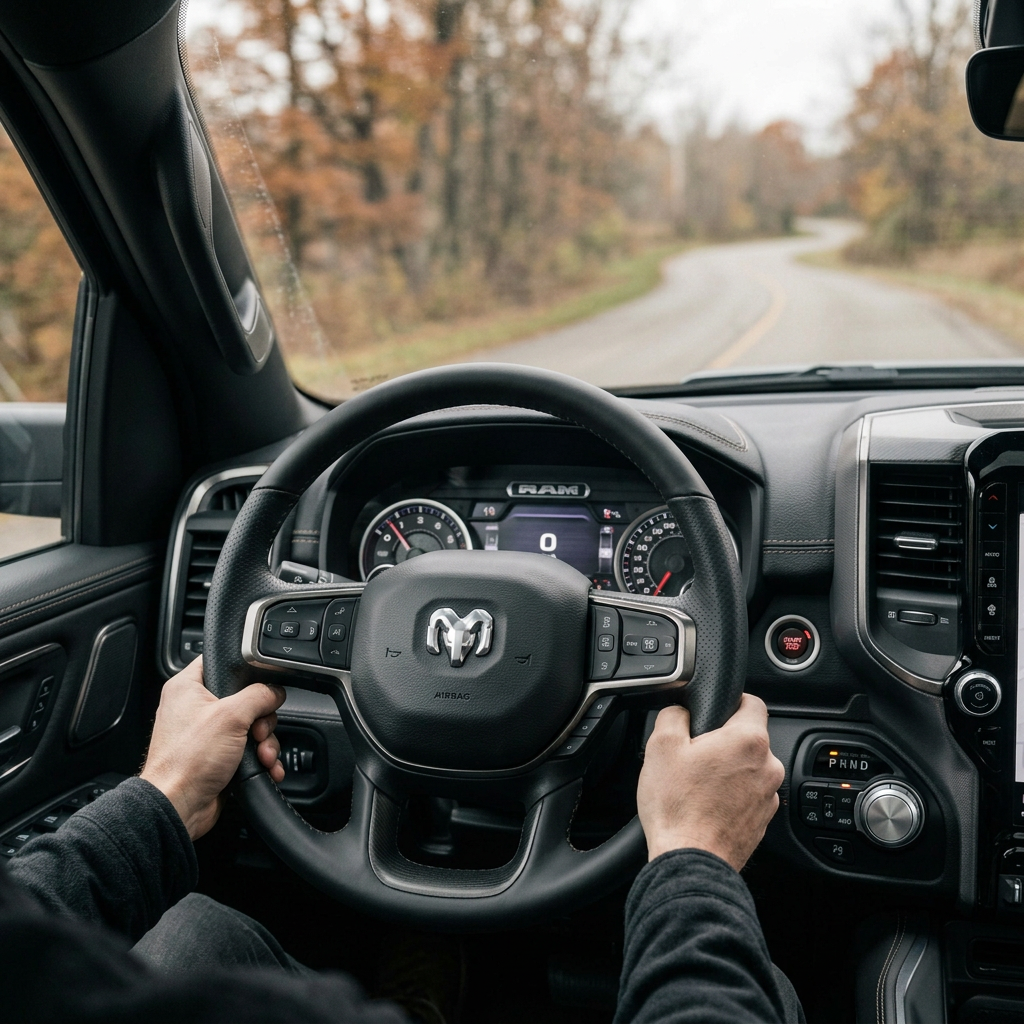
A steering wheel vibrates while driving primarily due to unbalanced tires, uneven tire wear, warped brake rotors, or worn front suspension and steering components like tie rods and ball joints. When tire weight distribution is uneven or mechanical components lose tight tolerances, rotational forces transmit directly up through the steering column into the steering wheel.
Understanding the specific conditions under which the shake occurs helps pinpoint the root cause quickly. For instance, a vibration that appears only at speeds above 50 mph usually indicates a wheel balance or tire circumference issue. Conversely, a steering wheel that pulses specifically when applying the brakes points directly to front brake rotor thickness variation or rotor warping. If the vibration occurs at all speeds or gets worse when driving over bumps, front-end mechanical wear is often responsible.
Ignoring a vibrating steering wheel can turn a quick adjustment into an expensive repair. Unbalanced wheels exert excessive strain on wheel bearings, struts, and steering linkages, accelerating wear across the entire front assembly. Driving across rural back roads around Onsted or navigating local lake routes can frequently dislodge clip-on wheel weights or cause subtle rim impacts, making routine checks essential for long-term vehicle health.
When your vehicle displays unexpected steering feedback, having it evaluated by factory-trained technicians ensures an accurate diagnosis. Drivers in need of professional vehicle care can stop by our service center at 1111 W Michigan Ave, Clinton, MI 49236 or give our service desk a quick call to discuss any symptoms.
Table of Contents
- What Causes Steering Wheel Vibration at High Speeds and How Is Tire Imbalance Fixed?
- Is Resurfacing Brake Rotors Sufficient to Stop Steering Wheel Shake?
- How Do Worn Suspension Parts, Wheel Bearings, and Alignment Affect Steering Stability?
- What Is the Average Cost to Repair Steering Wheel Vibration and Tire Issues?
- Common Questions About Steering Wheel Shake and Wheel Service
- Schedule Steering and Suspension Inspection
What Causes Steering Wheel Vibration at High Speeds and How Is Tire Imbalance Fixed?
Steering wheel vibration at highway speeds between 50 mph and 70 mph is almost always caused by an unbalanced tire-and-wheel assembly or a bent wheel rim. At these higher rotational speeds, even a weight variance of half an ounce generates centrifugal force strong enough to shake the front steering geometry.
Our service team frequently sees vehicles brought in for highway wobble where the intensity peaks right around 60 to 65 mph. Dynamic tire balancing resolves this issue by placing the tire and wheel assembly on a computerized balancing machine that spins the assembly to identify heavy spots. Technicians then apply precise counterweights—either clip-on or adhesive zinc weights—to equalize weight distribution across the wheel rim.
When dynamic tire balancing alone does not resolve persistent highway vibration, advanced diagnostics like Road Force balancing are required. This process uses a heavy roller against the spinning tire to simulate the real weight of the vehicle on the road. It measures:
- Radial and lateral runout in both the tire and the wheel rim.
- Force variation caused by hard spots inside the tire carcass.
- Bead seating alignment on the wheel rim flange.
By matching the highest point of the wheel rim with the lowest spot on the tire carcass, Road Force balancing eliminates force variation that standard spin balancers cannot detect. If a tire exhibits severe internal tread separation or a wheel rim has sustained heavy impact damage, component replacement remains the only safe solution.
Is Resurfacing Brake Rotors Sufficient to Stop Steering Wheel Shake?
Resurfacing brake rotors stops steering wheel vibration only when the shake happens specifically while depressing the brake pedal and the rotors retain enough metal thickness above minimum discarded specifications. If a rotor is severely warped, heat-cracked, or turned past its minimum thickness limit, total rotor replacement is necessary.
Brake-induced vibration occurs when the front brake pads clamp down on a rotor surface that is no longer perfectly flat. This condition, known as brake rotor runout or disc thickness variation, causes the brake caliper to pulse rapidly back and forth. That hydraulic pulsation travels through the brake lines, steering knuckles, and tie rods, manifesting as a noticeable pulse in the brake pedal and a wobble in the steering wheel.
Resurfacing, also called turning rotors, uses a precision metal lathe to shave off a thin layer of metal, restoring a smooth, flat friction surface. However, technicians must strictly adhere to safety limits:
- Minimum Thickness Specifications: Every rotor has a stamped minimum thickness limit; turning a thin rotor risks structural failure or heat fading.
- Heat Damage: Severe overheating creates hard spots in the cast iron that resurfacing blades cannot smooth out evenly.
- Pad Condition: New brake pads must be installed alongside resurfaced or new rotors to prevent old uneven pad wear from ruining the fresh rotor surface.
If the steering wheel vibrates while cruising at constant speed without touch on the brakes, the brake system is rarely at fault, and turning the rotors will not fix the vibration.
How Do Worn Suspension Parts, Wheel Bearings, and Alignment Affect Steering Stability?
Worn suspension components and failing wheel bearings allow excessive mechanical play in the front end, transforming subtle tire movements into pronounced steering wheel shaking. While poor wheel alignment primarily causes vehicle pulling and uneven tire wear rather than an immediate shake, that uneven tire wear eventually leads to severe vibration over time.
Front-end components work together to hold the front wheels firmly in place. When joints and bushings degrade, internal tolerances open up and create wobble:
- Tie Rod Ends: Loose inner or outer tie rods allow the front wheels to flutter side-to-side independently of driver input.
- Ball Joints: Worn ball joints create vertical and lateral movement in the steering knuckle, leading to erratic handling and shaking over bumps.
- Control Arm Bushings: Cracked or deteriorated rubber bushings fail to absorb road impacts, allowing the control arm to shift under load.
- Wheel Bearings: A failing hub bearing creates looseness in the wheel assembly, often accompanied by a continuous growling or humming noise that changes pitch during turns.
Vehicle alignment controls the angles of the tires relative to the road and each other, specifically camber, caster, and toe settings. When alignment is far out of specification, tires scrub against the pavement, developing uneven tread wear patterns known as cupping or feathering. Once the tread surface becomes irregular, the tire hops down the highway, generating continuous steering wheel vibration.
Restoring front-end stability requires quality replacement components built to original equipment specifications. Owners can easily order genuine Mopar parts through our site or browse our current parts specials on OEM components to maintain proper factory driving dynamics.
What Is the Average Cost to Repair Steering Wheel Vibration and Tire Issues?
Fixing steering wheel vibration generally varies depending on the required service, such as dynamic tire balancing, wheel alignment, brake work, or suspension repairs. Contact our service team for current estimates. Total repair expense depends directly on whether the root cause is a simple wheel weight adjustment or damaged steering hardware.
For commuters driving into Jackson from Michigan Center, maintaining smooth highway performance relies on catching minor imbalances before they damage surrounding parts. Combining routine tire balancing with a four-wheel alignment typically costs between $150 and $250 total, serving as an effective preventive measure against accelerated tread wear.
| Repair or Service Type | Typical Cost Range | Primary Symptom Addressed |
|---|---|---|
| Dynamic Tire Balancing (Set of 4) | $30 – $150 | Highway speed vibration (50–70 mph) |
| Four-Wheel Alignment | $100 – $200 | Vehicle pulling, uneven tire tread wear |
| Road Force Tire Balancing | $80 – $200 | Persistent shake missed by standard balancing |
| Front Brake Pad & Rotor Replacement | $250 – $600 | Steering vibration occurring only during braking |
| Tie Rod or Ball Joint Replacement | $200 – $500 per side | Front-end looseness, clunks, or erratic wander |
| Wheel Hub Bearing Assembly | $300 – $650 per side | Steering vibration paired with growling noise |
Investing in accurate diagnostic testing saves money by identifying the exact component at fault rather than replacing functional parts. Routine tire rotations and visual multi-point inspections during scheduled maintenance help catch loose weights or worn bushings early.
Drivers experiencing front-end feedback can readily schedule Mopar service online to have our certified technicians perform a complete inspection.
Common Questions About Steering Wheel Shake and Wheel Service
Q: At what speed range does an out-of-balance tire usually cause vibration?
Unbalanced front tires typically begin causing steering wheel vibration between 50 mph and 70 mph. The shaking motion often becomes most intense around 60 mph to 65 mph because that speed range matches the natural resonant frequency of many automotive front suspension systems. Vibrations felt at low speeds under 30 mph usually indicate a bent rim, a shifted tire belt, or severe suspension looseness rather than a simple balance issue.
Q: When should you choose Road Force balancing over regular tire balancing?
You should choose Road Force balancing when standard dynamic balancing fails to resolve a high-speed vibration, or when mounting low-profile tires on large aluminum wheels. Standard balancers only measure weight distribution around the wheel, whereas a Road Force machine applies a heavy loaded roller against the tire to measure stiffness variation and tire-to-rim runout. This process detects internal tire defects and improper bead seating that traditional spin balancers miss.
Q: Can a bad wheel bearing cause steering vibration without applying the brakes?
Yes, a worn or failing wheel bearing causes steering wheel vibration at cruising speeds without touching the brake pedal. As the internal steel balls or rollers degrade, mechanical play opens up inside the hub assembly, allowing the wheel to wobble on its spindle. This vibration is almost always paired with a low-pitched humming or growling noise that gets louder when turning or shifting the vehicle's weight from side to side.
Q: Does poor wheel alignment directly cause a steering wheel to shake?
Poor wheel alignment rarely causes an immediate steering wheel shake on its own, as misaligned angles primarily make the vehicle drift, pull to one side, or hold an off-center steering wheel. However, continuous driving on misaligned wheels causes uneven tire tread wear, such as cupping or scalloping. That irregular tread pattern ultimately bounces along the road surface, generating a persistent steering vibration over time.
Q: Is it safe to drive with a vibrating steering wheel?
Driving with a vibrating steering wheel for extended periods is unsafe because it accelerates wear on tires, wheel bearings, tie rods, and steering racks. While a minor wheel weight imbalance allows short trips to a service facility, severe shaking accompanied by loud clunks, vehicle instability, or pulsing brakes requires immediate inspection. Drivers seeking details on system health monitors or driver-assist warnings can learn about Uconnect technology features, or visit our site to learn about our dealership philosophy regarding maintenance care.
Schedule Steering and Suspension Inspection
Eliminating steering vibration starts with a comprehensive wheel, brake, and suspension inspection by factory-trained technicians using specialized diagnostic tools. Bringing your Chrysler, Dodge, Jeep, or Ram vehicle in at the first sign of steering feedback prevents minor wheel imbalance from damaging expensive front-end hardware.
Our certified technicians evaluate tire tread depth, perform dynamic balance tests, check brake rotor runout, and inspect all front suspension bushings and steering linkages. Using genuine factory parts and precision alignment machinery ensures your vehicle regains its smooth ride and original handling capabilities.
Protect your vehicle's tires and steering components by scheduling an appointment with our team. Drivers in the local area can stop by our Clinton service center or contact our service advisors directly at (517) 456-6555 to restore total driving confidence.
© 2026 NewGen Chrysler Dodge Jeep Ram of Clinton. All rights reserved.