

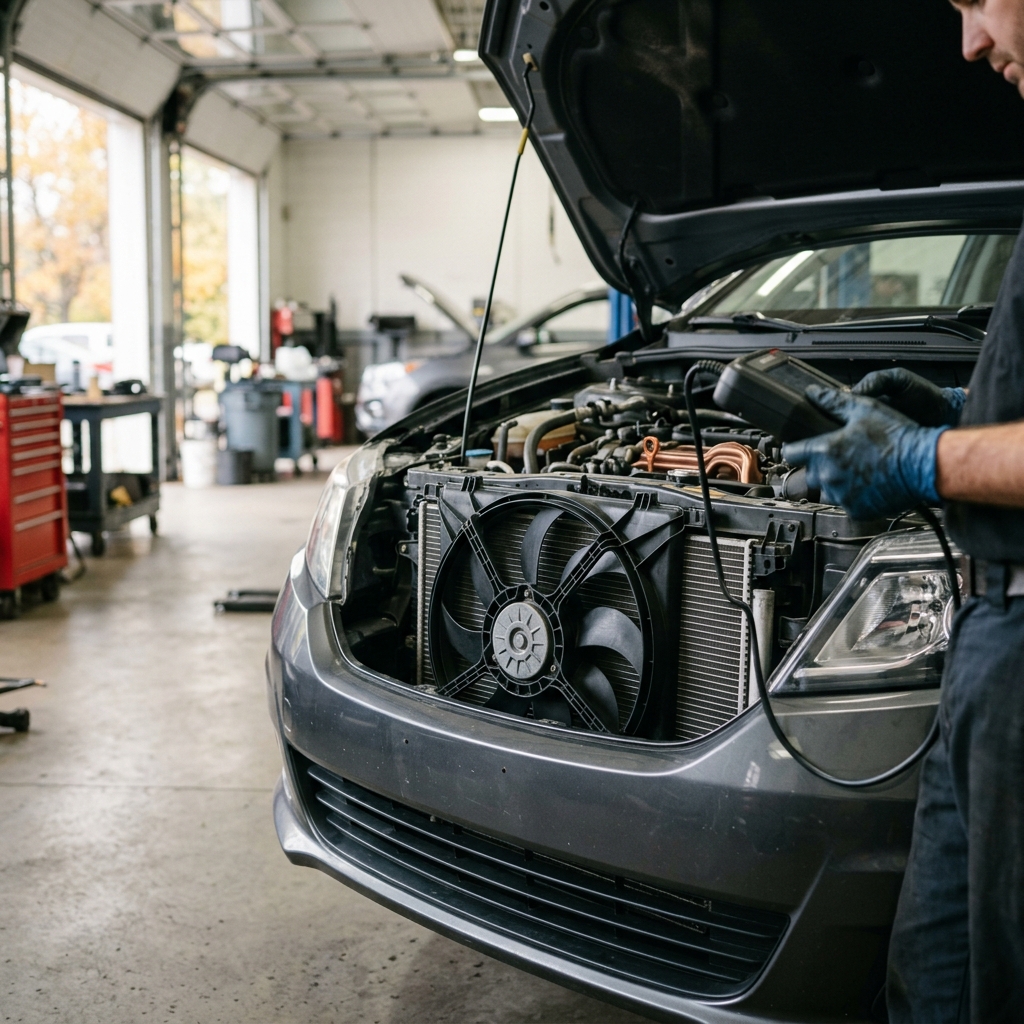
An engine cooling fan runs continuously when an electrical or mechanical fault signals the cooling system to stay in maximum heat-rejection mode, or when the engine is actively overheating. Common triggers include a stuck-closed fan relay, a failing engine coolant temperature sensor, low coolant levels, high air conditioning refrigerant pressure, or a locked mechanical fan clutch.
Under normal operating conditions, an electric radiator cooling fan engages intermittently. It turns on when engine coolant reaches a specific threshold—typically between 195 degrees Fahrenheit and 220 degrees Fahrenheit—or when you turn on the climate control system to cool the air conditioning condenser. However, if the fan spins at maximum speed from the moment you turn the key on a cold morning, your vehicle is responding to a circuit failure or an erratic sensor signal. Modern engine computers are programmed to default the cooling fan to 100 percent speed whenever they lose reliable temperature data, preventing catastrophic engine damage.
Ignoring a constantly spinning radiator fan can lead to secondary vehicle issues. In rural communities like Onsted, where drivers regularly haul utility trailers or travel past open farmland near Wamplers Lake, a heavy thermal load requires a precise cooling system. If a fan motor runs constantly due to an underlying short or low fluid level, the continuous duty cycle accelerates internal electrical wear, drains the 12-volt battery, and prevents the engine from reaching its efficient operating temperature.
If your dashboard display shows elevated engine temperatures, or if the fan noise remains blaring after you turn off the ignition, your vehicle needs immediate professional attention. You can easily find our service center at our Clinton location or give our certified service technicians a quick call to discuss what your vehicle is experiencing.
Table of Contents
- What Mechanical and Electrical Components Trigger the Radiator Fan?
- What Happens When an Engine Cooling Fan Runs Constantly While Driving?
- Why Does the Cooling Fan Keep Running After Turning Off the Engine?
- Diagnostic Costs, Tools, and Safety for Electric Radiator Fan Repairs
- Common Questions About Continuous Engine Cooling Fan Noise and Operation
- Schedule Cooling System Diagnosis and Maintenance
What Mechanical and Electrical Components Trigger the Radiator Fan?
The radiator fan is triggered electronically by the engine control module based on inputs from the engine coolant temperature sensor, air conditioning pressure switch, and transmission fluid temperature sensor, or mechanically through a thermal viscous fan clutch.
Understanding the specific components involved in activating the cooling fan makes it much easier to pinpoint why it will not shut off:
- Engine Coolant Temperature Sensor: This sensor measures the temperature of the antifreeze/coolant circulating through the engine block. If the sensor fails internally or develops high electrical resistance, it can send a false high-temperature signal to the computer, commanding the fan to run nonstop.
- Fan Relay and Control Module: Electric cooling fans draw high amperage. The cooling fan relay acts as a heavy-duty switch controlled by low-voltage signals from the powertrain computer. If the internal contacts inside the relay melt or weld together from electric arcing, power flows continuously to the fan motor even when the computer attempts to turn it off.
- A/C Refrigerant Pressure Switch: When you switch on the cabin defrost or air conditioning, refrigerant pressure rises. The A/C pressure sensor tells the engine computer to run the radiator fan to draw ambient air through the A/C condenser. A faulty switch reading high head pressure will force the fan to run on high speed constantly.
- Viscous Mechanical Fan Clutch: Found primarily on longitudinal engine layouts like heavy-duty Ram trucks, a viscous fan clutch uses silicone fluid and a bimetallic thermal spring to engage fan rotation. If the internal fluid valve fails or the clutch seizes mechanically, the fan remains permanently locked to engine shaft speed.
When replacing worn electrical sensors, relays, or mechanical clutches, using factory-engineered replacement parts maintains exact electrical resistance and thermal calibration. You can explore genuine Mopar parts through our department to ensure your cooling system matches original factory specifications.
What Happens When an Engine Cooling Fan Runs Constantly While Driving?
Driving with an engine cooling fan running constantly can cause premature fan motor burnout, delay normal engine warm-up, decrease fuel efficiency, and create excessive cabin wind noise.
Electric fan motors are designed for intermittent duty cycles, meaning they are built to cycle on and off as thermal demands change. When an electrical fault forces the motor to operate at 100 percent capacity continuously, internal motor windings overheat and carbon brushes wear down rapidly. In many cases, a fan motor left running continuously will suffer complete electrical failure within several days to a few weeks of constant operation. If the fan fails entirely while you are driving, the engine will quickly overheat when idling in traffic or stopping at intersections.
Continuous fan engagement also impacts engine efficiency. Internal combustion engines are designed to operate within a specific temperature window, typically around 200 degrees Fahrenheit. A cooling fan running constantly in cold weather overcools the engine coolant, forcing the powertrain computer to remain in a rich fuel-injection mode. This reduces fuel economy and leads to poor cabin heater performance.
For commuters taking morning drives from Michigan Center toward Jackson, a locked mechanical fan clutch or full-speed electric fan creates a distinct wind roar under acceleration. This mechanical drag drains horsepower from the crankshaft, making the vehicle feel sluggish while accelerating up rural hills.
Why Does the Cooling Fan Keep Running After Turning Off the Engine?
A cooling fan may stay on after turning off the engine to dissipate residual cylinder head heat on high-performance or turbocharged engines, or because a shorted fan relay or grounded wiring circuit continues supplying battery power to the fan motor.
Modern vehicle powertrains feature an after-run cooling program. When you shut off a hot engine after high-speed highway driving or towing, coolant stops circulating, causing heat to build up temporarily in the engine block—a phenomenon known as thermal soak. The engine computer may leave the electric fan running for 1 to 5 minutes post-shutdown to circulate air through the engine bay and lower under-hood temperatures. This is normal operation and will shut off automatically once temperatures drop.
However, if the fan continues running for 10, 20, or 30 minutes until the battery dies, an electrical component has failed. The most common culprit is a stuck electric fan relay. Because the relay receives unswitched battery power directly from the main fuse box, welded internal contacts keep circuit power flowing to the fan motor regardless of key position. A stuck relay will drain a standard 12-volt battery in two to four hours, leaving you stranded with a dead engine start.
Diagnostic Costs, Tools, and Safety for Electric Radiator Fan Repairs
Diagnosing a continuously running cooling fan requires an OBD2 diagnostic scan tool, digital multimeter, socket set, and electrical contact cleaner, with professional shop diagnostic fees typically ranging from $90 to $150.
Safety is paramount when inspecting any engine cooling issue:
- Never open a hot pressure cap: Pressurized, boiling coolant can erupt from the radiator or expansion tank, causing severe thermal burns. Always allow the engine to cool completely before inspecting fluid levels.
- Keep hands clear of fan blades: Electric cooling fans can start spinning unexpectedly at any time—even with the ignition key turned off and removed from the vehicle.
During a diagnostic evaluation, technicians connect an OBD2 scan tool to check for stored diagnostic trouble codes such as P0128 (coolant temperature below thermostat regulating temperature) or P0480 (cooling fan control circuit malfunction). Technicians use a digital multimeter to verify ground signals, measure sensor resistance, and check whether the cooling fan relay opens and closes properly under command.
If basic electrical testing reveals a blown fuse, shorted control module, or failing fan assembly, scheduling professional service ensures accurate repair. You can easily book a service appointment online to have certified technicians inspect your vehicle's wiring, relays, and cooling modules.
Common Questions About Continuous Engine Cooling Fan Noise and Operation
Q: How long can an electric fan motor last if it runs non-stop?
Electric radiator fan motors rely on internal carbon brushes and copper windings engineered for intermittent cycling. When an electrical fault forces the motor to operate continuously, heat builds up inside the motor housing, causing internal insulation breakdown. Under continuous duty, an electric fan motor often fails completely within a few days to a few weeks.
Q: What does a bad mechanical fan clutch sound like during acceleration?
A seized or locked viscous fan clutch produces a loud, jet-engine wind roar during acceleration that increases directly with engine RPM. Because the fan remains locked to the water pump pulley, it drags heavily on the engine, decreasing throttle responsiveness and reducing fuel economy.
Q: Will a running radiator fan completely drain my vehicle battery overnight?
Yes, an electric cooling fan drawing continuous power from a stuck relay or shorted wiring circuit will exhaust a standard 12-volt battery within two to four hours after shutting off the engine. If your fan does not turn off within a few minutes of parking, disconnect the negative battery terminal or remove the fan fuse to prevent a dead battery.
Q: Is it normal for the cooling fan to switch on high whenever the air conditioner is turned on?
Yes, activating your climate control system commands the electric fan to run at low or high speed. The fan draws ambient air across the front-mounted air conditioning condenser to lower refrigerant pressure, which is necessary to keep your cabin air cold during hot weather or humid defrost conditions.
Q: Can integrated vehicle technology notify drivers when engine temperature readings become unreliable?
Modern Chrysler, Dodge, Ram, and Jeep vehicles monitor sensor circuits continuously through onboard engine control electronics. If a sensor sends erratic data, the system flags a diagnostic trouble code, alerts the driver on the instrument cluster, and defaults the radiator fan to maximum speed as a protective fail-safe measure. You can review how integrated system alerts function by exploring Uconnect technology features available across our lineup, or read about our dealership to learn more about our commitment to certified vehicle care.
Schedule Cooling System Diagnosis and Maintenance
Resolving a constantly running engine fan promptly protects your vehicle's electrical system, prevents unexpected battery failure, and keeps your engine running within its optimal thermal range. Whether your vehicle requires a simple relay replacement, a new coolant temperature sensor, or a complete cooling system flush, addressing fan irregularities early avoids costly mechanical repairs down the road.
Our factory-trained service team uses factory diagnostic tools and original equipment parts to identify electrical shorts, sensor failures, and mechanical wear quickly. If your radiator fan refuses to shut off, drives with an unusually loud wind roar, or causes your battery to drain overnight, visit our Clinton service department or give our service advisors a call today to get your vehicle back in top operating condition.
© 2026 NewGen Chrysler Dodge Jeep Ram of Clinton. All rights reserved.