

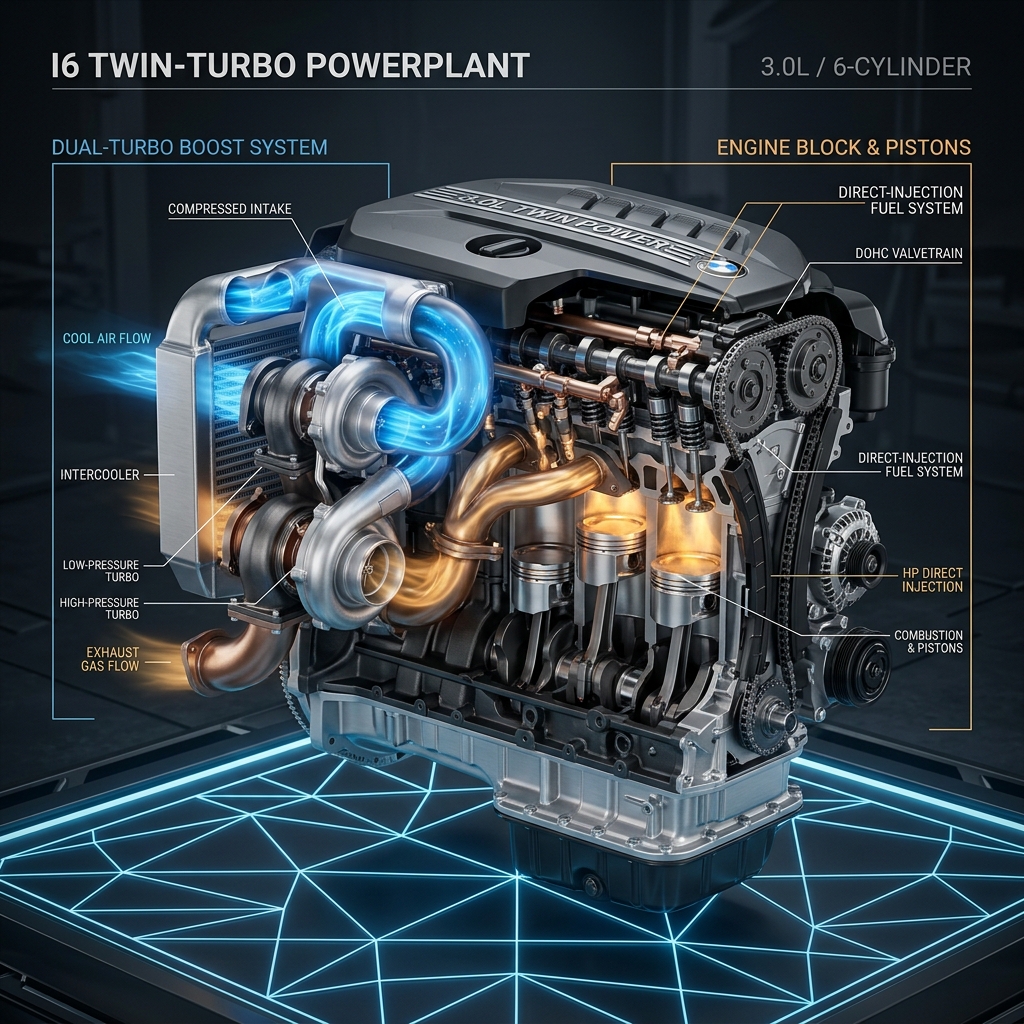
Jeep Hurricane Engine Performance and Service Guide: Specs, Common Issues, and Solutions
The High Output variant of the 3.0L Hurricane Twin-Turbo I6 engine strictly requires 91-octane premium fuel to prevent engine knock and maintain peak performance. Conversely, the Standard Output version operates safely on 87-octane regular unleaded, although 91-octane fuel remains recommended for optimal horsepower and efficiency while towing heavy loads. To break down how fuel grades, twin-turbo mechanics, and maintenance procedures impact long-term reliability, we sat down with David Farhina, Service Advisor at NewGen Chrysler Dodge Jeep Ram of Clinton. With 2 years of experience assisting local drivers at our Clinton service center, David provides clear answers on servicing these advanced inline-six powertrains. Drivers can reach our team directly by giving us a quick call to discuss diagnostic checks or routine service scheduling.
Q: Does the Jeep Hurricane 3.0L engine require premium fuel for daily driving?
A: Standard Output versions of the 3.0L Hurricane Twin-Turbo I6 run safely on 87-octane regular fuel without risking engine damage. The Engine Control Module automatically adjusts ignition timing to accommodate lower octane levels during routine commuting. However, running 91-octane premium fuel allows the engine management system to advance timing fully, unlocking the complete 420 hp rating and max torque when hauling payloads or driving in hot ambient weather.
For High Output configurations, premium fuel rated at 91 octane or higher is mandatory rather than optional. The High Output engine operates at higher boost pressures and tighter thermal margins, making lower-octane gasoline prone to pre-ignition or spark knock. Using regular fuel in a High Output engine forces the computer to pull significant timing, which reduces overall power and can trigger fault codes over prolonged driving.
Proper fuel selection plays a direct role in maintaining long-term combustion efficiency and preventing carbon buildup on direct-injection components. Because direct fuel injection sprays fuel directly into the cylinder rather than over the intake valves, high-quality gasoline with detergent additives helps keep high-pressure fuel injectors operating cleanly. Following manufacturer octane guidelines protects critical internal components and keeps your factory powertrain coverage fully intact.
Q: What are the exact specifications and horsepower ratings across the Hurricane engine lineup?
A: The twin-turbocharged inline-six engine family comes in two distinct power tiers designed to replace traditional V8 engines with improved thermal efficiency. The Standard Output engine generates 420 hp at 5,200 RPM and 468 lb-ft of torque at 3,500 RPM. The High Output engine increases performance to 510 hp and 500 lb-ft of torque, delivering massive low-end pulling power for full-size SUVs and trucks.
For 2026, the engine architecture also expands into four-cylinder applications. The 2.0-liter Hurricane 4 turbo engine delivers 324 hp and 332 lb-ft of torque, offering an impressive specific output of roughly 162 horsepower per liter while replacing previous V6 options. Drivers exploring alternative electrified powertrains can also review our lineup of Jeep hybrid models or check out compact options like a new Jeep Compass Latitude 4x4 for efficient commuting.
Maintaining these high-output powertrains requires sticking closely to recommended maintenance intervals. Our certified technicians utilize specialized diagnostic tools to verify boost pressure, sensor calibration, and fluid health. Vehicle owners can stay ahead of factory service intervals by scheduling Mopar service online through our dealership portal.
Q: How does the twin-turbocharger setup on the Hurricane engine eliminate turbo lag during acceleration?
A: Turbo lag is minimized by using two smaller, low-inertia turbochargers rather than a single large turbo. Each turbocharger is dedicated to feeding three cylinders of the inline-six engine, which significantly reduces the exhaust gas volume required to spool up the turbine wheels. When the driver presses the accelerator, exhaust gas rapidly accelerates the light turbines, building boost pressure almost instantaneously from low engine speeds.
"Because each turbocharger feeds just three cylinders, boost builds almost instantly when you step on the gas."
The cooling system also plays a crucial role in maintaining immediate throttle response. A high-flow, liquid-to-air intercooler lowers intake air temperatures before charge air enters the combustion chambers, ensuring dense oxygen delivery even under heavy loads. Drivers hauling utility trailers across rural farmland in Onsted notice this continuous torque delivery when pulling out onto high-speed country roads.
Precision engine management continuously monitors intake manifold pressure and throttle position to optimize wastegate actuation. By holding wastegates closed during quick throttle transitions, the system maintains turbine wheel momentum for seamless power delivery. When replacement hoses, seals, or hardware are required during service, our team relies exclusively on ordering genuine Mopar parts to maintain factory engineering tolerances.
Q: What mechanical differences separate the Standard Output and High Output Hurricane engines?
A: While both engines share a strong cast-aluminum block with plasma transfer wire arc cylinder wall coatings, their internal components are engineered for different stress levels. The Standard Output engine utilizes cast-aluminum pistons with a 10.4:1 compression ratio and delivers up to 22 psi of peak turbo boost. This setup balances high thermal efficiency with energetic throttle response for daily driving and light towing.
The High Output engine upgrades to forged aluminum pistons paired with a lower 9.5:1 compression ratio to accommodate higher boost levels. The High Output twin turbochargers push peak manifold pressure up to 26 psi, placing significantly greater mechanical loads on internal components. To manage this increased stress, the High Output engine includes dual high-pressure fuel pumps, upgraded oil cooling jets, and reinforced main bearing caps.
Structural enhancements extend to the valvetrain and cooling systems as well. The High Output variant features modified camshaft profiles optimized for high-RPM breathing alongside enlarged heat exchangers to dissipate engine heat during sustained high-load operations. These mechanical upgrades allow the engine to sustain heavy power demands reliably without compromising engine durability.
Q: What are the most common mechanical issues on the Jeep Hurricane 3.0L engine and how do service departments fix them?
A: Early production runs experienced minor oil seepage around the composite valve cover and oil filter adapter housing gaskets. Thermal cycling can cause initial gasket seating materials to relax, allowing small oil drops to collect near the base of the engine block. Service technicians address this issue by installing an updated valve cover assembly featuring revised gasket materials and applying updated factory torque specifications during reassembly.
Misfires and rough idling under cold morning starts represent another complaint reported by some vehicle owners. These conditions are typically driven by early Powertrain Control Module software calibrations or slight carbon fouling on the spark plugs. Our service department resolves rough idling by reflashing the PCM with updated calibration software, inspecting fuel injector spray patterns, and installing high-dielectric iridium spark plugs engineered for turbocharged cylinder pressures.
When drivers commuting into Jackson from Michigan Center bring their vehicles in for service, our technicians check all open Technical Service Bulletins to ensure every control module running the powertrain is updated. Drivers interested in compact utility vehicles with simpler powertrain maintenance schedules can evaluate new Jeep Compass inventory at our showroom.
Q: How does the 3.0L Hurricane engine compare to Ford's 3.5L EcoBoost V6 in overall performance and maintenance needs?
A: The inline-six layout of the Hurricane engine provides inherent primary and secondary mechanical balance, resulting in smoother power delivery across the rev range compared to a V6 configuration. Ford's 3.5L EcoBoost V6 produces between 400 hp and 450 hp in standard truck applications, whereas the High Output Hurricane engine delivers 510 hp from a smaller 3.0-liter displacement. This higher power density is achieved through twin low-inertia turbos working alongside direct fuel injection.
Maintenance requirements for both turbocharged engines focus heavily on oil quality and cooling efficiency. Turbochargers rely on clean synthetic engine oil to lubricate turbine bearings spinning at extreme speeds, making regular oil changes critical for preventing premature turbo wear. Because the Hurricane engine uses dual water-to-air intercoolers, maintaining correct engine coolant levels is equally essential for preserving turbocharger longevity.
Staying proactive with routine fluid changes and software updates ensures your twin-turbocharged inline-six delivers dependable service for years to come. Vehicle owners seeking expert maintenance or technical diagnostics are encouraged to plan a visit to our Clinton dealership location or reach out by calling our service department to speak with a factory-trained service advisor today.
© 2026 NewGen Chrysler Dodge Jeep Ram of Clinton. All rights reserved.