

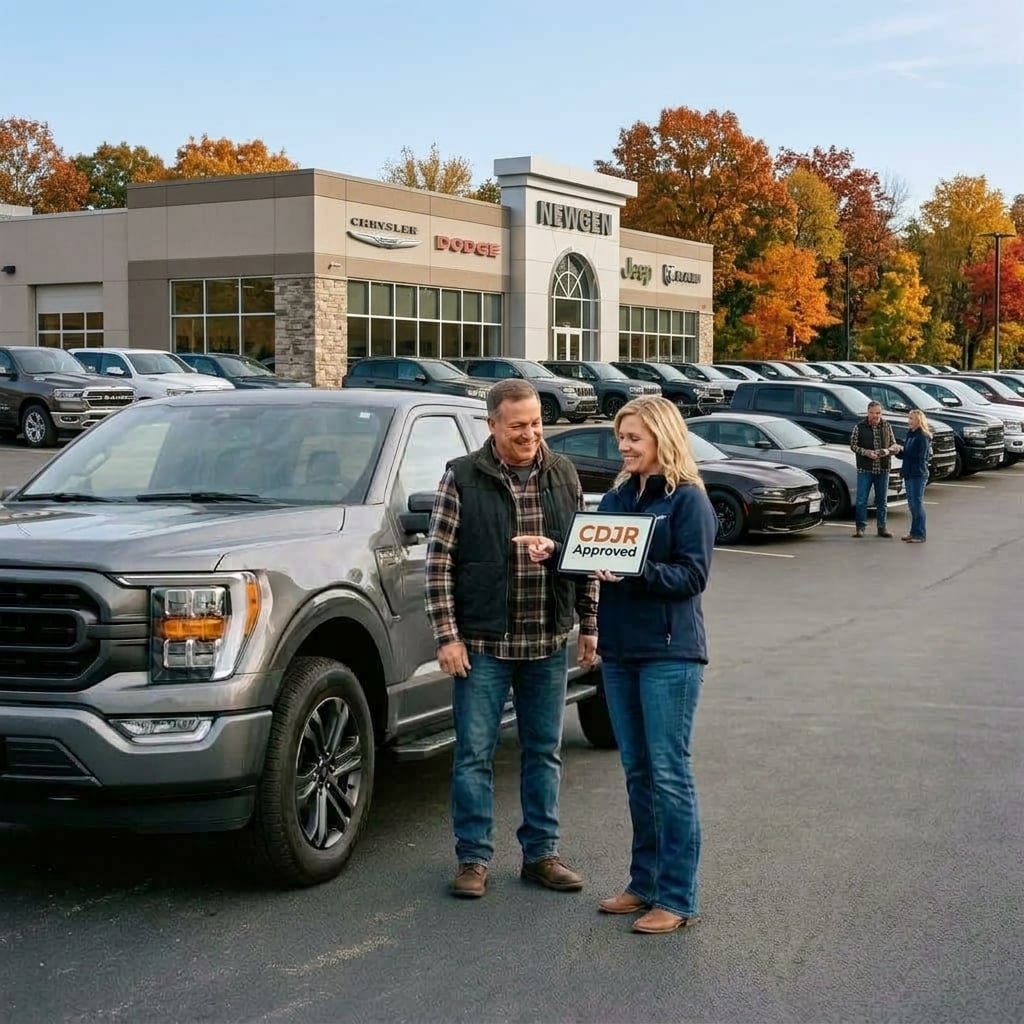
What I Tell Drivers About Vehicle Trade-In Transparency
Which Valuation Tools Provide the Most Reliable Trade-In Estimates?
The most reliable trade-in estimates come from valuation tools that aggregate real-time wholesale auction transactions and regional retail sales, such as Kelley Blue Book, Edmunds, and Black Book. Rather than relying on a single guide, cross-referencing multiple tools gives you a realistic wholesale baseline because these platforms analyze actual dealer transactions rather than unadjusted public asking prices.
When you research what your vehicle is worth, it helps to understand that independent third-party pricing guides gather data from millions of completed sales nationwide. Valuation algorithms track wholesale auction figures alongside regional retail market movements to generate an estimated price range. Because market conditions shift based on local supply and buyer demand, looking at two or three independent pricing benchmarks gives you a solid foundation before walking onto any showroom lot.
At NewGen Chrysler Dodge Jeep Ram of Clinton, we use these same wholesale market benchmarks to establish a transparent baseline for every appraisal. Whether you are looking for a rugged Ram 1500 with a high towing capacity or a versatile Jeep Wrangler built for off-road capability, establishing an accurate trade value is the first step toward your next vehicle. If you want to discuss your trade-in estimate directly with our sales team, you can visit our Clinton showroom location or give our staff a quick call to get started.
Table of Contents
- What Is the Difference Between Trade-In, Private Party, and Retail Value?
- How Do Dealerships Transparently Determine a Fair Trade-In Offer?
- What Key Vehicle Specifications and Conditions Impact Your Trade-In Offer Most?
- How Does Michigan Sales Tax Credit Narrow the Trade-In vs. Private Sale Gap?
- Is It Better to Sell Privately or Trade In to a Dealership?
What Is the Difference Between Trade-In, Private Party, and Retail Value?
Trade-in value is the wholesale purchase price a dealership pays for your vehicle, retail value is the higher price a dealership charges a buyer after completing mechanical reconditioning, and private party value sits between the two as the price negotiated directly between individual private sellers and buyers.
Understanding these three pricing tiers helps clarify why a single vehicle carries different numbers depending on how and where it is sold:
- Trade-In Value: Represents wholesale market pricing. The acquiring dealer assumes the financial risk of inventory holding costs, title processing, state safety compliance, and necessary mechanical repairs.
- Private Party Value: Reflects a middle-ground transaction price between private individuals. The buyer takes on all post-sale risks, while the seller handles listing preparation, test drives, and title transfer paperwork.
- Retail Value: The top-tier market price listed on a dealership lot. This price incorporates complete mechanical reconditioning, safety inspections, cosmetic detailing, legal title guarantees, and dealership warranty coverage.
The spread between wholesale trade-in value and retail market pricing exists because taking a pre-owned vehicle from trade-in condition to lot-ready retail status requires measurable investments in time and labor. Our service department conducts a thorough multi-point inspection on every incoming vehicle to check essential safety components, electrical systems, and mechanical health.
If you are curious about what your current vehicle might fetch in today's market, you can start the process online using our digital vehicle appraisal form. Knowing this baseline simplifies your search when comparing trade equity against our selection of pre-owned inventory listings.
How Do Dealerships Transparently Determine a Fair Trade-In Offer?
Transparent trade-in appraisals start from real-time wholesale auction benchmarks, from which documented reconditioning expenses, necessary repairs, and vehicle history findings are subtracted to arrive at an objective cash offer.
A professional vehicle appraisal involves a systematic evaluation of physical, mechanical, and historical parameters:
- Vehicle History Verification: Checking official records for prior accident reports, structural damage, single or multiple owner status, and open safety recalls.
- Exterior and Interior Inspection: Evaluating body panel alignment, paint condition, glass integrity, cabin wear, and tire tread depth.
- Mechanical Assessment: Testing engine performance, transmission shifts, braking efficiency, suspension stability, and verifying that no warning lights are illuminated.
- Local Market Analysis: Factoring in current regional supply, seasonal buyer trends, and historical turn rates for specific body styles.
Under current Federal Trade Commission guidelines for pricing disclosures, clear communication regarding vehicle pricing and trade-in allowances is essential for maintaining consumer trust. When our appraisal team presents an offer, we share the underlying market data and itemize any reconditioning deductions so you see exactly how the final figure was calculated.
Our dealership prides itself on building long-term relationships with local drivers through open communication and respectful service. To discover more about our sales philosophy and community roots, take a moment to learn about our team, or view our latest dealership career opportunities if you are interested in joining our staff. If you prefer a factory-backed pre-owned vehicle, explore our certified models through our certified pre-owned inventory page.
What Key Vehicle Specifications and Conditions Impact Your Trade-In Offer Most?
Mileage, model year, powertrain configuration, trim level, and optional factory equipment impact a trade-in offer most, along with overall cosmetic condition and a clean title history.
Vehicle specifications dictate how well a car, truck, or SUV holds its value over time. Lower mileage directly correlates with higher residual value because it indicates extended remaining operational life for major components like the engine and transmission. Higher trim levels equipped with desirable features like leather upholstery, advanced driver-assist technology, updated infotainment systems, and high-capacity towing packages maintain higher demand on the secondary market. Powertrain configuration also plays a major role; for example, four-wheel-drive trucks and all-wheel-drive SUVs usually command higher trade appraisals in Michigan due to seasonal road conditions.
Unrepaired mechanical issues or cosmetic defects result in direct reconditioning deductions. Items like cracked windshields, worn brake pads, bald tires, or active check engine lights lower the appraisal because the dealership must resolve those issues before reselling the vehicle. Conversely, providing documented routine maintenance records proves proper upkeep and helps protect your vehicle's value.
In agricultural communities around Onsted where trucks frequently haul heavy equipment and trailers, functional features like heavy-duty hitches and protective bedliners add practical utility that buyers look for. If you rely on maximum capability for work or weekend projects, check out our new work truck inventory, or plan your ideal build from the ground up through our custom factory order program.
How Does Michigan Sales Tax Credit Narrow the Trade-In vs. Private Sale Gap?
The Michigan trade-in sales tax credit allows vehicle buyers to subtract their trade-in value—up to a maximum allowance cap of $11,000 for calendar year 2026—from the taxable purchase price of a replacement vehicle, yielding up to $660 in direct tax savings at Michigan's 6% sales tax rate.
Calculating the net financial outcome of a trade-in requires factoring in these state sales tax savings alongside the gross offer. While a private buyer might offer a slightly higher gross purchase price, that private transaction provides zero sales tax relief on your next vehicle purchase.
| Financial Component | Private Sale Scenario | Dealership Trade-In Scenario |
|---|---|---|
| :-- | :-- | :-- |
| Gross Vehicle Sale Price | $12,000 | $10,500 |
| Replacement Vehicle MSRP | $35,000 | $35,000 |
| Michigan Sales Tax Allowance Applied | $0 | $10,500 |
| Taxable Purchase Amount | $35,000 | $24,500 |
| State Sales Tax Owed (6%) | $2,100 | $1,470 |
| Direct Sales Tax Savings | $0 | $630 |
| Net Transaction Advantage | Baseline | Reduces gross gap by $630 |
Applying the tax credit significantly narrows the financial gap between private sales and dealership trade-ins. In many cases, the combination of state tax relief, zero listing expenses, and avoiding out-of-pocket detailing costs offsets 30% to 50% of the gross price difference.
For drivers commuting along major corridors near Michigan Center, trading in a vehicle creates a smooth transition from an older daily driver to a brand-new model in a single visit. Our finance team works with a variety of lenders to secure competitive financing terms tailored to your budget. You can easily get started from home by filling out our secure online credit application.
Is It Better to Sell Privately or Trade In to a Dealership?
Trading in a vehicle to a dealership can be a convenient option for drivers prioritizing speed, safe payment handling, potential sales tax savings, and immediate liability release, whereas selling privately may benefit sellers willing to manage advertising, test drives with strangers, title administration, and extended selling timelines for a higher gross price.
Selling a vehicle on your own requires significant time and effort. You must clean the vehicle, take detailed photos, create online listings, answer phone calls and messages, arrange meetings with prospective buyers, and manage test drives. Furthermore, accepting large sums of cash or personal checks from private individuals carries inherent payment risks. You also remain legally liable for the vehicle until the buyer properly registers the title with the state.
When drivers ask me whether they should spend three weeks meeting private buyers or take our appraisal, I walk them through the net math including tax savings and immediate title release. Trading in your vehicle at our store streamlines the entire process into a single transaction. We process all state title documentation on the spot, handle outstanding loan payoffs directly with your lender, and apply your trade equity toward your replacement vehicle instantly.
If you are ready to evaluate your trade options, our team is here to assist you with transparent pricing and straightforward advice. You can visit our Clinton dealership location to complete an in-person appraisal, or give our sales desk a quick call today to schedule a convenient time to meet.
Keep Your Vehicle Running Strong
Keep your vehicle performing at its best with our service team:
© 2026 NewGen Chrysler Dodge Jeep Ram of Clinton. All rights reserved.