

Understanding Wheel Alignment: Camber vs Toe Q&A with NewGen Chrysler Dodge Jeep Ram of Clinton
Technicians physically adjust front suspension camber by altering the mechanical angle between the steering knuckle and the strut assembly or control arms—typically turning eccentric cam bolts, adjusting slotted strut mounts, or rotating threaded upper control arm sleeves. We sat down with Steve Wilkinson, Service Technician at NewGen Chrysler Dodge Jeep Ram of Clinton, who brings 18 years of hands-on automotive expertise to explain how camber and toe settings impact tire wear, vehicle safety, and handling performance.
Q: How do technicians physically adjust camber on a typical front suspension?
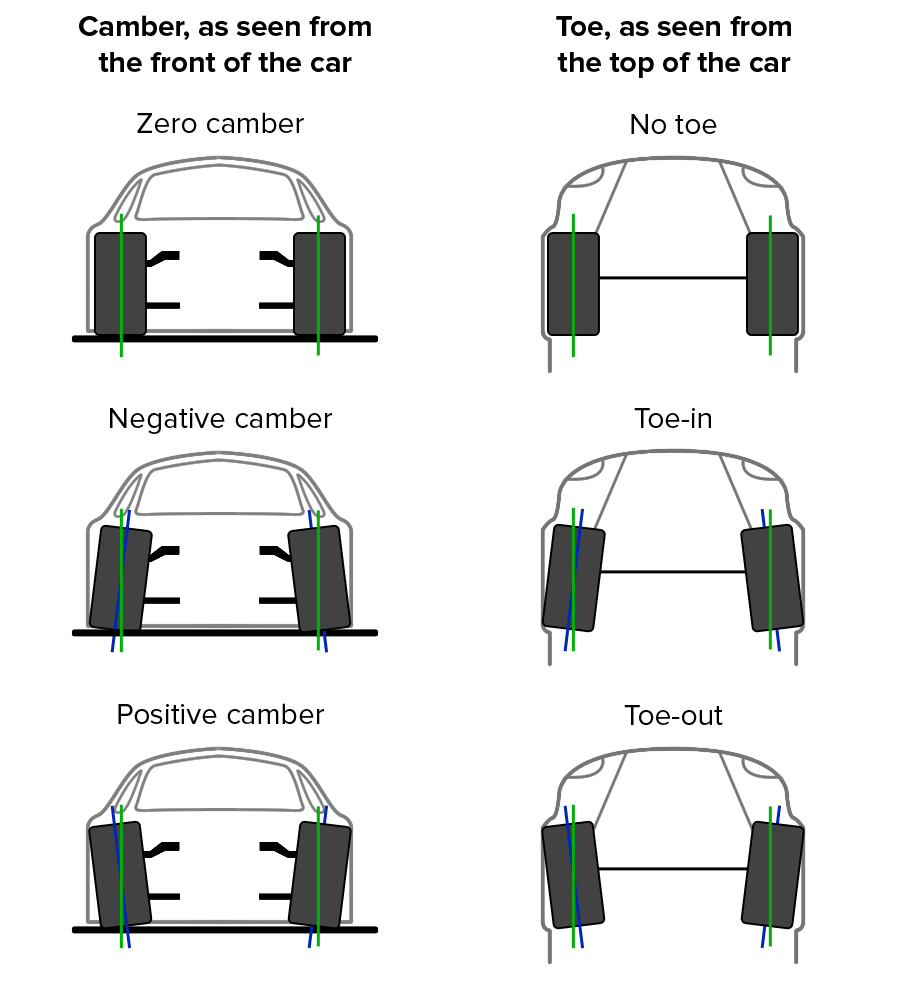
A: Technicians adjust front suspension camber by loosening the primary mounting fasteners connecting the steering knuckle to the strut or control arm, allowing them to pivot the wheel hub inward or outward to match factory specifications. On modern independent front suspensions, like those found on many passenger cars and crossover vehicles, we turn eccentric cam bolts or shift slotted strut-to-knuckle mounting points. Rotating these specialized cam bolts moves the top of the tire inward for negative camber or outward for positive camber. On double-wishbone or control arm configurations common on many trucks, we alter the alignment by turning eccentric cam adjusters at the lower control arm pivot points or adding precision shims to the upper control arm mounts.
When servicing heavy-duty trucks or solid-axle vehicles like a Jeep Wrangler or Ram 1500, adjusting camber requires installing offset ball joints or adjustable ball joint sleeves into the steering knuckle, as solid axles do not feature factory cam bolts. During the alignment process on our computerized alignment rack at our Clinton service center at 1111 W Michigan Ave, optical sensors track wheel angles in real time down to a fraction of a degree. Once we position the camber angle within the specified range, we torque all fasteners back to factory specifications. Drivers who want to double-check their suspension specifications before a long trip can give us a quick call at (517) 456-6555 to consult with our service team.
Q: Cambered vs toed tires: which misalignment causes worse tread wear?
A: Incorrect toe angles cause far more severe and rapid tread wear than incorrect camber because toe misalignment forces the tire to scrub sideways against the asphalt continuously as the vehicle rolls forward. When a tire suffers from excessive negative or positive camber, vehicle weight concentrates on one shoulder of the tread, leading to localized inner or outer edge wear over thousands of miles. However, when toe is misaligned, the tires point either slightly toward each other or away from each other rather than parallel to the vehicle's direction of travel.
This toe misalignment creates a harsh dragging action that shaves the rubber across the entire tread face, forming a sharp feathered or sawtooth pattern along the tread blocks. Even a tiny toe deviation of less than one degree can scrub thousands of miles off a set of tires and reduce fuel economy by up to 10 percent due to continuous rolling drag. For drivers navigating the unpaved routes and country lanes around Onsted, routine gravel impacts and rutted road conditions frequently knock delicate toe settings out of spec. Replacing damaged suspension components with genuine Mopar parts ensures your steering linkage holds precise toe settings and prevents premature tire destruction.
Q: How do camber and toe distinguish themselves in vehicle handling?
A: Camber primary influences cornering grip and lateral stability, whereas toe dictates straight-line tracking, steering responsiveness, and how the vehicle behaves when driving down a straight road. Most passenger vehicles are set with a slight negative camber angle, typically between -0.5° and -1.5°, which leans the top of the tire inward toward the chassis. This tilt allows the tire's tread to plant flat against the pavement when the chassis leans during hard cornering, maximizing traction through turns.
Toe settings control how eagerly the front tires respond to steering wheel inputs. Front toe is usually adjusted close to zero or given a slight toe-in setting, often between 0.1° and 0.25°, which forces the front tires slightly inward to encourage straight-line stability on the highway. Excessive toe-out makes the steering feel twitchy or darting, while incorrect camber creates a continuous pull toward the side with more positive camber. When truck owners come into our shop after hitting a rough patch, they usually ask whether toe or camber is eating their tires before we even get the vehicle on the rack.
"A tire that is leaning slightly off spec will wear down one shoulder over time, but a tire pointing the wrong direction scrubs away rubber every single foot it travels."
Maintaining proper steering geometry is essential whether you are considering custom factory ordering your vehicle built to exact factory tolerances or taking advantage of new vehicle service information on popular models. Even drivers exploring pre-owned vehicle inventory should insist on a complete alignment check to verify that handling remains crisp and predictable.
Q: Alignment vs balancing: how do these maintenance services differ?
A: Wheel alignment adjusts the mechanical angles of your suspension components to ensure the tires meet the road at the correct geometric angles, while tire balancing distribution corrects weight imbalances within the tire and wheel assembly itself. Alignment deals strictly with suspension geometry—specifically camber, toe, and caster angles—to keep the vehicle tracking straight and prevent uneven tread drag.
Tire balancing is performed by mounting the wheel assembly on a computerized dynamic balancer that spins the tire to identify heavy spots. Technicians then attach small, precise weights to the wheel rim to equalize weight distribution across the assembly. Commuters driving in from Michigan Center often notice an unbalanced tire as a distinct steering wheel vibration or cabin shake at highway speeds, whereas bad alignment causes silent tire wear, steering wheel off-center errors, or vehicle drift. Pairing routine wheel balancing with periodic alignment checks ensures a smooth ride and maximizes tire tread life. When it is time for routine maintenance, scheduling your Mopar service online makes keeping up with tire care quick and convenient.
Q: What mechanical failures and road symptoms signal alignment drift?
A: Alignment drift is most frequently triggered by sudden chassis impacts—such as striking a deep pothole or curbing a wheel—or by worn suspension components like ball joints, tie rod ends, control arm bushings, and strut mounts. As rubber bushings degrade or metallic joints develop play, the suspension geometry loses its rigid hold on the wheel hub. This slop allows camber and toe angles to shift dynamically while driving, even if static measurements on an alignment rack appear close to normal.
Key symptoms of alignment drift include a vehicle that pulls or drifts to one side when traveling on a level road, a steering wheel that sits crooked while driving straight, and unusual tire noises like a high-pitched squeal during low-speed turns. Visually inspecting your tires for smooth inner-edge wear or running your hand across the tread blocks to feel for rough, feathered edges will quickly tell you if your alignment has drifted out of specification.
Q: Can driving on misaligned camber or toe compromise vehicle safety?
A: Driving with severe camber or toe misalignment significantly compromises vehicle safety by reducing overall tire grip, extending emergency stopping distances, and making the vehicle unpredictable during sudden evasive maneuvers. When camber is severely out of spec, the tire's contact patch with the road is drastically reduced, decreasing traction on wet or icy pavement. Over time, severe negative camber wears down the inner tire shoulder until the internal steel belts become exposed, raising the risk of a sudden blowout at highway speeds.
Toe misalignment forces the tires to fight each other for directional control, creating a flighty or wandering steering feel that increases driver fatigue on long trips. In heavy rain, a misaligned tire that cannot clear water efficiently is far more prone to hydroplaning. Keeping your vehicle aligned protects your passengers, preserves your tires, and maintains built-in driver-assist calibration. If you suspect your alignment is out of spec, visit our Clinton service center for a complete alignment inspection, or speak directly with our service advisors by calling (517) 456-6555 today.
© 2026 NewGen Chrysler Dodge Jeep Ram of Clinton. All rights reserved.