
Understanding the Risks and Engineering of Jeep Wrangler Water Fording
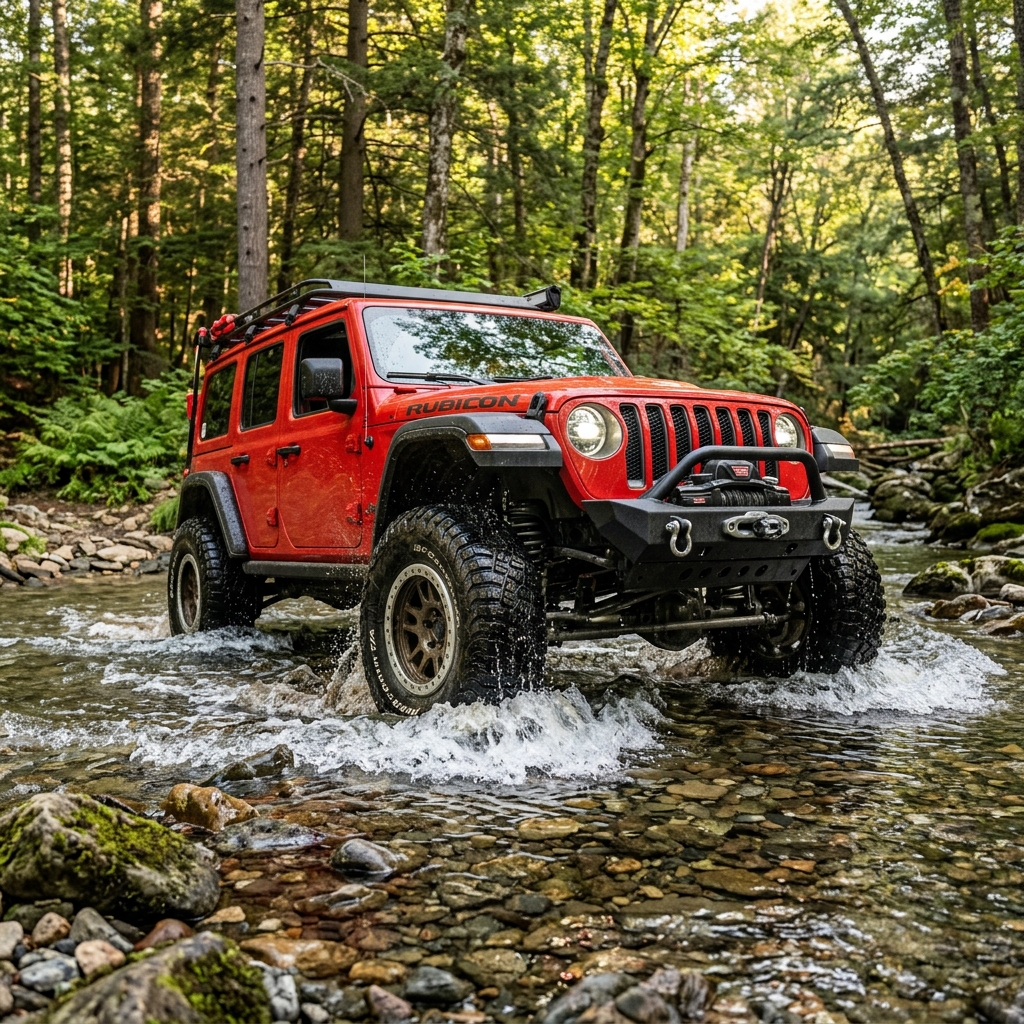
The question of whether water can damage a vehicle is one we hear frequently from owners who enjoy the rural landscapes around Onsted. While the 2026 Jeep Wrangler is legendary for its off-road prowess, it is not a submarine. Every Wrangler is engineered with specific water-fording capabilities, but exceeding these limits can lead to significant mechanical failure. A stock Wrangler in the Sport or Willys trim is generally rated to handle water depths of about 30 inches, while the Rubicon trim, equipped with a taller factory suspension and larger tires, increases that capability to approximately 34 inches.
This impressive depth is achieved through a combination of high-mounted air intakes, sealed electrical connections, and moisture-resistant body openings. Our certified technicians often point out that these seals are designed for slow, steady movement. If you are exploring the new Jeep inventory or considering a new Jeep Wrangler, it is vital to understand that these ratings assume a hard bottom. If the terrain is soft or muddy, your actual safe depth decreases as the tires sink. For those looking at other models like the new Jeep Compass or the new Jeep Grand Cherokee, the fording depths will be lower than the Wrangler, typically ranging between 19 inches and 24 inches depending on the specific model and suspension setup.
Before heading out on your next adventure, we recommend checking your vehicle's specific limits. You can find more details by looking through Jeep incentives or speaking with our staff about the hardware on a new Jeep Grand Cherokee Summit Reserve. If you have questions about a vehicle in our used inventory under $20,000, feel free to give our service team (517) 456-6555 a call. For a hands-on look at the Trailhawk or Limited hardware, you can find our showroom address online. We can walk you through the differences between a new Jeep Compass Latitude, a new Jeep Compass Limited, or the more rugged new Jeep Compass Trailhawk and explain how their air intakes are positioned to protect the engine. Even a new Jeep Grand Cherokee Limited requires careful attention to depth to avoid costly repairs.
Table of Contents
- High-Risk Components and Signs of Engine Water Ingestion
- Proper Fording Techniques and Protecting Your Factory Warranty
- Essential Post-Trail Maintenance and Fluid Inspection Schedules
- Enhancing Water Protection with Snorkels, Vent Hoses, and Lift Kits
- Common Maintenance Questions for Wrangler Water Crossings
- Reliable Service and Professional Care for Your Off-Road Jeep
High-Risk Components and Signs of Engine Water Ingestion
The most severe risk when driving through water is "hydrolock." This occurs when water is sucked into the air intake and enters the engine cylinders. Because water does not compress like air, the internal components—such as pistons and connecting rods—can bend or break instantly. Signs that your engine has taken in water include a sudden stall while in the water, a loud knocking sound, or a complete refusal to restart after the crossing. If you suspect water has entered the intake, do not attempt to restart the vehicle, as this can turn a manageable cleaning job into a total engine replacement.
Beyond the engine, the electrical system is highly vulnerable. Even with sealed connectors, prolonged immersion can allow moisture to reach the Engine Control Unit (ECU), relays, and various sensors. If water reaches the height of the windshield wipers, the entire engine bay is at risk. We often see electrical "ghosts" in vehicles that have been submerged too deeply, where lights flicker or sensors fail weeks after the initial incident. Using genuine Mopar parts for any electrical repairs is essential to maintain the integrity of these factory seals.
Water can also infiltrate the differentials, transmission, and transfer case through the vent tubes. If water mixes with your gear oil, it creates a "milky" appearance and loses its lubricating properties, leading to rapid wear on gears and bearings. After any deep crossing, it is a smart move to visit our Mopar parts center to get the correct fluids and filters for a complete system flush. This is especially important for those taking advantage of employee pricing programs, as keeping your maintenance records up to date is key to long-term reliability.
Proper Fording Techniques and Protecting Your Factory Warranty
How you enter the water is just as important as the depth itself. We advise drivers to maintain a slow and steady speed, typically around 5 mph. This speed creates a "bow wave" in front of the bumper, which actually creates a slight depression in the water level inside the engine bay. If you drive too fast, you risk splashing water over the hood and directly into the air intake. Conversely, stopping in deep water can allow water to seep into seals that are only meant to be water-resistant for short durations.
It is a common misconception that the Jeep name is a blanket authorization for any water activity. Damage caused by exceeding the vehicle's design limits or misuse is generally not covered under the 3-year/36,000-mile Basic Limited Warranty. However, defects in materials or workmanship remain covered. If a seal fails during a crossing that was well within the 34-inch limit of a Rubicon, that is a different conversation than a vehicle submerged to the roofline. When we help customers with custom factory orders, we always emphasize choosing packages with the highest vent tube extensions if they plan on frequent water crossings.
Whether you are driving a Wrangler or a new Ram 1500, the same rules of physics apply. Heavy-duty trucks often have high ground clearance, but their electronics can be mounted lower than those on a dedicated off-roader. You can check the specific fording specs for various models in our new incentives inventory. Always remember that the warranty is there to protect against manufacturing issues, but proper maintenance and responsible driving are your best defenses against water damage.
Essential Post-Trail Maintenance and Fluid Inspection Schedules
Once you’ve cleared the water, the work isn't quite finished. Water between the brake pads and rotors can temporarily reduce braking effectiveness. We suggest gently applying the brakes after a crossing to generate heat and dry them out. If you’ve spent the day near the Michigan Center reservoir or other local water bodies, you should also inspect the underbody for debris. Mud and silt can pack into skid plates and suspension components, holding moisture against metal surfaces and accelerating corrosion—a major concern in our salt-belt region.
If your Wrangler has a 5-year/60,000-mile Powertrain Limited Warranty, keeping your fluids clean is a requirement for maintaining that coverage. After deep water exposure, you should check your differential and transmission fluids. If the oil looks like chocolate milk, water has entered the system. We recommend a full fluid change immediately to prevent gear damage. You can easily schedule your service today through our online portal to have our technicians perform a multi-point inspection.
For those who frequently engage in off-road activities, we suggest more frequent inspection intervals than the standard manual suggests. Checking u-joints, wheel bearings, and suspension bushings for grease washout is a must. If you are starting to think about an upgrade, you can value your trade-in and see how a newer model with enhanced sealing might fit your lifestyle. Our team is ready to help you schedule service to ensure your current vehicle remains trail-ready for years to come.
Enhancing Water Protection with Snorkels, Vent Hoses, and Lift Kits
Many enthusiasts choose to modify their vehicles to push beyond factory limits. Adding a snorkel is one of the most effective ways to move the engine's air intake point to roof level, significantly reducing the risk of hydrolock. However, a snorkel alone doesn't make a vehicle waterproof; you must also ensure that the entire intake tract is perfectly sealed. Similarly, extending the vent hoses for your axles, transmission, and transfer case to a higher point on the firewall can prevent fluid contamination.
Adding a suspension lift and larger tires naturally increases your safe fording depth by raising the entire chassis. For example, a Rubicon with a 2-inch lift and 35-inch tires will have a much higher margin of error than a stock Sport. If you are looking for a vehicle that can handle heavy work and occasional deep water, the new Ram 2500 offers incredible ground clearance. For commercial needs, even the new ProMaster has specific design considerations for inclement weather, though it is not intended for off-road fording.
We often discuss these types of modifications on our automotive blog, where we cover the latest in Mopar performance parts. It is important to note that while these upgrades improve capability, they can also change how your vehicle handles on the road. Always consult with a professional to ensure that any lift kit or snorkel is installed correctly to maintain the safety and reliability of your drivetrain.
Common Maintenance Questions for Wrangler Water Crossings
Q: Can driving through water void my Jeep’s warranty? Damage caused by water ingestion or immersion beyond the vehicle's rated capacity is typically considered "misuse" and is not covered by the manufacturer's warranty. However, if a component fails due to a factory defect while you are within the rated fording depth, the repair may still be covered. We recommend keeping detailed maintenance records to show the vehicle was properly cared for after off-road use.
Q: How do I know if water got into my transmission or differentials? The easiest way to tell is by checking the fluid itself. Pull the dipstick or open the fill plug; if the oil appears milky, cloudy, or light tan, water has contaminated the system. This requires an immediate flush and refill with fresh oil to prevent permanent damage to the gears and bearings.
Q: Is it safe to shift the transfer case while I am in the water? It is best to shift into 4-Low before you enter the water to ensure you have maximum torque and control. Shifting while submerged can potentially allow water to enter the transfer case through the shift linkage seals if they are worn. Consistency is key to a successful crossing, so get into the correct gear early.
Q: Should I remove my carpets if water gets inside the cabin? Yes, if water enters the interior, you should pull up the carpets and remove the floor drain plugs immediately. Wranglers are designed with these plugs specifically for this reason. Allowing the floorboards and carpets to dry completely prevents mold growth and protects the floor pans from long-term corrosion.
If you are looking for a rugged vehicle that is already broken in, you might explore our pre-owned specials. We also carry a wide range of trucks, such as the Ram 1500 Laramie Crew Cab or the new Ram 1500 Big Horn, which offer great capability for those who need to navigate tough terrain.
Reliable Service and Professional Care for Your Off-Road Jeep
At NewGen Chrysler Dodge Jeep Ram of Clinton, we are committed to keeping your vehicle in peak condition, no matter where your adventures take you. Our certified technicians have the specialized tools and expertise to handle post-trail inspections and complex electrical repairs. Whether you need a simple fluid check after a weekend at the lake or more extensive service, we offer various maintenance specials and service coupons to help you maintain your vehicle affordably.
If you are considering a new vehicle with the latest water-protection technology, be sure to check our current new car specials. You can also give our service department (517) 456-6555 a quick call to discuss any concerns you have about your vehicle's performance. When you're ready to visit us, our Clinton location is easy to find on West Michigan Avenue. We look forward to helping you protect your investment and prepare for your next journey.
© 2026 NewGen Chrysler Dodge Jeep Ram of Clinton. All rights reserved.