

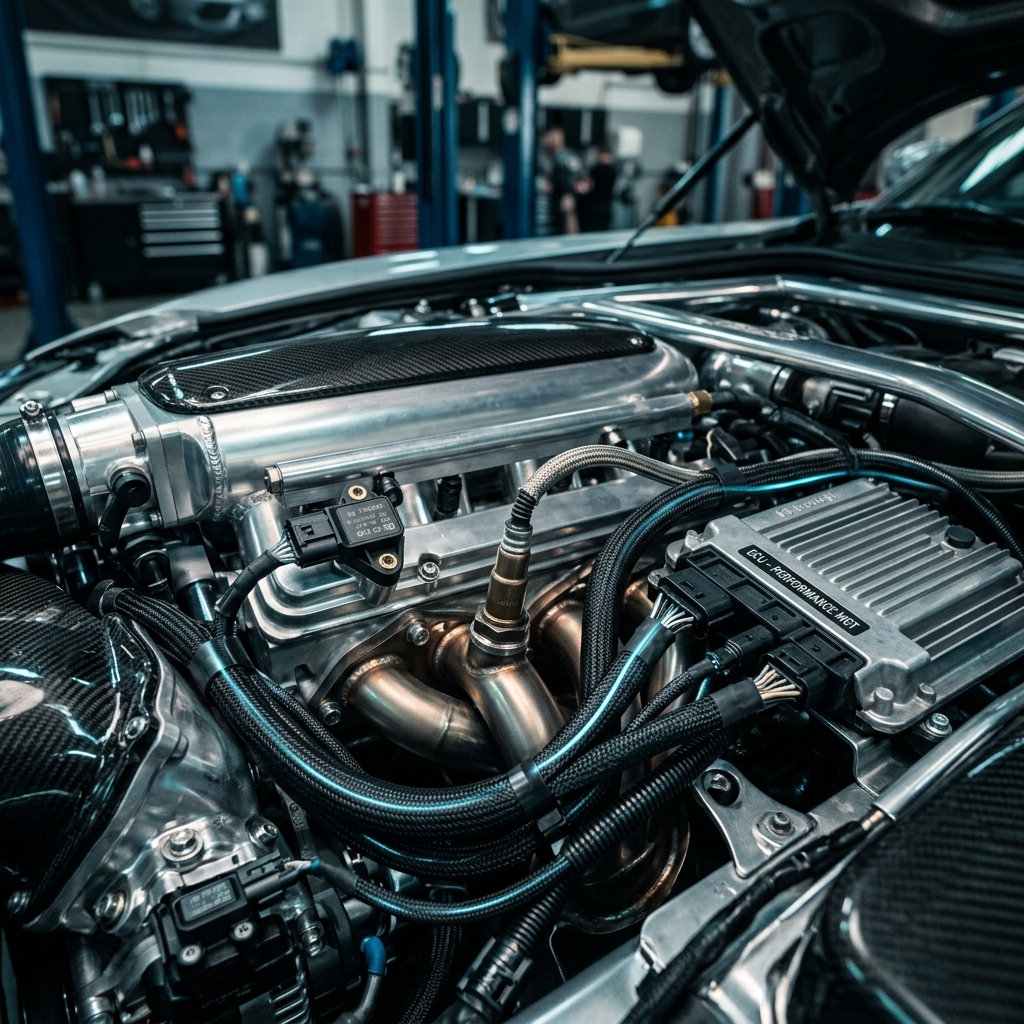
Understanding the Vital Role of Sensors in Engine Health
Modern vehicles rely on a sophisticated network of electronic components to maintain efficiency and reliability. At the heart of this system is the Engine Control Unit (ECU), which acts as the brain of your vehicle. This computer constantly receives data from various sensors to manage combustion, timing, and emissions. Without these precise measurements, your engine would be unable to adjust to changing conditions, such as the thin air during a drive through Onsted or the varying fuel quality found at different pumps. When a sensor fails, it is not just a minor electronic glitch; it fundamentally alters how your vehicle processes fuel and air, often leading to physical wear on internal components.
We often see vehicles come into our service center with performance issues that trace back to a single faulty data point. If the ECU receives incorrect information about how much air is entering the intake or the temperature of the coolant, it may default to a "limp home" mode. This safety feature protects the mechanical parts of the engine but significantly restricts power and speed. Maintaining these electronics is a core part of long-term ownership care, ensuring that your vehicle remains safe and dependable for years. If you are noticing a change in how your car handles, you can reach out to our team at (517) 456-6555 to discuss the symptoms with a certified technician.
For those maintaining older vehicles, keeping an eye on these sensors is the best way to avoid the high costs associated with major engine repairs. If the cost of maintaining an aging vehicle begins to outweigh its value, we also offer a selection of reliable pre-owned vehicles under $20,000 that have been thoroughly inspected by our staff. Whether you are driving a high-mileage work truck or a newer family SUV, understanding these electronic components is key to a stress-free ownership experience. If you need a professional diagnostic check, you can find our service department in Clinton easily for a comprehensive inspection.
Table of Contents
- The Critical Impact of Oxygen and Airflow Sensors on Performance
- Identifying Common Symptoms of Sensor Failure and Deterioration
- The Diagnostic Process and Resolving Emissions-Related Fault Codes
- Maintenance Strategies and Warranty Protection for Modern Engine Electronics
- Quick Answers to Common Engine Sensor and Diagnostic Questions
- Trusted Service and Expert Sensor Calibration in Clinton
The Critical Impact of Oxygen and Airflow Sensors on Performance
Two of the most influential components in your engine are the oxygen (O2) sensor and the mass airflow (MAF) sensor. The O2 sensor sits within the exhaust stream, measuring the amount of unburned oxygen exiting the engine. This data allows the ECU to fine-tune the air-fuel mixture in real-time. If the mixture is too "rich," meaning there is too much fuel, you waste gasoline and risk clogging your catalytic converter. If it is too "lean," with too much air, the engine can run hot and suffer from pre-ignition or "knock." A failed O2 sensor can drop your fuel economy by as much as 40 percent because the computer loses its ability to trim fuel usage accurately.
The MAF sensor serves a different but equally vital purpose by measuring the volume and density of air entering the intake manifold. Located just after the air filter, it is sensitive to dust and oil vapors. A dirty MAF sensor often causes a rough idle or hesitation during acceleration, which can be particularly noticeable when merging onto busy roads in Chelsea. Because these sensors are precision instruments, we always recommend using components from our Mopar parts center to ensure the voltage signals match the factory specifications of your vehicle. Using the wrong part can lead to "ghost" codes where the light stays on even after the repair.
When these sensors deteriorate, the engine often compensates in ways that are hard on the drivetrain. For example, a bad throttle position sensor (TPS) can confuse the transmission, leading to jerky shifts or delayed engagement. If you are experiencing these issues and considering a change, our team can help you value your current trade-in to see how its condition affects your next steps. While a new Jeep Grand Cherokee features the latest in sensor technology for maximum efficiency, keeping your current vehicle's airflow and oxygen sensors clean remains the most effective way to protect your engine's longevity and performance.
Identifying Common Symptoms of Sensor Failure and Deterioration
How do you know when a sensor is actually failing versus a mechanical issue? The most obvious sign is the check engine light, but the vehicle often "talks" to you before that lamp illuminates. A failing engine coolant temperature sensor might cause the cooling fans to run constantly, or worse, not run at all, leading to overheating risks. You might also notice that the vehicle is difficult to start when the engine is already warm. These electronic hiccups are the car’s way of signaling that the ECU is working with incomplete data, often resulting in a noticeable "stumble" when you press the gas pedal.
Misfires and rough idling are frequently traced back to the knock sensor or the manifold absolute pressure (MAP) sensor. The knock sensor detects specific vibration frequencies that indicate improper combustion; if it fails, the ECU may retard ignition timing so much that the car feels sluggish and underpowered. Drivers in Michigan Center often report these symptoms during humid weather or after a heavy rain, as moisture can sometimes interfere with aging electrical connectors. If you suspect a sensor is on its way out, you can order genuine parts directly through our website to ensure you are getting the exact match for your VIN.
Beyond performance, sensor failure often manifests as a physical smell or sound. A bad O2 sensor frequently results in a strong scent of unburned gasoline from the tailpipe, while a failing catalytic converter—often caused by long-term sensor neglect—might produce a "rotten egg" sulfur smell. For those driving a new Jeep Compass or similar modern SUV, these systems are highly integrated, meaning one small fault can trigger multiple warning lights. We frequently update our new vehicle specials for those who prefer the peace of mind that comes with a full factory warranty and the latest diagnostic capabilities.
The Diagnostic Process and Resolving Emissions-Related Fault Codes
When a technician plugs a scan tool into your vehicle’s OBD-II port, they aren't just looking for a single answer; they are looking for a starting point. A code like P0420, which indicates low catalyst efficiency, is a classic example of why professional diagnosis matters. While many might assume the catalytic converter is dead, the actual culprit is often a downstream O2 sensor sending erratic voltage signals. Replacing the expensive converter without checking the sensor is a common and costly mistake. Our technicians look at "live data" graphs to see how the sensors are switching, ensuring we fix the root cause rather than just the symptom.
The diagnostic process also involves checking the "readiness monitors" within the computer. After a sensor is replaced, the vehicle must be driven under specific conditions before the ECU confirms the system is healthy and turns off the light permanently. This is why a simple "code clear" at a parts store rarely works; the light will simply return once the computer runs its self-test. For more technical insights into how these systems work, you can browse our automotive service blog where we break down common repair scenarios. We pride ourselves on transparency, which is why we offer special pricing programs and competitive rates on all diagnostic labor.
Maintenance is always more affordable than repair. Ignoring a small sensor code can eventually "poison" the catalytic converter or foul the spark plugs, leading to a much larger bill. We often see this with vehicles that have been driven for months with a steady amber light. If you are currently shopping for a used vehicle, checking for these hidden codes is vital. We invite you to look through our current pre-owned specials, where every vehicle has undergone a rigorous electronic and mechanical health check to ensure no lingering emissions faults are present.
Maintenance Strategies and Warranty Protection for Modern Engine Electronics
Keeping your sensors healthy starts with basic engine hygiene. A clean air filter is the primary defense for your mass airflow sensor; if dirt bypasses a cheap or torn filter, it can coat the delicate sensing wire and cause immediate performance drops. Similarly, using high-quality fuel and keeping up with oil changes prevents the carbon buildup that often "blinds" oxygen sensors. For 2026 models and newer, these electronic systems are often covered under specific federal emissions warranties, which can last longer than the standard bumper-to-bumper coverage.
A common question we hear is whether using non-OEM parts will impact your protection. While the Magnuson-Moss Warranty Act generally protects your right to use aftermarket parts, a sensor that provides incorrect voltage and subsequently damages a computer or a catalytic converter may not be covered. This is why we strongly advocate for manufacturer-backed components installed by certified experts. You can schedule your service today to have our team perform a multi-point inspection that includes a scan of your vehicle's health reports. We also provide a variety of manufacturer incentives that often include maintenance coverage for new owners.
Regularly scheduled inspections are the best way to catch a sensor that is "lazy"—meaning it is still working but responding too slowly to keep the engine at peak efficiency. These won't always trigger a light immediately, but they will cost you at the fuel pump. If you are due for a check-up, you can book a Mopar service appointment online. Our team uses the latest factory diagnostic tools that can see deep into the system's history, catching intermittent electrical issues before they leave you stranded on a cold Michigan morning.
Quick Answers to Common Engine Sensor and Diagnostic Questions
Q: Does replacing a sensor always fix the check engine light?
Replacing a sensor fixes the light only if the sensor itself was the failure point. Sometimes the light stays on because of a broken wire, a vacuum leak, or a failing ECU. A professional diagnostic test confirms the electrical circuit is intact before we recommend a part replacement, ensuring you don't pay for components you don't need.
Q: Can I drive my car if the check engine light is on?
If the light is steady, you can usually drive to a service center, though your fuel economy and power will likely suffer. However, if the light is flashing, you should pull over and shut off the engine immediately. A flashing light typically indicates a severe misfire that can melt your catalytic converter in a matter of minutes.
Q: Will an aftermarket sensor void my factory warranty?
Using an aftermarket part does not automatically void your warranty. However, if that part fails or sends a signal that damages other components, the manufacturer may deny coverage for the resulting repairs. For vehicles like the Jeep Grand Cherokee Summit Reserve, the complexity of the electronics makes genuine parts the safest choice for maintaining your warranty.
Q: How often should sensors be cleaned or replaced?
Most sensors do not have a set replacement interval and are designed to last 100,000 miles or more. However, cleaning the MAF sensor during every other air filter change can prevent many common idling issues. If you are ordering custom factory vehicles, we can walk you through the specific maintenance needs of the newest engine technologies.
Q: Why did my light come on right after a fuel fill-up?
The most common reason is a loose gas cap. The sensors in the evaporative emissions (EVAP) system detect the pressure leak and trigger the light. Always ensure your cap is clicked into place. If you are browsing our new Jeep inventory, you'll notice many newer models now feature capless fuel fillers to eliminate this specific problem entirely.
Trusted Service and Expert Sensor Calibration in Clinton
At NewGen Chrysler Dodge Jeep Ram of Clinton, we believe in building lasting relationships with our community through honest and transparent service. Our certified technicians are experts in the complex electronics found in modern Chrysler, Dodge, Jeep, and Ram vehicles. We don't just clear codes; we find solutions that keep your vehicle running strong on Michigan roads. Whether you need a quick diagnostic scan or a complex sensor calibration, we are here to help.
We invite you to check our current service specials or browse our latest maintenance offers before your next visit. Our team is dedicated to providing quick, trusted service tailored to your busy schedule. You can find our dealership address online for easy navigation, or simply give us a quick call at (517) 456-6555 to speak with a service advisor. Let us help you keep your engine healthy and your journey safe.