

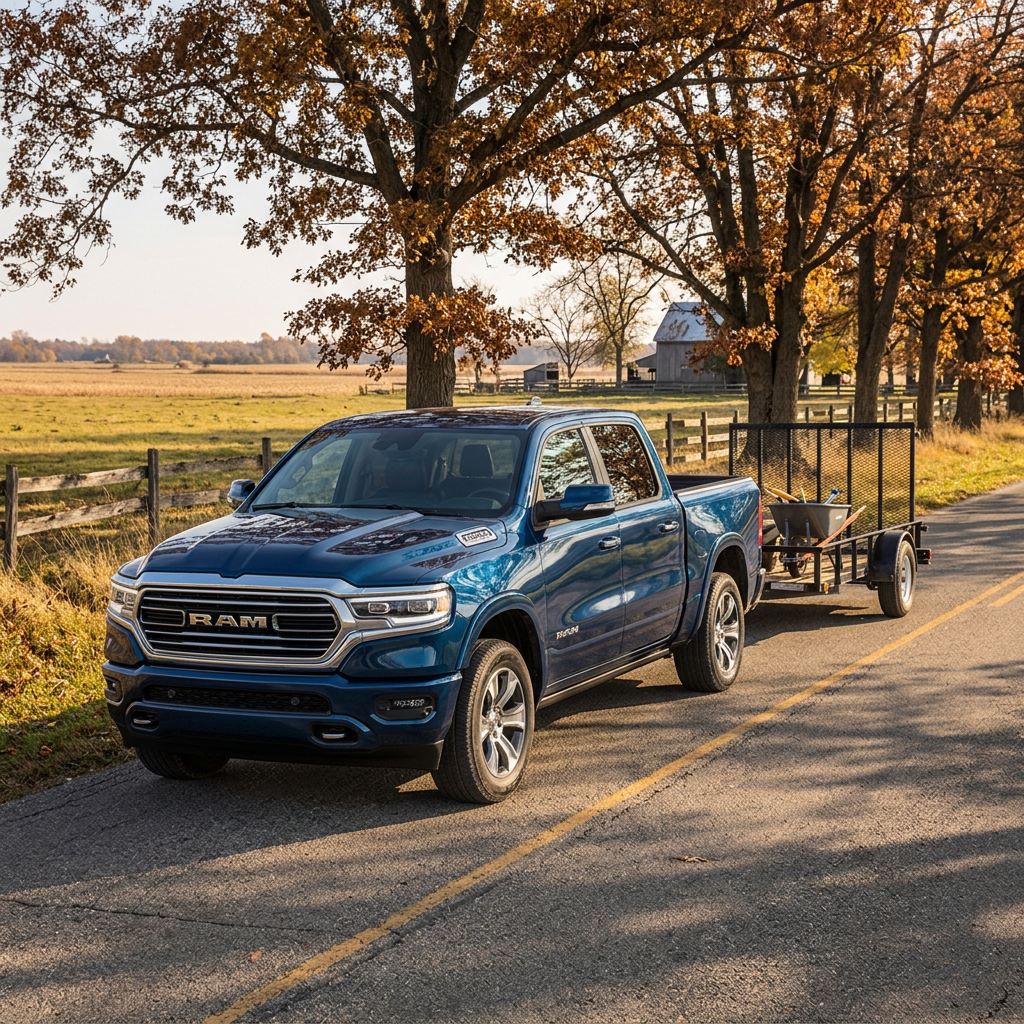
Yes, the Ram 1500 eTorque mild-hybrid system is worth buying for truck owners who want smoother engine stop-start operation, improved city fuel economy, and immediate low-end torque for launching heavy loads. By pairing a belt-driven electric motor-generator with a 48-volt battery pack, eTorque enhances daily drivability and towing responsiveness without requiring external charging plugs or complex hybrid maintenance.
Truck shoppers evaluating modern light-duty pickups often balance working capability against daily fuel expenses. The eTorque system bridges this gap by targeting the most inefficient moments of truck operation: launching from a complete stop and idling in stop-and-go traffic. Traditional automatic stop-start systems can create noticeable cabin vibration and hesitate when re-engaging the engine. The 48-volt eTorque setup restarts the engine in a fraction of a second, feeding electric torque directly to the crankshaft before fuel delivers full combustion power. This delivers an exceptionally quiet and fluid takeoff whether navigating daily traffic or pulling out from a job site.
For buyers considering long-term ownership, the initial efficiency and drivability gains continue throughout the vehicle's lifespan. The electric assist smoothing out shift points allows the transmission to manage gear selection more efficiently, reducing unnecessary downshifts during gentle acceleration. When you are ready to evaluate a light-duty truck, visiting our Clinton showroom gives you the opportunity to experience the eTorque power delivery firsthand during a test drive.
Financing an eTorque-equipped truck is straightforward, and our finance department works with a variety of lenders to structure competitive terms. You can streamline your purchase experience by applying for financing online before your visit. If you have preliminary questions about current inventory or powertrain configurations, calling our team directly at (517) 456-6555 connects you with a specialist who can guide your decision.
Table of Contents
- How Does the Ram 1500 eTorque Mild-Hybrid System Work and Charge Its Battery?
- Does eTorque Add Extra Horsepower and How Does It Affect Towing and Payload Capacity?
- How Does eTorque Fuel Economy in City Driving Compare to Highway Driving and Towing?
- How Do Maintenance Requirements Compare Between Mild-Hybrid and Full-Hybrid Trucks?
- Does the eTorque System Retain Better Resale Value on Used Ram 1500 Models?
- Frequently Asked Questions About Ram eTorque Technology
- Finding the Right Ram 1500 eTorque Truck
How Does the Ram 1500 eTorque Mild-Hybrid System Work and Charge Its Battery?
The Ram 1500 eTorque mild-hybrid system replaces the conventional alternator with a belt-driven motor-generator unit connected to a 0.4-kWh lithium-ion battery. It automatically recharges its battery through regenerative braking during deceleration and engine power generation during normal operation, eliminating any need for plug-in charging.
At the core of the eTorque system is a liquid-cooled motor-generator unit mounted to the front of the engine. A heavy-duty belt connects this unit directly to the engine crankshaft pulley. During deceleration and coasting, the system operates in reverse, capturing kinetic energy that would otherwise be lost as brake heat and converting it into electrical energy. That captured power is stored in the compact 0.4-kWh lithium-ion battery pack, which is securely mounted inside the rear cabin wall to protect it from road debris and extreme weather.
The system manages electrical loads using a dual-voltage architecture. While the eTorque motor operates on 48 volts to deliver substantial mechanical energy, a DC-to-DC converter steps down voltage to maintain the standard 12-volt electrical system that powers headlights, infotainment, climate control, and cabin accessories. This dual-line design ensures high electrical performance for engine assistance while preserving component reliability across all accessories.
When local truck buyers test-drive an eTorque model on our lot, they often ask whether the electric motor requires manual charging or special maintenance. Our specialists walk through the self-sustaining nature of the energy loop to show how seamlessly it fits into daily driving. Drivers interested in alternative electrified powertrains across our vehicle family can also explore our lineup of Jeep 4xe hybrid models to compare mild-hybrid and plug-in hybrid setups.
We maintain a comprehensive selection of new Ram 1500 trucks equipped with eTorque technology across multiple cab and bed setups. Shoppers looking for a popular, highly capable trim configuration can examine the new Ram 1500 Big Horn Crew Cab 4x4 with the 5-foot-7 box to see how eTorque integrates with crew cab seating and four-wheel-drive capability.
Does eTorque Add Extra Horsepower and How Does It Affect Towing and Payload Capacity?
The Ram 1500 eTorque system does not increase total peak horsepower ratings, but it supplies immediate supplemental electric torque at low engine speeds—up to 130 lb-ft on V-8 engines and 90 lb-ft on V-6 engines. A properly equipped 2026 Ram 1500 with the 5.7-liter HEMI V-8 eTorque achieves a maximum towing capacity of 11,320 pounds, while the overall lineup max towing rating is 11,610 pounds.
Understanding the difference between engine horsepower and supplemental torque is essential when evaluating eTorque. The 5.7-liter HEMI V-8 eTorque engine produces an impressive 395 horsepower and 410 lb-ft of peak engine torque paired with an 8-speed automatic transmission. The eTorque motor does not alter that 395 horsepower maximum peak figure because peak horsepower occurs high in the RPM range where the gas engine delivers full power. Instead, the electric motor injects up to 130 lb-ft of supplementary torque directly to the crankshaft at lower engine speeds off the line. This low-end torque fills the brief gap before the combustion engine reaches its optimal power band, giving the truck a strong, effortless launch when pulling heavy cargo.
Towing performance benefits directly from this low-RPM supplemental torque. Launching a heavy trailer on a steep boat ramp or getting a loaded utility trailer moving from a stop sign requires substantial immediate power. The eTorque assist allows the truck to get rolling cleanly without forcing the transmission to over-rev or slip the torque converter. For drivers hauling agricultural equipment or towing recreational watercraft around Onsted, this low-end responsiveness makes heavy trailer transport controlled and composed.
Regarding payload, the physical hardware of the eTorque system—including the motor-generator, wiring, and battery pack—adds approximately 90 to 100 pounds of curb weight to the truck chassis. Because total vehicle weight ratings remain fixed, this extra hardware weight reduces net maximum payload by a corresponding amount compared to non-eTorque trucks. However, maximum payload ratings across eTorque models still reach up to roughly 2,300 pounds depending on cab, bed, and axle ratio choices.
To keep your truck performing at its peak under heavy working conditions, our parts department supplies genuine Mopar parts and accessories, including heavy-duty trailering hitches, wiring harnesses, and bed accessories.
How Does eTorque Fuel Economy in City Driving Compare to Highway Driving and Towing?
The Ram 1500 eTorque system yields its largest fuel economy improvements in city driving, boosting urban efficiency by up to 2 to 3 mpg through stop-start operation and regenerative energy capture. Highway fuel economy gains are smaller at 1 to 2 mpg, while heavy trailer towing drops overall fuel consumption to roughly 10 to 13 mpg regardless of hybrid assist.
Fuel efficiency ratings reflect the distinct operational advantages of mild-hybrid technology in stop-and-go environments. MotorTrend tested 2026 Ram 1500 HEMI eTorque 4x4 configurations like the Warlock and Laramie, recording EPA ratings of 16 mpg city, 20 mpg highway, and 18 mpg combined. The reason city fuel economy sees a higher percentage gain lies in how energy is managed during frequent stops:
- Engine Shut-off at Idling: The combustion engine cuts off cleanly during complete stops, eliminating fuel waste at stoplights and drive-thrus.
- Regenerative Deceleration: Stopping energy is continuously recovered during urban slowing and routed back into the 0.4-kWh lithium-ion battery.
- Torque-Assisted Relaunch: Electric power handles the initial vehicle motion, reducing the immediate fuel surge required to get a 5,000-pound truck moving from a dead stop.
On open highway stretches, opportunities for energy recovery drop because the vehicle maintains a steady speed with few braking events. As a result, the highway fuel economy gains stem primarily from cylinder deactivation support and optimized transmission gear retention rather than electric motor propulsion. For rural commuters driving along Michigan Center Reservoir toward Jackson, the combination of steady cruising efficiency and smooth engine management provides consistent fuel savings over long miles.
When towing heavy trailers weighing 5,000 pounds or more, aerodynamic drag and total towed mass become the primary factors in fuel consumption. Under heavy load conditions, the internal combustion engine must continuously work at higher output levels, dropping overall trailer-towing fuel economy to between 10 and 13 mpg. While eTorque cannot overcome the physics of pulling heavy loads at highway speeds, it continues to assist during low-speed maneuvers, stop-and-go trailering, and initial launches, protecting drivability and reducing mechanical stress on the powertrain.
How Do Maintenance Requirements Compare Between Mild-Hybrid and Full-Hybrid Trucks?
The Ram 1500 eTorque mild-hybrid system requires significantly less maintenance than a full-hybrid truck because it uses a simpler belt-driven motor architecture without complex dual-power cooling loops or high-voltage drive components. Routine service focuses mainly on periodic drive belt inspections alongside standard engine oil changes and brake checks.
Full-hybrid pickups feature large high-voltage battery packs, complex electric drive transmissions, and dedicated liquid cooling systems for electric drive motors. These full-hybrid components require specialized coolant flushes, complex electronic diagnostics, and higher component replacement costs over time. In contrast, the Ram eTorque system operates as a streamlined mild-hybrid setup. Its main mechanical component is the front-mounted motor-generator unit driven by a specialized, heavy-duty serpentine belt.
Service requirements for eTorque focus on straightforward maintenance items:
- Drive Belt Inspection: Regular visual checks of the eTorque drive belt tensioner and belt condition during routine oil changes.
- Cooling System Checks: Inspection of the liquid cooling lines that keep the front motor-generator unit operating within proper thermal limits.
- Standard Powertrain Care: Adhering to standard engine oil, filter, and transmission fluid replacement intervals recommended by the manufacturer.
Brake system maintenance on eTorque models also sees long-term advantages. Because regenerative braking handles a portion of vehicle deceleration, standard friction brake pads and rotors experience less wear during daily stop-and-go driving. This mechanical benefit helps extend brake pad lifespan and lowers routine ownership expenses.
Our factory-trained service team uses factory diagnostic tools and genuine components to maintain your powertrain. You can easily schedule Mopar service online to book your routine maintenance, multi-point inspection, or oil change at a time that fits your schedule.
Does the eTorque System Retain Better Resale Value on Used Ram 1500 Models?
Pre-owned Ram 1500 trucks equipped with the eTorque system retain strong resale value on the used truck market due to their refined driving dynamics, updated fuel efficiency ratings, and proven long-term durability. Used truck buyers actively seek eTorque models for their quiet engine restarts and smooth power delivery.
Resale value in the light-duty pickup segment depends heavily on powertrain reputation, capability, and daily usability. When eTorque was introduced, some buyers questioned whether mild-hybrid technology would hold up over years of hard work. Real-world performance has proven the reliability of the 48-volt system, giving second-hand truck shoppers strong confidence in pre-owned models. J.D. Power's 2026 U.S. Vehicle Dependability Study recognized the Ram 1500 for low rates of reported problems among large light-duty trucks, reinforcing buyer trust in the brand's long-term engineering.
For buyers researching pre-owned pickups, eTorque offers tangible value advantages over traditional non-assisted powertrains:
- Refined Driving Experience: The absence of starter noise and harsh engine shudder makes older trucks feel tight and modern.
- Enhanced Urban Efficiency: Pre-owned buyers looking to manage commuting costs appreciate higher city MPG ratings.
- Full Factory Warranty Backing: Basic vehicle protection includes Edmunds reporting a 3-year/36,000-mile basic warranty, while major powertrain components carry extended factory coverage.
If you are exploring current models, viewing our new Ram 1500 showroom allows you to examine factory specs and feature packages. For shoppers focused on pre-owned value, our pre-owned Ram 1500 selection provides thoroughly inspected trucks ready for work. If you plan to upgrade your current vehicle, you can quickly value your trade-in online to see how much equity you can apply toward your purchase.
Frequently Asked Questions About Ram eTorque Technology
Q: How does the eTorque stop-start feature behave in daily traffic?
Unlike traditional starters, the eTorque system uses a 48-volt motor-generator to restart the engine smoothly and quietly. Engine restart occurs in approximately 400 milliseconds, delivering instant crankshaft rotation before fuel combustion begins. This eliminates the delay and starter noise common in conventional stop-start systems, allowing the vehicle to move forward smoothly as soon as the driver lifts off the brake pedal.
Q: Does the eTorque 48-volt battery ever need to be charged by the owner?
No, the 48-volt lithium-ion battery in the eTorque system never requires manual charging or plugging in. The system automatically maintains its charge using regenerative braking when slowing down and energy captured from the engine during steady driving. The integrated control system constantly monitors battery charge levels to ensure electric torque assistance and stop-start functionality remain available without any driver intervention.
Q: Can drivers manually turn off the automatic stop-start system on a Ram 1500 eTorque?
Drivers can turn off the automatic stop-start feature using a dedicated button located on the center console dashboard. Pressing this button disables engine shut-off for the remainder of the current ignition cycle. To maintain compliance with fuel economy standards, the system automatically defaults back to active status every time the engine is restarted with the key or push-button ignition.
Q: What happens to towing stability and trailer control when driving an eTorque truck?
Towing stability remains excellent because eTorque works alongside the truck's heavy-duty chassis, suspension geometry, and electronic trailer sway control. The supplemental electric torque helps launch heavy trailers cleanly from stops without aggressive transmission downshifts. Additionally, smooth engine restarts prevent driveline shock when pulling away on boat ramps or steep highway grade restarts with a trailer attached.
Q: What warranty coverage applies to the eTorque mild-hybrid components?
The eTorque system components—including the 48-volt battery pack, motor-generator unit, power electronics, and belt system—are backed by factory powertrain and emission warranty protection. Basic vehicle coverage spans 3 years or 36,000 miles, while high-voltage hybrid components carry extended federal emission and hybrid component warranty coverage for additional years and mileage.
Finding the Right Ram 1500 eTorque Truck
Choosing the right Ram 1500 eTorque pickup comes down to matching your daily work requirements, cab preferences, and towing needs with the right engine and trim setup. Whether you need the high towing capacity of the 5.7-liter HEMI V-8 eTorque or the everyday efficiency of the V-6 eTorque powertrain, our team is prepared to help you evaluate every detail.
Shopping at NewGen Chrysler Dodge Jeep Ram of Clinton is car buying the way it should be: fun, informative, and fair. We are committed to transparent sales processes, pressure-free customer service, and community-focused support for local events and charities. Our finance team works with a broad network of lending partners to secure flexible options tailored to your budget, and we welcome trade-ins on any vehicle with no purchase required.
When you are ready to test-drive an eTorque truck, visiting our dealership location in Clinton allows you to compare trim levels on the lot and experience mild-hybrid performance firsthand. Give our sales specialists a call today at (517) 456-6555 to confirm vehicle availability, schedule your test drive, or discuss your trade-in options.